Beyond the China+1 Strategy: Why the June 1st Registration Deadline is a Supply Chain Trap for Small Distributors
For over a decade, the "China+1" strategy has been the gold standard for supply chain resilience. Small to medium-sized (SME) distributors in the food packaging industry have diligently diversified their sourcing, moving production lines to Southeast Asian hubs like Vietnam and Thailand to mitigate geopolitical risks and bypass the heavy tariffs associated with Chinese-origin goods. However, as the 2026 regulatory landscape shifts, a new, more immediate threat has emerged—one that renders simple geographic diversification insufficient.
The looming June 1st deadline for California’s Senate Bill 54 (SB 54) registration is not just another administrative hurdle; it is a critical bottleneck that could effectively "lock out" non-compliant distributors from the world’s fifth-largest economy. For many SMEs, the assumption that their existing "China+1" partners have handled the paperwork is a dangerous gamble. True resilience in 2026 requires a deeper integration of compliance, material science, and strategic geography—specifically through a Cambodia-based production facility that addresses both the regulatory hammer of California and the economic pressure of federal anti-dumping duties.
The SB 54 Regulatory Hammer: Why June 1st Matters
California SB 54, also known as the Plastic Pollution Prevention and Packaging Producer Responsibility Act, is the most ambitious extended producer responsibility (EPR) law in the United States. Its goals are clear: by 2032, all single-use packaging must be recyclable or compostable, and plastic packaging must be reduced by 25% in weight and plastic component.
The "trap" for small distributors lies in the definition of a "Producer." Under SB 54, the responsibility for compliance follows a strict hierarchy. If the brand owner is not based in the U.S., the responsibility falls on the importer or the distributor. For many SME distributors sourcing private-label products or unbranded bulk goods, you are the producer in the eyes of the law.
June 1st is the deadline for all producers to register with the designated Producer Responsibility Organization (PRO), the Circular Action Alliance (CAA). Failing to register by this date triggers a cascade of risks that can dismantle a small business overnight:
Staggering Fines: CalRecycle is authorized to impose administrative civil penalties of up to $50,000 per day per violation. For a small distributor, even a week of non-compliance could be existential.
Market Exclusion: Retailers and food service giants are already auditing their supply chains. Without proof of SB 54 registration and a clear compliance roadmap, distributors will find themselves "blacklisted" from major contracts as big-box retailers move to protect themselves from secondary liability.
The Reporting Burden: Registration is only the beginning. Producers must report the total weight and material types of all packaging sold into California. Many traditional "China+1" factories are ill-equipped to provide the granular data required for these reports, leaving distributors to guess—a strategy that invites audits and further penalties.
The Failure of Traditional Geographic Diversification
While many distributors moved production out of China to avoid the 25% Section 301 tariffs, they are now running headfirst into a new wave of Trade Remedy Investigations. Federal authorities are increasingly targeting Southeast Asian nations where Chinese firms have set up "pass-through" operations or where local production has surged suspiciously fast.
Vietnam and Thailand, once the darlings of the China+1 strategy, are now subject to intense scrutiny regarding anti-dumping (AD) and countervailing duties (CVD). In some packaging categories, these duties can exceed 100%, overnight erasing the margin of any distributor. The U.S. Department of Commerce has become increasingly aggressive in its "anti-circumvention" rulings, meaning that even if your product is finished in Vietnam, it could still be hit with Chinese-level duties if the primary inputs are deemed Chinese.
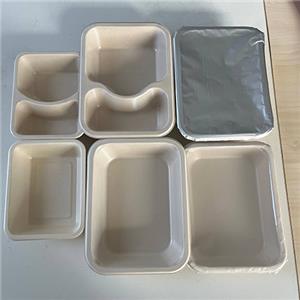
This is where the distinction between "geographic relocation" and "integrated manufacturing" becomes vital. Simply buying from a warehouse in Vietnam that re-packages Chinese components is no longer a viable strategy. Compliance with SB 54 requires a manufacturer that controls the raw material stream and can guarantee the absence of "forever chemicals." This is why PFAS-free Bagasse Containers have become the mandatory standard for the California market, and sourcing them from a verified, vertically integrated source is the only way to ensure both tariff and regulatory safety.
The Cambodia Advantage: Beyond Tariffs and Toward Compliance
Cambodia has emerged as the strategic linchpin for savvy distributors who realize that Vietnam and Thailand are "overcrowded" and under fire. Unlike its neighbors, Cambodia still benefits from a more stable trade relationship with the U.S., providing a safer harbor for long-term investments. More importantly, it offers a "clean slate" for manufacturing infrastructure.
At Mountain-Bio, our Cambodia-based production facility was designed with 2026 regulations in mind. We don't just provide a non-China origin; we provide a compliance-ready ecosystem.
Zero Anti-Dumping Risks: By utilizing locally sourced and regionally integrated raw materials, we ensure that our products are not subject to the AD/CVD "reflex" currently hitting other Southeast Asian hubs. Our facility is a genuine manufacturing site, not a transshipment point.
Data Transparency: We provide the precise material weight and compostability certification data required for SB 54 PRO reporting, relieving the administrative burden from our distributors.
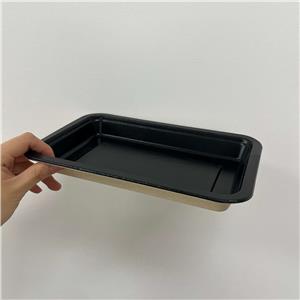
Material Excellence: Our Eco-friendly Food Trays are manufactured using high-heat, high-pressure molding processes that eliminate the need for PFAS-based oil repellents. This is crucial because California’s AB 1200 already bans the sale of food packaging containing intentionally added PFAS.
The "SME Dilemma": Why Small Distributors are Specifically Targeted
Large corporations like Walmart or McDonald's have entire departments dedicated to EPR (Extended Producer Responsibility) compliance. They have been preparing for June 1st for years, joining the CAA early and negotiating data sharing agreements with their global suppliers. Small distributors, however, often operate on thin margins with lean teams, focusing on sales and logistics rather than regulatory deep-dives.
There is a common misconception among SMEs that "my supplier said it's compostable, so I'm safe." This is a dangerous fallacy. SB 54 requires specific certifications and participation in the circular economy funding model. If your supplier in a "China+1" location is merely a middleman, they cannot provide the chain-of-custody documentation needed to satisfy CalRecycle during an inspection.
Furthermore, the shift toward Eco-friendly Food Trays must be absolute. California’s enforcement agencies are increasingly using high-tech screening tools to detect PFAS in imported containers. A distributor who buys "cheap" bagasse from an unverified source might find their entire inventory seized or rendered unsellable if it fails a random screening. For an SME, such a loss of inventory—combined with the SB 54 fines—is a death sentence.
The Role of Sugarcane Bagasse in a Circular Economy
To truly understand why sugarcane bagasse is the answer to SB 54, one must look at its lifecycle. Unlike bioplastics (PLA) which often require specific industrial composting conditions that don't exist in all municipalities, bagasse is a natural byproduct of the sugar industry. It is inherently fibrous and compostable in a wider variety of environments.
However, not all bagasse is created equal. The traditional method of making bagasse grease-resistant involved the application of PFAS coatings. Under the new California regime, this is strictly prohibited. The "trap" for distributors is that many older factories in Southeast Asia still use these legacy chemicals because they are cheaper and easier to apply. Transitioning to a PFAS-free Bagasse Containers line requires significant investment in new machinery and chemical engineering—investments that Mountain-Bio has already made in our Cambodian plant.
By sourcing bagasse, distributors are participating in a "closed-loop" system. The waste from the sugar industry becomes a functional container, which then returns to the soil as compost. This narrative is not just good for the planet; it is the specific "circularity" that SB 54 is designed to fund. By choosing the right material, distributors can lower their "eco-fees" paid to the PRO, as the law is designed to reward materials that are easier to process.
Strategic Steps for Distributors Before June 1st
If you are a distributor selling food packaging into the California market, your window for action is closing. Here is the professional roadmap to avoid the June 1st trap:
1. Audit Your "Producer" Status
Determine if you are the "Producer" under SB 54. Do not assume your manufacturer is handling it unless you have a written agreement and their CAA registration number. If you import products under your own brand, the responsibility—and the liability—is 100% yours.
2. Verify PFAS-Free Claims with "Total Fluorine" Testing
Do not take "PFAS-free" at face value. Demand third-party lab reports (such as Total Fluorine testing) that prove your PFAS-free Bagasse Containers meet the strict California standards. If the test shows more than 100 parts per million of total fluorine, it is considered to have "intentionally added PFAS" under California law.
3. Evaluate Your Source Country for "Trade Heat"
Is your current "China+1" source currently under a federal AD/CVD investigation? Check the latest rulings from the International Trade Commission (ITC). If your source country is being investigated for "dumping," the June 1st SB 54 registration will be the least of your worries when a 100% duty is applied at the port. Transitioning to a Cambodia-based production facility offers a long-term hedge against these trade wars.
4. Join the Producer Responsibility Organization (PRO)
Register with the Circular Action Alliance before the June 1st deadline. Even if your data is not perfect, being in the system demonstrates a "good faith effort" to comply, which can be a vital defense if CalRecycle comes knocking with an audit notice.
Conclusion: The New Standard of B2B Partnership
The era of "simple sourcing" and "lowest price at any cost" is over. The June 1st deadline is a signal that the California market—and soon the rest of the U.S. as Oregon, Washington, and New York follow suit—will require a level of transparency and compliance that traditional manufacturing models cannot provide.
By moving beyond the superficial China+1 strategy and embracing a partnership with an integrated, Cambodia-based manufacturer, small distributors can turn a regulatory threat into a significant competitive advantage. While your competitors are scrambling to pay fines or find new suppliers after an anti-dumping ruling, you can offer your clients guaranteed, compliant, and high-performance Eco-friendly Food Trays.
The trap is set for June 1st. Will your supply chain be the bait, or will it be the engine of your future growth? The choice must be made now.
FAQ: California SB 54 and Cambodia Sourcing
Q: Who is actually responsible for paying the SB 54 fees?
A: The "Producer" is responsible. This is usually the brand owner if they are in the U.S. However, if the brand owner is foreign, the distributor or importer of record becomes the responsible party. These fees go toward building California's recycling and composting infrastructure.
Q: Can I wait until 2027 to worry about compostability requirements?
A: No. While the 100% compostability/recyclability mandate is for 2032, the registration and reporting requirements begin now. Furthermore, AB 1200 already mandates PFAS-free materials for food contact. If you are selling non-compliant goods today, you are already at risk.
Q: Why is Cambodia preferred over Vietnam for sugarcane bagasse products right now?
A: Cambodia currently faces lower risks of anti-dumping duties compared to Vietnam, which has seen a massive influx of Chinese "transshipment" activity. Additionally, specialized facilities in Cambodia, like Mountain-Bio’s, are built specifically to meet Western environmental and labor standards from the ground up, providing better ESG (Environmental, Social, and Governance) data.
Q: Are Eco-friendly Food Trays from Cambodia more expensive?
A: When factoring in the "total cost of ownership"—including the avoidance of 25% tariffs, the hedge against potential 100%+ anti-dumping duties, and the elimination of non-compliance fines—Cambodian-sourced bagasse is often the most cost-effective and risk-adjusted solution for the U.S. market.
Q: How do I prove my containers are PFAS-free for California regulators?
A: You must provide a certificate of analysis (COA) from an accredited lab showing that the product contains no intentionally added PFAS and meets the "less than 100ppm total fluorine" threshold. Mountain-Bio provides this documentation for all PFAS-free Bagasse Containers.
Q: What happens if I miss the June 1st registration deadline?
A: You risk being prohibited from selling your products in California and may face fines of up to $50,000 per day. CalRecycle has indicated they will prioritize enforcement on high-volume material categories, including food service packaging, meaning small distributors cannot simply "hide in the crowd."
Q: Does SB 54 apply if my business is not based in California?
A: Yes. If you sell or distribute products into California, regardless of where your corporate office is located, you must comply with SB 54. This includes e-commerce sales and sales to California-based franchisees.