Beyond the Buzzwords: Navigating the 'Greenwashing' Trap with Certified Bagasse Tableware in 2026
Beyond the Buzzwords: Navigating the 'Greenwashing' Trap with Certified Bagasse Tableware in 2026
In the rapid evolution of the sustainable packaging industry, 2026 marks a definitive turning point. For years, the term "eco-friendly" was used loosely, often as a marketing veneer rather than a verified product attribute. However, as we enter a year defined by stringent legislative enforcement and heightened corporate accountability, the era of vague claims is over. For global distributors, food service chains, and institutional buyers, the focus has shifted from simple aesthetics to hard-core compliance. Navigating the market for bagasse plates now requires more than just finding a low-cost vendor; it requires finding a partner who understands the legal minefield of greenwashing and provides the third-party certifications necessary to survive an audit.
The rise of bagasse plate manufacturers has been meteoric, driven by the global push to replace single-use plastics. Yet, not all bagasse plate manufacturers operate with the same level of integrity. As regulators in North America and Europe tighten the screws on "forever chemicals" and deceptive labeling, the risks of sourcing unverified sugarcane bagasse plates wholesale have never been higher. For distributors, the search for sugarcane bagasse plates wholesale must prioritize transparency. This article explores the regulatory landscape of 2026, the essential nature of BPI and TUV certifications, and why a transparent Cambodia-based production facility is the ultimate safeguard for your brand’s reputation.
The 2026 Regulatory Landscape: Why 'Eco-Friendly' is Now a Legal Term
In 2026, the legislative environment for eco-friendly food packaging has transitioned from guidance to enforcement. Two major pieces of legislation now dictate the standards for anyone purchasing bagasse plates wholesale.
SB 54 and the End of Plastic Waste in California
California’s Plastic Pollution Prevention and Packaging Producer Responsibility Act (SB 54) has reached a critical implementation phase. By 2026, the state requires that all packaging be recyclable or compostable. More importantly, it places the burden of proof on the producer and the distributor. If you are marketing bagasse plates as compostable in the California market without rigorous, up-to-date certification, you are facing substantial fines. This law has set a precedent that other US states are rapidly following, making BPI certification a non-negotiable entry requirement for the American market.
EU Green Claims Directive and the SUP Directive
Across the Atlantic, the European Union has implemented the Green Claims Directive. This legislation explicitly targets greenwashing by requiring companies to substantiate their environmental claims using a standard methodology. For bagasse plate manufacturers, this means that terms like "biodegradable" or "sustainable" must be backed by scientific evidence and verified by independent bodies. Simultaneously, the Single-Use Plastics (SUP) Directive continues to expand its list of restricted materials, pushing procurement teams toward high-quality eco-friendly food packaging that can withstand the scrutiny of European customs and consumer watchdogs.
The 'Greenwashing' Trap: The High Cost of Unverified Claims
Greenwashing in 2026 is no longer just a PR risk; it is a financial and legal liability. Many buyers looking for sugarcane bagasse plates wholesale are often lured by prices that seem too good to be true. In many cases, these products are manufactured in facilities that lack proper environmental controls or use hidden additives to mimic the performance of certified eco-friendly food packaging.
When a distributor sells uncertified bagasse plates to a major restaurant chain, they are passing on a ticking time bomb. If those bagasse plates fail to break down in an industrial composting facility, or if they are found to contain prohibited chemicals, the resulting recall, legal fees, and brand damage can be catastrophic. The "Greenwashing Trap" is essentially the gap between what a product claims to be and what its certifications can prove. To bridge this gap, buyers must prioritize sourcing from bagasse plate manufacturers who offer full transparency into their chemical composition and manufacturing processes for all their eco-friendly food packaging lines.
The Gold Standards: BPI and TUV OK Compost
In the world of bagasse plates wholesale, two certifications stand above the rest: BPI (Biodegradable Products Institute) and TUV AUSTRIA (specifically the OK compost INDUSTRIAL and HOME marks). These are not just stickers; they are the result of rigorous laboratory testing for all high-quality bagasse plates wholesale products.
BPI Certification: The North American Benchmark
BPI is the leading authority on compostability in North America. For a product to earn the BPI logo, it must meet the ASTM D6400 or D6868 standards. This ensures that the bagasse plates will disintegrate and biodegrade at a rate consistent with known compostable materials, leaving no toxic residues. In 2026, BPI certification also implies that the bagasse plates have undergone strict testing for total fluorine to ensure it is PFAS-free.
TUV OK Compost: The European Authority
TUV certification is globally recognized, particularly in Europe. The "OK compost INDUSTRIAL" mark guarantees that the eco-friendly food packaging is compostable in an industrial composting plant. For businesses targeting the consumer-composting market, the "OK compost HOME" certification is even more prestigious for eco-friendly food packaging, as it proves the material will break down in the lower temperatures of a backyard compost pile. Sourcing bagasse plates with both BPI and TUV certifications allows a wholesaler to move product seamlessly between global markets without re-testing. Sourcing bagasse plates wholesale with these marks is the only way to ensure international compliance.
The Non-Negotiable of 2026: PFAS-Free Certification
Perhaps the most significant shift in the last few years has been the global crackdown on Per- and Polyfluoroalkyl Substances (PFAS). Historically, many bagasse plate manufacturers used PFAS to provide oil and water resistance. However, as these "forever chemicals" have been linked to severe health issues and environmental persistence, they have been banned in food contact materials across many jurisdictions.
In 2026, simply being "compostable" is not enough. You must ensure you are sourcing PFAS-free Bagasse Containers. Reputable bagasse plates wholesale providers now utilize mechanical pressing techniques and natural, plant-based coatings to achieve performance without the use of toxic chemicals. When auditing a supplier, asking for a "total fluorine" test report is the only way to ensure your sugarcane bagasse plates wholesale inventory is truly compliant with modern safety standards.
Why Supply Chain Transparency Starts with the Source
The geographic origin of your eco-friendly food packaging matters more than ever. Many traditional manufacturing hubs have come under fire for opaque labor practices and lack of environmental oversight. This is why a Cambodia-based production facility has become a preferred choice for ethically-minded B2B buyers.
The Cambodian Advantage
Cambodia offers a unique combination of strategic location, competitive labor, and a burgeoning commitment to international manufacturing standards. By sourcing from a specialized facility in Cambodia, companies can often achieve a higher level of audit-readiness. These facilities are often newer, designed with modern sustainability goals in mind, and are more open to third-party inspections compared to older, more entrenched manufacturing regions. For a brand's ESG (Environmental, Social, and Governance) reporting, being able to trace bagasse plates back to a specific, transparent facility in Cambodia is a powerful asset.
Strategic Sourcing: How to Choose Bagasse Plate Manufacturers
Choosing the right partner for sugarcane bagasse plates wholesale requires a checklist that goes beyond the price per unit. Here is how to evaluate bagasse plate manufacturers in 2026:
1. Certification Validity: Do not just accept a PDF of a certificate. Verify the certificate number on the BPI or TUV public registries.
2. Chemical Transparency: Request specific test results for PFAS and heavy metals.
3. Production Capacity: Ensure the manufacturer can scale. The demand for bagasse plates is surging, and you need a partner who can keep up with wholesale volumes.
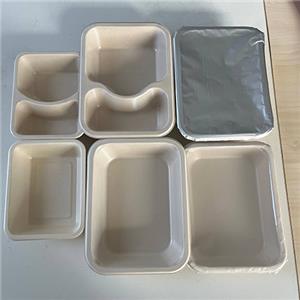
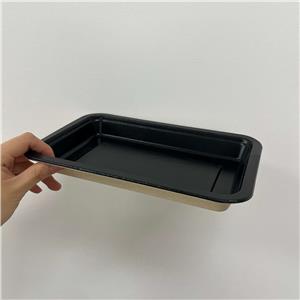
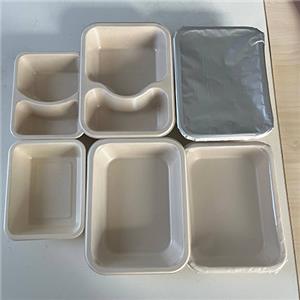
4. Product Range: Look for a supplier that offers a variety of solutions, from standard plates to Eco-friendly Food Trays, to consolidate your shipping and logistics.
5. Audit Accessibility: Can you or a third party visit the factory? A transparent facility is a reliable facility.
The Business Case for Real Sustainability
Investing in high-quality, certified bagasse plates wholesale is not just about avoiding fines; it is about market leadership. Consumers in 2026 are highly educated. They look for the BPI logo. They read about PFAS. When a restaurant or supermarket can confidently state that their eco-friendly food packaging is third-party verified, it builds a level of trust that drives customer loyalty.
Furthermore, certified products have a smoother journey through the global supply chain. Customs officials in the US and EU are increasingly trained to look for proper labeling and certification on imported bagasse plates. Using unverified sources often leads to shipment delays, seizures, and additional testing costs that far outweigh any initial savings on the purchase price.
Spotlight: Bagasse Plates and Their Environmental Impact
Bagasse plates are made from the fibrous residue left over after sugarcane stalks are crushed to extract their juice. This material is an agricultural byproduct that would otherwise be burned, contributing to air pollution. By upcycling this waste into eco-friendly food packaging, we reduce the need for virgin wood pulp (preserving forests) and eliminate the need for petroleum-based plastics.
The performance of modern bagasse plates is remarkable. They are microwave-safe, freezer-safe, and capable of holding hot, oily foods without leaking—provided they are manufactured by high-end bagasse plate manufacturers who prioritize structural integrity. As the market for bagasse plates wholesale grows, the innovation in design and durability continues to improve, making them the gold standard for sustainable disposables.
FAQ: Navigating the 2026 Bagasse Market
1. What is the difference between "biodegradable" and "compostable" bagasse plates?
In 2026 legal terms, "biodegradable" is often considered too vague. "Compostable" refers to a product that has been tested to break down in a specific timeframe under specific conditions (usually industrial composting). Always look for "compostable" with a BPI or TUV certification.
2. Are all bagasse plates PFAS-free?
No. While many bagasse plate manufacturers have transitioned to PFAS-free versions, some lower-cost wholesale options still use these chemicals for grease resistance. Always ask for a PFAS-free certification or a total fluorine test report.
3. How do I verify a manufacturer's BPI certification?
You can visit the BPI website and use their "Find Certified Products" tool. Search for the company name or the specific product type to ensure their certification is active and covers the items you are purchasing.
4. Why is Cambodia becoming a hub for bagasse plate production?
Cambodia offers a favorable trade environment, a growing infrastructure, and a focus on meeting international compliance standards. A Cambodia-based production facility often provides the transparency and audit-readiness that modern B2B buyers require.
5. Can bagasse plates be used for hot liquids and oily foods?
Yes, high-quality bagasse plates are designed to handle temperatures up to 200°F and are resistant to oil. However, the degree of resistance depends on the manufacturing process, which is why sourcing from reputable bagasse plate manufacturers is essential.
6. What happens if I sell uncertified "eco-friendly" packaging in 2026?
Under regulations like SB 54 and the EU Green Claims Directive, you could face significant fines, mandatory product recalls, and legal action for deceptive marketing. The financial risk significantly outweighs the cost of sourcing certified products.
Conclusion: Securing Your Future in the Sustainable Market
As we look toward the remainder of 2026 and beyond, the message for the B2B sector is clear: compliance is the new currency. The "Greenwashing Trap" is easily avoided by those who do their due diligence with their bagasse plate manufacturers. By focusing on BPI and TUV certifications, ensuring a PFAS-free supply chain, and partnering with transparent bagasse plate manufacturers like a Cambodia-based production facility, you can protect your business from legal risks and position your brand as a true leader in sustainability.
Whether you are looking for bagasse plates, specialized Eco-friendly Food Trays, or high-volume sugarcane bagasse plates wholesale solutions, remember that the most important feature of any product is the proof behind its claims. In 2026, real sustainability is not a buzzword—it’s a certified reality. Secure your inventory of sugarcane bagasse plates wholesale and PFAS-free Bagasse Containers today and lead the transition to a truly circular economy with the world's most trusted bagasse plate manufacturers.