How Does Modified Atmosphere Packaging Work? A Practical Guide for Food Packaging
How Does Modified Atmosphere Packaging Work?
Modified Atmosphere Packaging (MAP) works by replacing the air inside a package with a carefully controlled mixture of gases. This process slows down spoilage, extends shelf life, and helps maintain food quality during storage and transportation.
Unlike traditional packaging, MAP is designed to actively control the internal environment of the package.
What Gases Are Used in MAP?
MAP typically uses three main gases:
Oxygen (O₂)
Helps maintain the color of fresh meat but can accelerate oxidation.Carbon Dioxide (CO₂)
Slows down bacterial growth and is critical for preservation.Nitrogen (N₂)
An inert gas used to balance the mixture and prevent package collapse.
The ratio of these gases varies depending on the food product.
Step-by-Step: How MAP Works
Food is placed into a tray or container
Air inside the package is removed
A specific gas mixture is injected
The package is sealed with a high-barrier film
This sealed environment helps maintain freshness for a longer period.
Why Packaging Materials Matter in MAP
The success of MAP depends heavily on the packaging material. Key requirements include:
Gas barrier performance
Leak-proof sealing
Resistance to temperature changes
This is why traditional plastic trays have been widely used.
Can Sustainable Materials Support MAP?
Yes—modern innovations now allow fiber-based packaging to work with MAP systems.
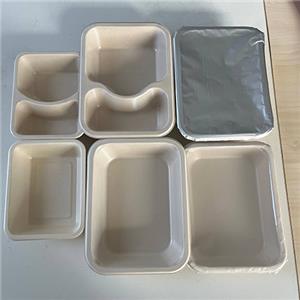
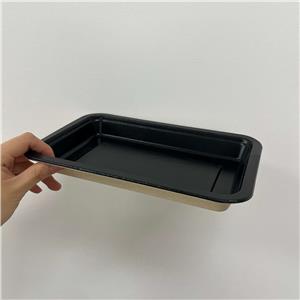
Our bagasse coated trays combine natural sugarcane fiber with functional coatings such as:
PLA (compostable option)
EVOH (high oxygen barrier)
PET or PP (enhanced sealing strength)
These solutions provide:
Reliable sealing performance
Gas retention capability
Compatibility with MAP machinery
Applications of MAP Packaging
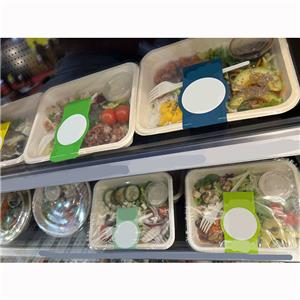
Ready meals
Fresh meat and seafood
Fresh produce
Bakery products
Internal Link
👉 Learn more about MAP fundamentals here:
What is Modified Atmosphere Packaging
H2: FAQ
Q: Does MAP completely remove oxygen?
A: Not always. Some foods require a controlled level of oxygen.
Q: Is MAP better than vacuum packaging?
A: MAP preserves texture and appearance better for many products.