Supply Chain Resilience in 2026: Why Cambodia is Outpacing Vietnam and Malaysia in the Race for ESG-Compliant Bagasse Tableware
Supply Chain Resilience in 2026: Why Cambodia is Outpacing Vietnam and Malaysia in the Race for ESG-Compliant Bagasse Tableware
In the rapidly evolving landscape of 2026, the global procurement sector has undergone a fundamental shift. No longer is "lowest cost" the sole metric of success for procurement officers at major retail chains and food service conglomerates. Instead, the focus has pivoted sharply toward supply chain resilience and uncompromising Environmental, Social, and Governance (ESG) compliance. As the world moves further away from traditional plastics, bagasse plates and related eco-friendly food packaging have become the gold standard for the industry.
However, the geographic center of gravity for manufacturing these essential items is shifting. While Vietnam and Malaysia have long been the traditional heavyweights in Southeast Asian manufacturing, Cambodia has emerged in 2026 as the clear frontrunner for high-volume production of sustainable tableware. This article explores the economic, regulatory, and logistical reasons why savvy bagasse plate manufacturers are prioritizing Cambodia and why global buyers are flocking to a Cambodia-based production facility for their sugarcane bagasse plates wholesale needs.
The 2026 ESG Regulatory Landscape: A New Reality for Global Sourcing
The year 2026 marks a watershed moment for environmental regulation. The European Union’s Corporate Sustainability Reporting Directive (CSRD) and the U.S. Securities and Exchange Commission’s (SEC) climate disclosure rules have moved from theoretical frameworks to mandatory enforcement. For any company involved in bagasse plates wholesale, this means every step of the supply chain must be documented, from the sugarcane field to the final shipping container.
In this context, eco-friendly food packaging is no longer just a marketing claim; it is a legal requirement. These regulations demand rigorous audits of water usage, carbon emissions, and labor practices. Cambodia has anticipated this shift. Unlike some of its neighbors, which have struggled to retrofit aging infrastructure, Cambodia’s newest factories were built with these 2026 standards in mind. When sourcing sugarcane bagasse plates wholesale, buyers are finding that Cambodian facilities offer a level of transparency and compliance data that older factories in Vietnam and Malaysia simply cannot match.
Cambodia vs. Vietnam: Beyond the Tariff War
For over a decade, Vietnam was the default "China Plus One" destination. However, by 2026, the Vietnamese manufacturing sector has become a victim of its own success. Rising labor costs, land scarcity in key industrial zones near Ho Chi Minh City, and increasing trade friction have complicated the landscape for bagasse plate manufacturers.
The Tariff Advantage (EBA Status)
The most significant differentiator for Cambodia in 2026 is its trade status. Under the "Everything But Arms" (EBA) agreement, Cambodia maintains duty-free access to the European market for many products, including bagasse plates. While Vietnam has the EU-Vietnam Free Trade Agreement (EVFTA), it comes with complex "rules of origin" and a sliding scale of tariffs that can still impact the bottom line for bagasse plates wholesale buyers. For US-based importers, Cambodia remains a strategic alternative as Vietnam increasingly faces anti-dumping investigations and Section 301 scrutiny.
Modernization and Specialized Focus
While Vietnam’s economy is diversified into electronics and textiles, Cambodia has made a strategic bet on the "Circular Economy." New investments in the country have specifically targeted the high-end eco-friendly food packaging sector. This specialization means that a Cambodia-based production facility is often more technologically advanced than a generalist pulp factory in Vietnam. The focus is exclusively on producing high-quality, PFAS-free Bagasse Containers and bagasse plates that meet the stringent safety standards of 2026.
Cambodia vs. Malaysia: Solving the Labor and Resource Puzzle
Malaysia has historically been a strong player in the palm oil and plastic alternatives space. However, in 2026, the Malaysian manufacturing sector is grappling with chronic labor shortages and a pivot toward high-tech electronics, which has left the eco-friendly food packaging industry struggling for attention and investment.
Labor Stability
Cambodia’s young and increasingly skilled workforce is a major asset for bagasse plate manufacturers. The government has implemented vocational training programs specifically for the sustainable materials sector. In contrast, Malaysia’s reliance on migrant labor has faced increased scrutiny under modern ESG frameworks, creating "social" risk for Western brands. By sourcing bagasse plates from Cambodia, companies can ensure their social audits remain spotless, a critical component of the 2026 ESG mandate.
Raw Material Proximity
Bagasse, the fibrous residue left after sugarcane crushing, is the lifeblood of this industry. Cambodia’s expanding agricultural sector provides a consistent, localized supply of raw materials. This reduces the carbon footprint associated with transporting raw pulp across borders—a common issue in Malaysia’s fragmented supply chain. For those looking for sugarcane bagasse plates wholesale, the localized "field-to-factory" model in Cambodia ensures both price stability and a lower Scope 3 emission profile.
The Technical Edge: PFAS-Free and High-Performance Tableware
One of the biggest challenges facing bagasse plate manufacturers in 2026 is the global ban on "forever chemicals" or PFAS (per- and polyfluoroalkyl substances). Many older factories in the region still struggle to achieve oil and water resistance without these chemicals.
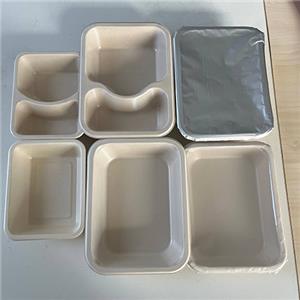
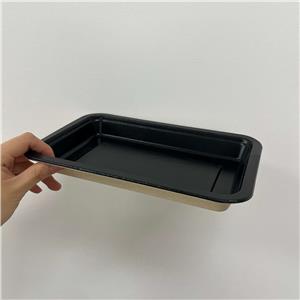
Cambodia’s modernized production lines have been designed from the ground up to utilize advanced plant-based coatings. This ensures that PFAS-free Bagasse Containers are not just a premium option but the standard. Whether you are ordering Eco-friendly Food Trays or standard bagasse plates, the Cambodian output is characterized by:
Superior Thermal Stability: Safe for use in microwaves and freezers.
Structural Integrity: Enhanced fiber interlocking technology prevents the "soggy plate" syndrome common in lower-quality bagasse plates wholesale products.
Certified Compostability: Meeting both ASTM D6400 and EN 13432 standards, ensuring they break down in industrial composting facilities within 90 days.
Conclusion: The Cambodia Advantage in 2026
The shift in the global supply chain for bagasse plates is a testament to how quickly the manufacturing landscape can change when ESG and trade policy intersect. Cambodia has successfully positioned itself as the high-tech, high-compliance alternative to the saturated markets of Vietnam and Malaysia.
For wholesalers and distributors, the message is simple: resilience is built on choosing the right partners in the right locations. Investing in bagasse plates wholesale from Cambodia isn't just about getting a better price; it's about ensuring your brand is protected by the highest standards of modern manufacturing. From Eco-friendly Food Trays to heavy-duty bagasse plates, the future of sustainable dining is being manufactured in Cambodia.