Colombia's 2026 Packaging Transformation: Mastering Law 2232 and the Rise of Fiber-Based Solutions
Colombia is positioning itself as a Latin American leader in packaging sustainability. As the continent's third-largest economy and a member of both the Andean Community (CAN) and MERCOSUR (associate), the country's regulatory choices influence packaging strategy across the region. In 2026, three converging forces are reshaping material decisions: the phased implementation of Law 2232 of 2022 banning single-use plastics, a new national tax on single-use plastic imports, and the modernisation of INVIMA food contact material regulations alongside Resolution 1407 EPR obligations.
For Colombian B2B operators—from coffee exporters in the Eje Cafetero to luxury hotels in Cartagena's walled city—the era of conventional plastic packaging is closing. At Hebei Mountain Environmental Protection Technology, we provide the verified PFAS-FREE and fiber-based with functional lamination solutions required to lead Colombia's packaging transformation.
Law 2232: Why Colombia's Phased Plastic Ban is Reshaping the 2026-2030 Packaging Landscape
Law 2232 of 2022 establishes one of Latin America's most structured plastic phase-out roadmaps. The law implements a phased approach: July 7, 2024 saw the immediate prohibition of eight single-use plastic items including bags, straws, and stirrers. By 2030, the ban expands to 14 categories, including food containers, packaging, and bags for fruits and vegetables—directly targeting the food service and retail packaging sectors that drive Colombia's economy.
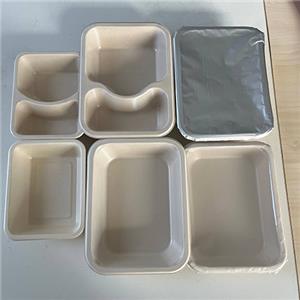
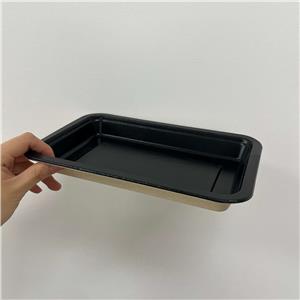
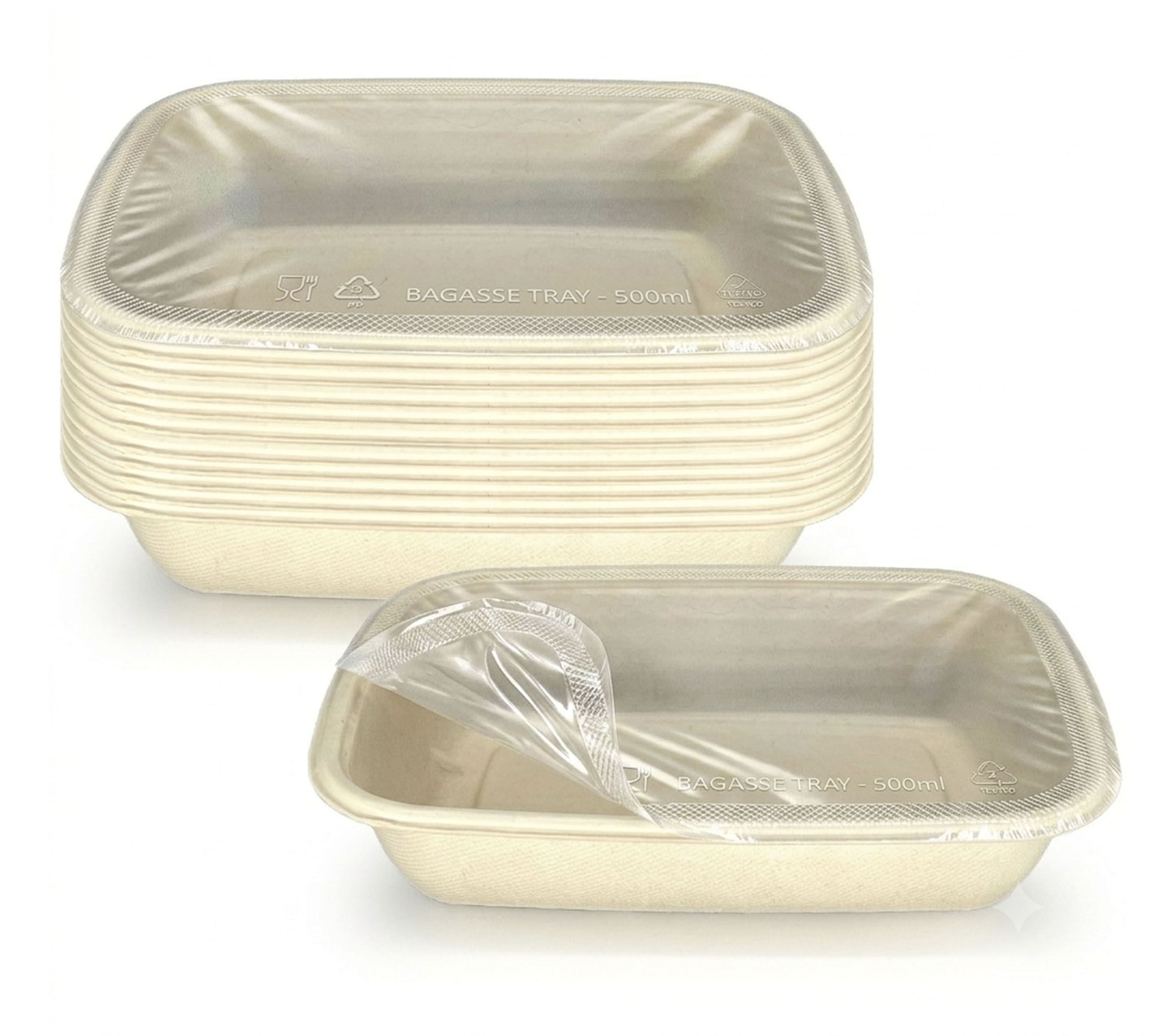
For Colombian importers and brand owners, the 2030 deadline is not a distant horizon—it is a regulatory trajectory that demands action in 2026. Hebei Mountain's fiber-based bagasse trays with functional lamination provide a direct, law-aligned solution today. Our products consist of a natural plant fiber base with an ultra-thin functional coating. By transitioning to fiber now, Colombian brands position themselves ahead of the 2030 compliance curve while building supply chain resilience against the intermediate milestones of the phased ban.
The March 2026 Plastic Import Tax: How Fiscal Policy is Driving the Switch to Fiber
Colombia has deployed fiscal policy as a direct driver of packaging material choice. Effective March 2026, the government introduced a national tax on single-use plastic imports, requiring importers to report and pay duties on the plastic content of their packaging. This levy immediately increases the landed cost of conventional plastic containers entering the Colombian market.
Hebei Mountain's fiber-based hybrid solutions are classified outside the scope of this import tax. Because our packaging is built on natural plant fiber rather than petroleum-based plastic, it does not fall under the March 2026 levy framework. For Colombian wholesalers and food service chains, this translates into immediate and compounding cost savings on every shipment.
INVIMA and Resolution 1407: Navigating Colombia's Food Safety and EPR Framework
Colombia's regulatory infrastructure for food packaging operates on two complementary tracks. INVIMA (National Institute for Drug and Food Surveillance) published a new Application Guide on January 1, 2026 for Resolution 683 of 2012, providing updated clarity on food contact material (FCM) approval procedures. Simultaneously, Resolution 1407 of 2018 establishes EPR obligations requiring producers to submit and implement waste management plans for packaging.
Hebei Mountain provides the fully documented compliance support that Colombian importers need: complete material declarations for INVIMA FCM registration, EPR-aligned recovery pathway documentation, and SGS-verified safety reports against REACH, POPs, and BPA-free standards—ensuring smooth regulatory clearance through Colombia's dual-track system.
From Coffee Axis to Caribbean Coast: Fiber-Based Solutions for Colombia's Food and Tourism Economy
Colombia's world-famous coffee culture, vibrant street food scene, and Caribbean tourism industry create a unique demand profile. Hebei Mountain's fiber-based trays with functional lamination are engineered for the Colombian environment:

Hot Food Stability: Our trays maintain structural integrity with steaming hot Colombian dishes—from bandeja paisa to arepas—eliminating warping and leakage.
100% Oil and Liquid Barrier: The ultra-thin functional layer provides complete containment of oils, hogao sauces, and aji.
1:1 Mold Replication: We match your existing container dimensions precisely, allowing Colombian central kitchens to switch to fiber without disrupting automated filling lines.
Hebei Mountain's Solution: Fiber-Based with Functional Lamination (PFAS-FREE ND)
We deliver a fully documented compliance strategy for Colombia's multi-layered regulatory framework:
Law 2232 Aligned: Plant-fiber base positions brands ahead of the 2030 single-use plastic phase-out deadline.
Tax Position: Outside the scope of Colombia's March 2026 plastic import tax under the current framework.
INVIMA-Ready: Complete material declarations and FCM registration documentation.
AS 4736 Industrial Compostable Certification: Aligned with Colombia's emerging organic waste infrastructure.
Strategic Supply Chain: Cambodia-Based Manufacturing for the Andean Market
For Colombian importers, supply chain diversification is critical. Hebei Mountain's Cambodia facility ensures a stable, high-volume supply of premium compostable food containers, supported by trans-Pacific logistics to Colombian ports in Buenaventura, Cartagena, and Santa Marta.
Conclusion: Future-Proof Your Colombian Business for 2026 and Beyond
The convergence of Law 2232, the March 2026 import tax, and INVIMA/Resolution 1407 compliance makes the transition to fiber-based packaging the most strategically sound pathway. Brands integrating PFAS-FREE, fiber-based hybrid packaging today will lead Latin America's most dynamic regulatory transformation. Contact Hebei Mountain for SGS-certified samples.
Hebei Mountain Environmental Protection Technology Co., Ltd.
Your Partner for Sustainable Innovation in Colombia and Latin America.