Compostable Ready Meal Packaging: What Distributors Need to Know in a Changing Food Market
Compostable Ready Meal Packaging: What Distributors Need to Know in a Changing Food Market
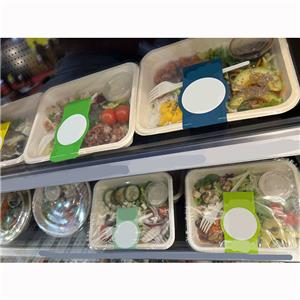
The global demand for ready meals is rising fast. From supermarket shelves to online food delivery platforms, consumers are choosing convenience more than ever before. At the same time, there is growing pressure on brands and retailers to reduce plastic waste.
This is where a key question comes into play:
What are the best compostable ready meal packaging options available today?
For distributors and wholesalers, the answer is not just about sustainability—it’s about performance, scalability, and meeting the expectations of modern food brands.
Why Compostable Packaging Matters in the Ready Meal Industry
Ready meals require packaging that can handle multiple stages:
Cold storage or freezing
Transportation and logistics
Microwave reheating
Direct food contact
Traditional packaging—mainly plastic trays such as PP or CPET—has long dominated this segment due to its durability and heat resistance. However, increasing environmental regulations and consumer awareness are pushing the industry toward alternatives.
Compostable packaging is no longer a niche category. It is becoming a strategic requirement for many food brands.
What Is Compostable Ready Meal Packaging?
Compostable ready meal packaging refers to food containers made from materials that can break down under controlled composting conditions.
Common materials include:
Molded fiber (bagasse, bamboo pulp, paper pulp)
Bioplastics (PLA, PBAT blends)
Coated fiber structures
Among these, sugarcane bagasse molded fiber has emerged as one of the most commercially viable options due to its balance of cost, strength, and availability.
The Challenge: Performance vs. Compostability
While compostability is important, ready meal packaging must also meet strict performance standards.
Distributors should evaluate:
Heat resistance during microwave use
Oil and moisture barrier performance
Structural strength under load
Leak prevention for saucy meals
Shelf-life compatibility
Pure fiber trays may struggle with high-moisture foods, which is why many commercial solutions adopt coated structures.
Why Coated Bagasse Ready Meal Trays Are Gaining Attention
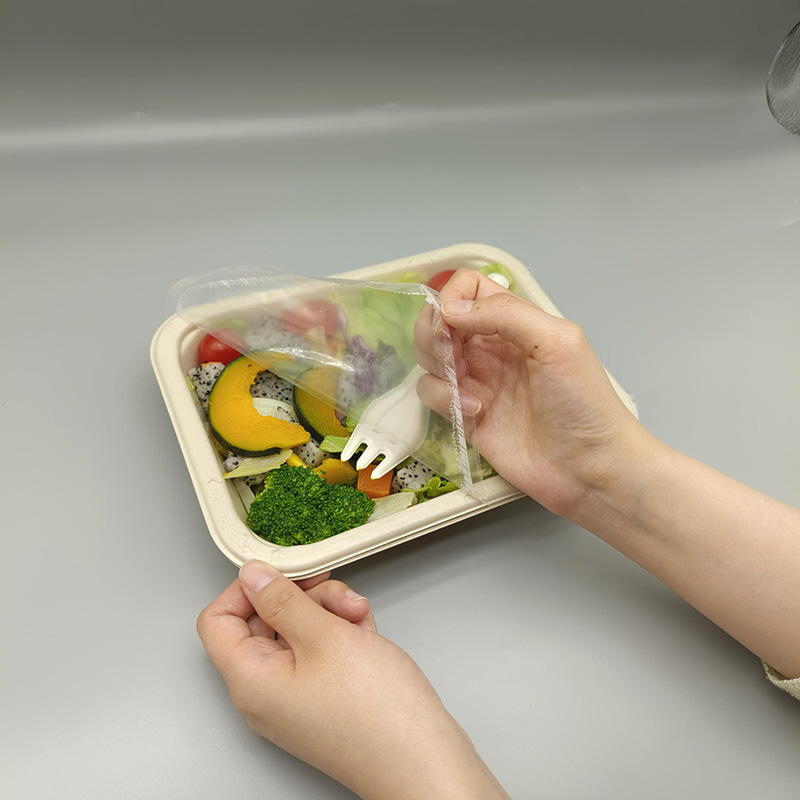
In real-world foodservice applications, most ready meals contain sauces, oils, or liquid components. This requires packaging with enhanced barrier properties.
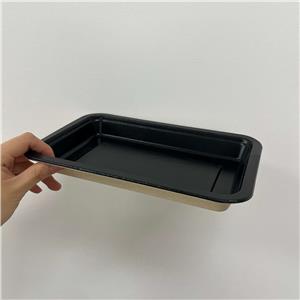
Our factory produces bagasse coated ready meal trays, designed specifically for these challenges.
These trays combine:
A rigid molded sugarcane fiber base
A thin plastic inner lining (such as PE) for sealing and resistance
This hybrid structure delivers:
Reliable microwave performance
Strong resistance to oil and moisture
Reduced plastic usage compared to full plastic trays
Stable stacking and transport durability
For food brands, this means they can move toward more sustainable packaging without sacrificing functionality.
For distributors, it means offering a product that meets both environmental and operational requirements.
Are Coated Bagasse Trays Still Compostable?
This is one of the most common questions in the market.
The answer depends on:
The type and thickness of the coating
Local composting infrastructure
Certification standards in the target country
In many cases, coated bagasse trays are positioned as reduced-plastic solutions rather than fully compostable products. However, they still represent a significant step forward compared to conventional plastic trays.
For distributors, clear communication with customers about performance and disposal is essential.
Supply Chain Matters: Choosing the Right Manufacturer
As demand for compostable packaging grows, supply consistency becomes a critical factor.
At our manufacturing facilities, we specialize in molded fiber food packaging based on sugarcane bagasse, with production systems designed for international distribution.
We support global partners with:
Industrial-scale automated production lines
Stable raw material sourcing
Custom mold development
OEM and private label services
Export-standard packaging and logistics
Our product range includes:
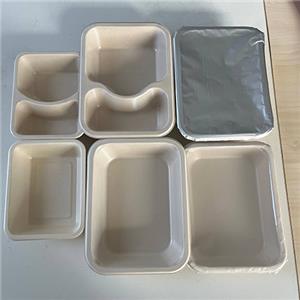
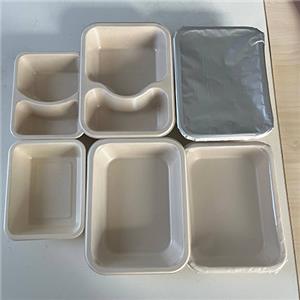
Bagasse plates and trays
Compartment meal trays
Clamshell containers
Coated bagasse ready meal trays for high-performance applications
For distributors, working with a capable manufacturer ensures:
Reliable lead times
Consistent product quality
Scalable order volumes
Competitive cost structures
The Future of Ready Meal Packaging
The shift toward compostable and reduced-plastic packaging is accelerating across global markets.
Retailers and food brands are no longer just asking for “eco-friendly” options—they are demanding solutions that work in real-world conditions.
This is why coated bagasse ready meal trays are becoming a practical bridge between sustainability and performance.
For distributors and wholesalers, this category represents a strong growth opportunity:
Expanding product portfolios
Meeting regulatory trends
Supporting brand sustainability goals
FAQ (Optimized for Google Featured Snippets)
What is compostable ready meal packaging?
It refers to food containers made from materials that can break down under industrial composting conditions.
Are bagasse trays compostable?
Uncoated bagasse trays are typically compostable. Coated versions depend on the material and local standards.
Can compostable trays be microwaved?
Yes, if they are designed for heat resistance and microwave use.
Why are coated bagasse trays used for ready meals?
They provide better protection against oil and moisture while reducing plastic usage.
Final Thoughts
Compostable ready meal packaging is no longer just a sustainability trend—it is becoming a core requirement in modern food distribution.
For distributors, the key is not only choosing eco-friendly materials, but also ensuring those materials perform reliably across the entire supply chain.
Bagasse-based packaging, especially coated ready meal trays, offers a balanced solution that aligns with both environmental goals and commercial realities.
As the ready meal market continues to expand, those who adopt the right packaging strategies will be better positioned for long-term growth.