Georgia Introduces Broad Ban on Single-Use Plastic Foodware
New regulation targets plastic cutlery and foam containers while allowing transition periods for businesses
As of January 1, the government of Georgia has rolled out one of its most comprehensive environmental measures to date, introducing a nationwide ban on a wide range of single-use plastic food-contact products.
Reported by Georgia Today, the policy is designed as a practical step to curb plastic pollution without disrupting everyday life. Officials describe the regulation as a balance between environmental responsibility, public health, and economic stability.
Under the new decree, manufacturers and importers are prohibited from producing, importing, or selling several common disposable items, including plastic forks, knives, and spoons, as well as expanded polystyrene (EPS) food containers, cups, and lids. Production for export markets remains permitted.
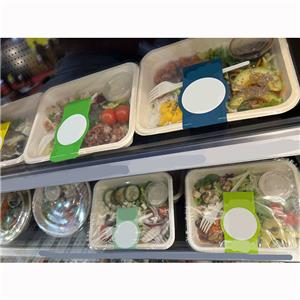
Restaurants, cafés, and mobile food vendors are also affected. Once the ban is fully in force, ready-to-eat meals may no longer be served using these restricted plastic products.
Packaging for groceries remains exempt
To avoid interfering with food safety and grocery access, the regulation includes a key exemption: plastic packaging for pre-packaged food products will continue to be allowed. Authorities say this exception is essential for maintaining hygiene standards and supply chain efficiency.
Recognizing the need for a gradual transition, the government has built flexibility into the rollout. Plastic products already placed on the market before January 1 may continue to be sold for up to three months. Food-service businesses are given six months to use remaining inventory, while certain other plastic food-contact materials may remain available for up to one year.
A growing global policy trend
Georgia’s move aligns with a broader international shift toward reducing single-use plastics. Similar bans and restrictions have been adopted across Europe, parts of Asia, and North America, often with measurable results.
In the United States, for example, a study examining New Jersey’s “Get Past Plastic Act” found a 96% reduction in single-use plastic bags distributed after the law took effect. The policy eliminated more than 90 million bags within eight months and significantly reduced plastic-related greenhouse gas emissions.
Such data points have strengthened the case for plastic reduction policies, highlighting benefits that extend beyond waste management to include cleaner public spaces and lower environmental costs.
Concerns from businesses remain
Despite environmental support, plastic bans often face criticism from small businesses. Restaurant owners and food vendors frequently raise concerns about higher costs for alternative materials and the potential loss of convenience for customers.
In response, governments in other regions are pairing restrictions with support measures. In Malaysia, one state is developing a unified single-use plastics ban scheduled for 2026, alongside incentives for businesses and investment in biodegradable and circular material innovation.
Part of a wider transition
Georgia’s legislation represents one step in a global transition away from disposable plastics. While bans alone are not a complete solution, policymakers increasingly view them as a catalyst for innovation, encouraging the adoption of safer, longer-lasting, and more sustainable alternatives.
As more countries introduce similar regulations, the focus is shifting toward ensuring that businesses and consumers are given sufficient time, resources, and practical options to adapt—making waste reduction a shared, achievable goal rather than a disruptive mandate.
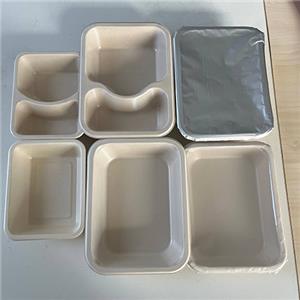
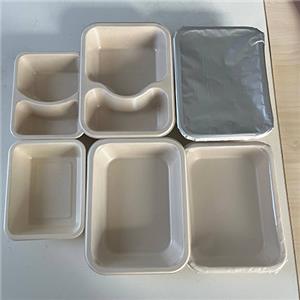
As more countries tighten regulations on single-use plastics, renewable fiber-based tableware is becoming an increasingly important alternative in food-contact packaging. Molded fiber products made from sugarcane bagasse align well with both evolving policy requirements and shifting market demand.
Sugarcane bagasse is an agricultural byproduct of the sugar production process and does not require additional cultivation or the use of food resources. Through molded fiber manufacturing, these natural fibers can be formed into food containers, plates, bowls, cups, and disposable cutlery that meet everyday performance needs while significantly reducing reliance on conventional plastics.
In countries such as Georgia, where bans on single-use plastics have been implemented, the restrictions primarily target high-frequency plastic items used in takeaway dining and ready-to-eat food service, including plastic utensils and expanded polystyrene containers. This has led a growing number of restaurant brands, food manufacturers, and distributors to seek alternative materials that comply with regulations while balancing cost and usability.
Compared with traditional plastics and foam materials, sugarcane bagasse tableware offers several practical advantages. These products can gradually break down under natural conditions, helping to reduce long-term environmental impact. They also provide good heat resistance and structural stability, making them suitable for hot foods, oily dishes, and takeaway applications. In addition, the natural fiber appearance is generally well received by consumers and supports foodservice brands in communicating a more environmentally responsible image.
From a manufacturing perspective, China has developed a mature molded fiber production ecosystem, with established raw material supply chains, advanced forming technologies, and scalable manufacturing capacity. This enables Chinese factories to consistently supply sugarcane bagasse tableware solutions to international markets while meeting food-contact safety standards.
It is increasingly clear that policies like those introduced in Georgia are not isolated cases. As more countries move toward plastic reduction and restriction measures, sugarcane bagasse tableware and other plant-fiber products are expected to transition from niche alternatives to mainstream solutions, playing a growing role in the global foodservice and packaging system.