Mexico's 2026 Packaging Transformation: Mastering the LGEC Circular Economy Law and the Rise of Fiber-Based Solutions
Mexico is at a regulatory crossroads in 2026. After years of fragmented state-level plastic restrictions, the federal government has enacted the country's first comprehensive circular economy framework—the General Law on Circular Economy (LGEC), published January 19, 2026. Yet the LGEC's approach has sparked both progress and controversy: while it establishes Extended Producer Responsibility (EPR) for the first time at the federal level, it deliberately does not ban single-use plastics—a decision that has drawn sharp criticism from environmental advocates but reflects the practical reality of managing 32 states with dramatically different regulatory appetites.
For Mexican B2B operators—from resort hotels in Cancún to restaurant chains in Mexico City—the regulatory environment demands strategic navigation of both federal mandates and aggressive state-level action. At Hebei Mountain Environmental Protection Technology, we provide the verified PFAS-FREE and fiber-based with functional lamination solutions required to thrive in Mexico's complex regulatory landscape.
The LGEC Framework: Why Mexico's First Federal Circular Economy Law is Reshaping Packaging Strategy
Mexico's General Law on Circular Economy (LGEC), published on January 19, 2026, represents the country's first comprehensive federal framework for packaging and waste. The law establishes Extended Producer Responsibility (EPR) obligations, new requirements for product design that incorporate circularity principles, and amendments to the General Law on Prevention and Integral Management of Waste (LGPGIR). Critically, the LGEC regulates heavy metals—including lead—in packaging materials and sets the foundation for a national packaging recycling infrastructure.
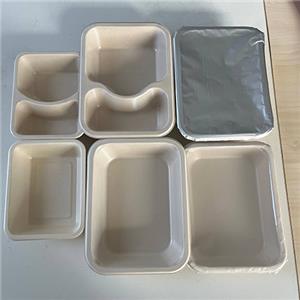
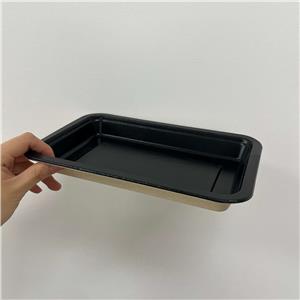
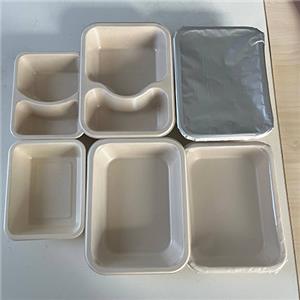
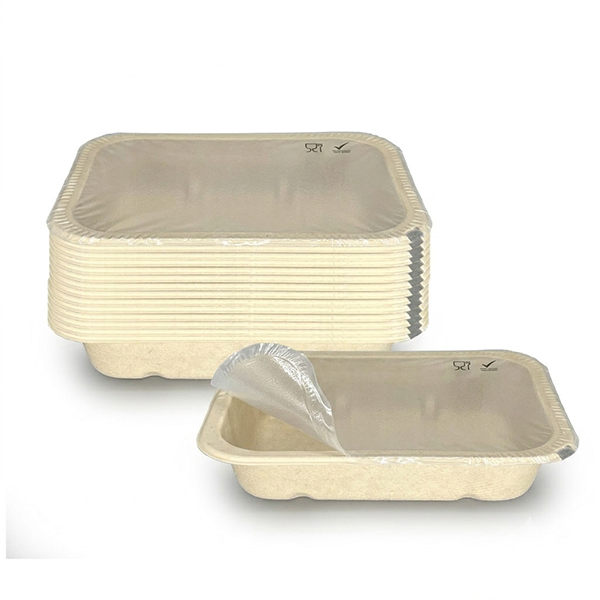
For Mexican importers and brand owners, the LGEC creates a new compliance paradigm. Manufacturers and importers must now demonstrate that their packaging supports circularity objectives and does not contain prohibited heavy metals. Hebei Mountain's fiber-based bagasse trays with functional lamination provide direct alignment with LGEC requirements. Our products consist of a natural plant fiber base with an ultra-thin functional coating. We deliver the complete material declarations, heavy metal absence certifications, and circularity documentation that Mexican brands need to satisfy LGEC EPR obligations, positioning your packaging as a circular economy asset rather than a regulatory liability.
The 32-State Patchwork: Navigating Mexico's State-Level Single-Use Plastic Bans
While the federal LGEC stopped short of banning single-use plastics, Mexico's 32 states have not waited for federal leadership. Mexico City has led the way with comprehensive bans on single-use plastic bags and expanded polystyrene containers, with additional restrictions on microplastics in production processes. Tourist-heavy states like Quintana Roo (Cancún, Tulum, Playa del Carmen), Baja California Sur (Los Cabos), and Nayarit (Punta Mita) have enacted their own aggressive restrictions on single-use plastic food service items.
For national brands that distribute across multiple states, this patchwork of regulations creates a logistical and compliance nightmare. A packaging format that is legal in one state may violate restrictions in another. Hebei Mountain's fiber-based hybrid solutions provide a universal compliance strategy. Because our packaging is built on renewable plant fiber, it satisfies even the strictest state-level single-use plastic bans. By standardizing on fiber-based packaging, Mexican brands can eliminate the risk of state-by-state compliance gaps and focus on growth rather than regulatory navigation.
From Cancún to Los Cabos: Fiber-Based Solutions for Mexico's World-Class Tourism Economy
Mexico's tourism industry is a national treasure—from the Mayan Riviera's all-inclusive resorts to the luxury properties of Los Cabos and the cultural destinations of Oaxaca and San Miguel de Allende. This world-class hospitality sector demands packaging that performs reliably with Mexico's richly flavoured cuisine while meeting the environmental expectations of international travellers from Europe, Canada, and the United States.
Hebei Mountain's fiber-based trays with functional lamination are engineered for Mexico's unique culinary and tourism environment:
Hot Food Stability: Our trays maintain structural integrity with steaming hot Mexican dishes—from mole to pozole—eliminating the warping and leakage common with low-grade alternatives.
100% Oil and Liquid Barrier: The ultra-thin functional layer provides complete containment of oils, salsas, and sauces—essential for Mexico's rich culinary traditions.
1:1 Mold Replication: We match your existing container dimensions precisely, allowing Mexican central kitchens and food processors to switch to fiber without disrupting automated filling lines.

USMCA 2026: How North American Environmental Provisions Impact Mexican Packaging
The 2026 USMCA joint review (known as T-MEC in Mexico) is more than a trade negotiation—it is a vehicle for environmental standard harmonisation across North America. With both the United States (California SB 54) and Canada (federal SUP ban) implementing aggressive packaging regulations, Mexico faces increasing pressure to align its own standards. The USMCA review process is expected to include environmental provisions that will influence Mexico's future packaging policy trajectory.
For Mexican exporters shipping food products to the US and Canadian markets, this creates an imperative to adopt packaging that meets the highest North American standards. Hebei Mountain's AS 4736 Industrial Compostable certified and PFAS-FREE (ND) packaging provides a single solution that satisfies emerging requirements across all three USMCA markets, protecting your export business from regulatory divergence.
Hebei Mountain's Solution: Fiber-Based with Functional Lamination (PFAS-FREE ND)
We deliver a fully documented compliance strategy for Mexico's multi-level regulatory framework:
LGEC-Compliant: Complete heavy metal absence certifications and circularity documentation to satisfy federal EPR obligations.
State-Ban Universal: Our plant-fiber base satisfies the strictest state-level single-use plastic bans across all 32 states.
USMCA-Ready: AS 4736 certification and PFAS-FREE (ND) status support cross-border trade compliance with the US and Canada.
SGS Certified: Full compliance with REACH, POPs, and BPA-free standards for export-grade Mexican food products.
Strategic Supply Chain: Cambodia-Based Manufacturing for the Mexican Market
For Mexican importers accustomed to global supply chains, cost predictability and logistics reliability are critical. Hebei Mountain's production base in Cambodia offers a diversified, resilient supply route.
By sourcing from our Cambodia facility, Mexican partners access a competitive, high-volume supply of premium compostable food containers, supported by efficient maritime logistics via trans-Pacific shipping lanes to major Mexican ports in Manzanillo, Veracruz, and Lázaro Cárdenas.
Conclusion: Future-Proof Your Mexican Business for 2026 and Beyond
The convergence of the LGEC federal framework, the 32-state patchwork of plastic bans, and USMCA environmental harmonisation makes the transition to certified, fiber-based packaging the most strategically sound pathway for Mexican food and hospitality brands. Companies that act today to integrate PFAS-FREE, fiber-based hybrid packaging will be the market leaders in Latin America's second-largest economy and North America's key manufacturing hub.
Contact Hebei Mountain today to request samples of our SGS-certified sugarcane bagasse solutions and discover how our 1:1 mold replication and LGEC-ready documentation can secure your compliance and your brand's future in Mexico.
Hebei Mountain Environmental Protection Technology Co., Ltd.
Your Partner for Sustainable Innovation in Mexico and North America.