From California to the FDA: Navigating the Total PFAS Phase-out in US Food Service Packaging (2025-2026)
Introduction: The Seismic Shift in Food Service Sustainability
The United States food service industry is currently undergoing its most significant regulatory transformation in decades. For nearly half a century, Per- and Polyfluoroalkyl Substances (PFAS)—often referred to as "forever chemicals"—were the invisible workhorses of the packaging world. They provided the essential grease and water resistance that allowed paper plates, bowls, and takeout containers to hold hot, oily foods without leaking. However, as 2025 approaches, the era of chemical grease-proofing is officially coming to an end.
From the federal mandates issued by the U.S. Food and Drug Administration (FDA) to the strict state-level enforcement of California’s Assembly Bill 1200 (AB 1200), the regulatory net is tightening. For B2B distributors, procurement officers, and large-scale food service providers, the challenge is no longer just about "going green"—it is about legal compliance and supply chain survival. As the industry pivots, the focus has shifted from chemical additives to high-performance physical barriers.
Companies like the EcoPackGPro Super Factory are leading this transition, offering FDA Approved PFAS-Free solutions that don't just meet the bare minimum but set new standards for performance, including 220°C heat-resistance and tariff-advantaged import terms.
1. The FDA Mandate: The January 2025 Total Phase-out
In early 2024, the FDA announced a landmark agreement with major chemical manufacturers to complete the voluntary phase-out of PFAS used as grease-proofing agents on paper and paperboard food packaging. While the transition has been ongoing, January 2025 marks the definitive deadline where the "grace period" for manufacturing ends.
What the FDA Ban Specifically Targets
The FDA’s focus is on the long-chain and certain short-chain PFAS chemicals that were historically added directly to pulp or sprayed onto the surface of molded fiber products. These substances are known to migrate into food, particularly when exposed to high heat or acidic contents.
For the US market, this means that any bagasse (sugarcane fiber), bamboo, or paper-based packaging must now prove it contains zero added PFAS. This is not merely a recommendation; it is a prerequisite for entry into the US food supply chain. Distributors who fail to verify their inventory risk significant liability and the potential for massive product recalls as the FDA increases its market surveillance in late 2025.
2. California AB 1200: Setting the Gold Standard
While the FDA provides the federal floor, California has set the ceiling with Assembly Bill 1200 (AB 1200). This law is particularly critical for B2B entities because of California’s massive market share and its role as a regulatory trendsetter.
The 100ppm Total Fluorine Limit
Unlike some earlier regulations that only banned specific types of PFAS, AB 1200 takes a more rigorous approach. It prohibits the sale or distribution of food packaging that contains PFAS at or above a level of 100 parts per million (ppm), measured as total fluorine.
This distinction is vital for quality control. Total fluorine testing is a "proxy" test; since fluorine is the backbone of all PFAS chemicals, measuring the total amount of fluorine is the most reliable way to ensure that no hidden or "legacy" PFAS are present in the packaging. To ensure compliance, US distributors are increasingly demanding AB 1200 Compliant Packaging that comes with verified lab reports showing total fluorine levels well below the 100ppm threshold.
Disclosure Requirements
AB 1200 also mandates that manufacturers disclose the presence of certain chemicals on their websites. For B2B buyers, this means that transparency is no longer an optional "extra"—it is a legal requirement. Partnering with a factory that provides full transparency into its raw material sourcing is the only way to navigate these state-level complexities.
3. The Technical Pivot: From Chemical to Physical Barriers
For years, the industry asked: “How can we make paper act like plastic without using PFAS?” The answer has finally arrived in the form of physical barrier technologies.
The Limitation of "PFAS-Free" Pulp
In the early days of the PFAS-free transition, many factories simply removed the PFAS and replaced it with nothing, or with weak wax alternatives. The result was a disaster for the food service industry: containers that became "soggy" within minutes of holding hot food and oil that soaked through the bottom of the tray.
The Rise of High-Performance Coatings
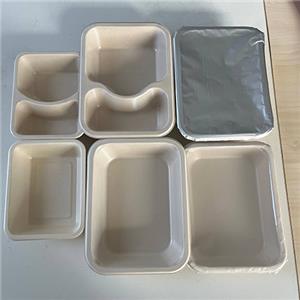
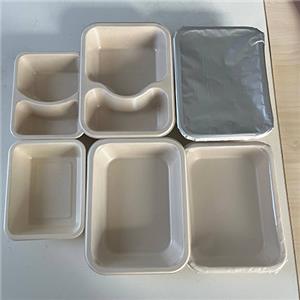
The next generation of FDA Approved PFAS-Free packaging utilizes advanced physical barriers. These include:
Aqueous Coatings: Water-based dispersions that create a tight seal over the natural fibers.
PLA (Polylactic Acid) Linings: A compostable bio-plastic derived from corn starch that provides an absolute barrier to grease and moisture.
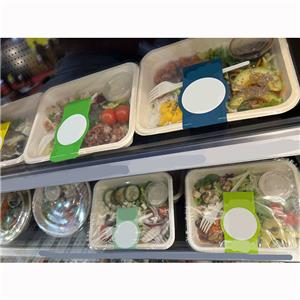
Heat-Sealable Films: Specifically designed for "grab-and-go" meals and industrial food prep.
The core argument for the 2025-2026 market is clear: chemical barriers are dead; physical engineering is the future.
4. Solving the Heat Gap: The 220°C Heat-Sealable Challenge
One of the biggest hurdles in the PFAS phase-out has been heat resistance. Traditional PFAS-free bagasse products often fail when exposed to the high temperatures required for industrial reheating or oven-safe applications.
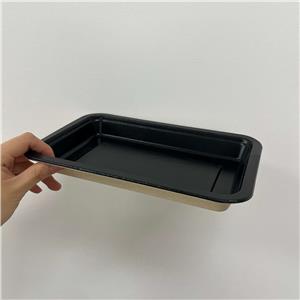
220°C Heat-Sealable Trays
For the airline catering, hospital, and school lunch sectors, packaging must withstand extreme heat. The EcoPackGPro Super Factory has solved this with a specialized line of trays that are:
PFAS-Free: Meeting all FDA and AB 1200 requirements.
Heat-Sealable: Allowing for a plastic or compostable film to be sealed directly to the rim, ensuring leak-proof transport.
High-Temp Rated: Capable of withstanding up to 220°C (428°F) in conventional ovens or microwaves.
This technical achievement is what separates "standard" eco-packaging from "industrial-grade" solutions. For a US distributor, offering a tray that is both compliant and high-performing is the ultimate competitive advantage.
5. The Supply Chain Strategy: The Cambodia Advantage
As US regulations tighten, the "where" of manufacturing has become just as important as the "how." The global supply chain for food packaging is currently fraught with geopolitical risks and shifting trade policies.
Tariff-Advantaged Entry to the US
One of the most significant barriers for US distributors is the high tariff rate on products imported from certain regions, notably China (Section 301 duties). By sourcing from the Cambodia Bagasse Factory, US companies can leverage the Generalized System of Preferences (GSP) and other trade agreements to enjoy significantly reduced tariff entry.
This 25% to 30% cost saving is often the difference between a profitable contract and a loss-leader. In a B2B environment where margins are razor-thin, the Cambodia-based "Super Factory" model provides a stable, low-cost, and high-capacity alternative.
Scale and Reliability
A "Super Factory" isn't just about size; it's about integration. With 200+ high-speed production lines and 150,000 tons of annual capacity, the Cambodia facility ensures that US distributors don't face the "out-of-stock" crises that plagued the industry in 2021-2022.
Conclusion: Lead the Change, Don't Just Follow It
The total phase-out of PFAS is not a temporary trend; it is a permanent restructuring of the US food service market. For distributors, the choice is clear: continue with aging, high-duty, and potentially non-compliant supply chains, or pivot to the future of physical barrier technology.
By choosing AB 1200 Compliant Packaging and leveraging the strategic advantages of a Cambodia Bagasse Factory, B2B leaders can ensure their business remains profitable, compliant, and ready for the 2026 landscape. The "Super Factory" era has arrived, and it is PFAS-free.