US Tariffs on Molded Fiber Tableware in 2026: Rates, Origin and What to Verify
Introduction
If you are sourcing molded fiber tableware for the United States, the duty number you were quoted in 2025 is probably no longer the number that applies today, and the number that applies today may stop applying again before your next container ships. Between August 2025 and July 2026 the legal basis for U.S. tariffs on these products changed three times. Each change moved the rate, and each change left behind a trail of supplier websites, quotation templates and internal spreadsheets that were never updated.
This page sets out the position as it stands on 3 November 2026. It explains which legal instrument produces the duty, how the rate differs by country of origin, why the tariff classification of molded pulp tableware matters as much as the country, and which questions decide whether a particular shipment is inside or outside the current antidumping and countervailing duty orders. Every figure below is tied to a published instrument that you or your customs broker can read directly.
One warning before the detail. The rate for molded fiber tableware has been quoted as 10 percent at three separate moments in the last eighteen months, and each time the 10 percent came from a completely different legal authority. A page that was never updated can therefore look correct by accident. That is more dangerous than a page that is visibly out of date, because nobody goes back to check a number that appears to be right.
1. The Position in One Paragraph
Molded pulp tableware is classified in heading 4823.70 of the Harmonized Tariff Schedule of the United States. The Column 1 General rate for 4823.70.00 is Free, so the tariff schedule itself adds nothing. The duty arises from additional tariffs layered on top of that heading. For goods of Cambodian origin, the applicable additional duty on 3 November 2026 is the 10 percent Section 301 forced-labor duty that took effect on 24 July 2026. For goods of Chinese origin, the same 10 or 12.5 percent Section 301 layer applies on top of antidumping and countervailing duties that reach a China-wide cash deposit rate of 477.90 percent. For goods of Vietnamese origin, both the Section 301 layer and a separate antidumping order apply. Country of origin, not the supplier’s location on a business card, decides which of those three situations you are in.
2. Three Regimes in Eighteen Months
The sequence matters, because each regime inherited something from the one before it and each one left a different number in circulation.
| Period | Legal basis | Rate for Cambodian goods | What it left behind |
|---|---|---|---|
| From 1 August 2025 | Reciprocal tariffs imposed under the International Emergency Economic Powers Act, following the October 2025 Agreement on Reciprocal Trade | 19 percent | Duty tables and landed-cost models built on 19 percent |
| From 20 February 2026 | Supreme Court decision in Learning Resources, Inc. v. Trump, No. 24-1287, holding that IEEPA does not authorize the President to impose tariffs | No IEEPA rate; the reciprocal tariffs were invalidated | A short period of legal uncertainty and refund claims |
| From 24 February 2026 | Section 122 of the Trade Act of 1974, a temporary 10 percent surcharge capped by statute at 150 days | 10 percent | A bridge measure with a known expiry date of 24 July 2026 |
| From 24 July 2026 | Section 301 of the Trade Act of 1974, in the forced-labor investigations concluded by the U.S. Trade Representative on 23 July 2026 | 10 percent | The current position |
Two things follow from that table. First, the 19 percent figure that circulated widely in late 2025 and early 2026 has no legal existence today; it disappeared when the reciprocal tariffs were invalidated. Second, the current 10 percent is not a continuation of the 10 percent that applied before August 2025. It has a different statutory basis, a different scope, and a different set of product exclusions.
3. What the Supreme Court Actually Decided
On 20 February 2026 the Supreme Court decided Learning Resources, Inc. v. Trump by a vote of six to three. The holding was narrow in wording and enormous in effect: the International Emergency Economic Powers Act does not authorize the President to impose tariffs. The Court affirmed the judgment below invalidating the tariffs that had been imposed under that statute, which included both the so-called reciprocal tariffs and the separate drug-trafficking tariffs.
What the decision did not do is equally important. It did not invalidate tariffs imposed under other authorities. Antidumping and countervailing duty orders, which rest on Title VII of the Tariff Act of 1930, were untouched. Section 301 of the Trade Act of 1974 was untouched. Section 232 of the Trade Expansion Act of 1962 was untouched. The result was not a return to a pre-tariff world but a forced migration of tariff policy from an emergency statute onto older, slower, more procedurally durable ones.
For a buyer, the practical consequence is this: after February 2026 the question is no longer which country the President named in an annex, but which statutory investigation a product falls within, which specific HTS subheading carries the additional duty, and whether that subheading applies to your goods at all. Those are questions with documentary answers, not headline answers.
4. The Section 301 Layer That Replaced the Bridge
The Section 122 surcharge was designed as a bridge and it behaved like one. Section 122 of the Trade Act of 1974 permits a temporary surcharge, but caps its duration at 150 days. Having invoked it on 24 February 2026, the executive branch faced a statutory expiry of 24 July 2026. The replacement was prepared in parallel.
On 23 July 2026 the U.S. Trade Representative took final action in Section 301 investigations concerning the failure of sixty trading partners to impose and effectively enforce a prohibition on the importation of goods produced with forced labor. The measure imposed additional ad valorem duties of 10 percent or 12.5 percent on most imports from those sixty economies, effective at 12:01 a.m. Eastern Time on 24 July 2026, the same moment the Section 122 surcharge expired. Nineteen of the sixty economies were assigned the 10 percent rate; forty-one were assigned 12.5 percent. Cambodia is in the 10 percent group. China, Vietnam and Thailand are in the 12.5 percent group.
The additional duties are assessed under HTS subheadings 9903.05.20 through 9903.05.84. Articles subject to Section 232 tariffs are excluded, so the forced-labor duty does not stack on Section 232 measures. The action also carries product exclusions and, for some economies, additional carve-outs listed in the Federal Register notice. This last point deserves emphasis: the 10 percent rate for Cambodia is the general rate for most imports, not a certificate that every Chapter 48 line is covered in the same way. The Federal Register notice and its annexes are the operative document, and your customs broker should confirm the classification before the first entry, not after it.
5. The Current Duty Position by Country of Origin
The following table states the position on 3 November 2026 for molded fiber tableware classified in heading 4823.70. It separates the three layers that are routinely collapsed into one number, because collapsing them is how buyers end up with a landed-cost model that is wrong by a factor of five.
| Layer | Cambodian origin | Chinese origin | Vietnamese origin |
|---|---|---|---|
| Column 1 General rate, HTS 4823.70.00 | Free | Free | Free |
| Section 301 forced-labor additional duty, from 24 July 2026 | 10 percent | 12.5 percent | 12.5 percent |
| Antidumping and countervailing duty orders | Not covered by A-570-182 or A-552-845 | Covered by A-570-182 and C-570-183 | Covered by A-552-845 and C-552-846 |
| Cash deposit rate for entries on or after 7 January 2026 | Not applicable | 477.90 percent antidumping, plus 62.66 percent countervailing for all other producers | 260.56 percent Vietnam-wide antidumping, before countervailing |
| Practical effect on quoted cost | A 10 percent addition to the declared value | An effective prohibition on direct import for most buyers | Dependent on producer-specific rates; the Vietnam-wide rate is punitive |
Read the first row carefully. The tariff schedule contributes nothing to the duty on molded pulp tableware. Everything that buyers experience as a tariff on these products is an additional duty layered on top of a heading whose Column 1 rate is Free. This distinction matters because it tells you where the volatility lives. A change to the HTS is rare and slow. A change to the additional-duty layer can happen in a single Federal Register notice, and has now done so three times in eighteen months.
6. Why 4823.70 Matters More Than the Country
Classification is the first question, not a detail to be settled at the port. Molded fiber foodservice articles are not always entered under 4823.70. When a product is described as a plastic tray, or when the supplier’s commercial invoice uses language that points to plastics, entries have been made in heading 3924, which carries a Column 1 rate of 3.5 percent and, for Chinese origin, an additional Section 301 rate under a different list. The same physical product can therefore produce two different duty outcomes depending on how the invoice describes it.
U.S. Customs and Border Protection has issued rulings on this point. Molded pulp bowls have been classified in subheading 4823.70.0020 with a rate of duty of free, which confirms that the article’s material composition rather than its end use governs the classification. Suppliers who sell bagasse tableware alongside plastic lids, film and sealing equipment have a specific risk here: mixed shipments invite mixed classifications, and a single misdescribed line can trigger a document review that holds the whole container.
The practical rule for buyers is to require the HTS subheading on the commercial invoice and on the packing list, to confirm that the subheading matches the material actually shipped, and to reconcile it against the classification a customs broker would choose independently. If those three do not agree, the disagreement will be resolved by CBP, at your expense, after the goods arrive.
7. The Antidumping Orders That Cover China and Vietnam
The antidumping and countervailing duty orders on thermoformed molded fiber products are the single largest tariff exposure in this product category, and they are frequently misunderstood in two opposite directions: some buyers assume they apply everywhere, and others assume they apply nowhere.
Commerce issued the orders on 27 January 2026 in investigations A-570-182 and C-570-183 covering China, and A-552-845 and C-552-846 covering Vietnam. The China-wide entity received a dumping margin of 477.97 percent, with an adjusted cash deposit rate of 477.90 percent. An average rate of 214.73 percent applies to seventy-five producer-exporter combinations, and specific producers received rates of 49.08 percent and 283.89 percent. On the countervailing side, the all-others rate for China is 62.66 percent. For Vietnam, the Vietnam-wide entity rate is 260.56 percent before adjustment.
The orders also defined gap periods during which no liability accrued, reflecting the statutory limits on how long liquidation can be suspended after a preliminary determination. No countervailing duty liability applies to subject merchandise entered from 12 July 2025 through 6 January 2026. Suspension of liquidation resumes for entries on or after 7 January 2026, and the cash deposit requirements run from that date.
The orders cover China and Vietnam. They do not name Cambodia. That single fact is the basis of every Cambodia-origin sourcing strategy now being sold into the United States, including ours. It is also the fact most often stated without the condition that makes it true.
8. Country of Origin: The Test That Decides Everything
The orders do not apply to goods of Cambodian origin. They do apply to goods of Chinese origin. Everything therefore turns on the origin determination, and origin is not determined by where the goods were last touched, packed or shipped from.
U.S. origin rules ask where the article last underwent a substantial transformation, meaning a change in name, character or use. A process that leaves the article essentially the same article is not a substantial transformation, no matter how much labour, distance or documentation is added to it. Coating a formed tray, printing a logo on a lid, assembling a lid to a bowl, labelling retail packaging, palletising, or re-invoicing through a third country does not change what the article is. Each of those steps is a real manufacturing activity and each of them has value, but none of them converts a Chinese-origin article into a Cambodian-origin article.
What does support a Cambodian origin claim is the part of the process that turns raw material into a formed article: pulping, refining, forming, drying and finishing, performed in Cambodia, from inputs that are themselves not already formed articles of the same kind. That is where the value and the character change happen. It is also the part of the process that is easiest to evidence with equipment lists, process flow diagrams, batch records and a factory walkthrough, and hardest to evidence with a certificate alone.
This is why we do not describe our Cambodia position as a tariff status. We describe it as a manufacturing location with documents attached, and we expect a serious buyer to test it. A certificate of investment registration proves that a project was approved. It does not prove that forming happens on the floor. Those are two different claims and only one of them answers a customs question.
9. Twelve Questions That Separate a Position From a Story
The difference between a supplier with a tariff position and a supplier with a tariff story is not the price. It is whether the answer to each of the following questions is a document or an adjective. Ask them in writing, before samples, and keep the replies.
- Which HTS subheading will appear on the commercial invoice? A supplier who cannot name it is relying on the broker to decide after the fact.
- Which legal instrument produces the additional duty you are quoting? The correct answer today names the Section 301 forced-labor action of 24 July 2026, not a reciprocal tariff that no longer exists.
- On what date was that rate last confirmed? Any tariff statement without a date stamp has an unknown age, and in this category age is the main source of error.
- Where does substantial transformation occur, and what are the process steps at that site? The answer should name pulping, forming and drying, not assembly, coating or packing.
- What is the operating entity at that site, and what is its registration number? A trading company, a factory and an investment project are three different legal persons, and the invoice must match the origin claim.
- Is the product within the scope of A-570-182 or A-552-845? The answer depends on origin, not on who signs the contract.
- Can you provide the investment registration and the manufacturing licence for the site? Either you can, or the origin claim rests on assertion.
- Can you provide consumption records for the raw material, per batch? This is what ties a finished article to a forming line rather than to a warehouse.
- Which certifications are held, by which entity, for which product, with which certificate number and expiry date? A certificate that does not name the factory does not cover the factory.
- Who is the importer of record, and does that entity hold the customs-security validation your broker requires? Importer-side obligations travel with the entry, not with the seller, and they are the buyer’s to carry.
- What happens to the price if the additional duty changes before shipment? The contract should say, because the rate has changed three times in eighteen months.
- Will you put the applicable rate and the origin basis in writing at the time of quotation? This is the only answer that stays true after the next Federal Register notice.
A supplier who answers eight of those twelve with attachments is a supplier you can model. A supplier who answers all twelve with reassurance is a supplier whose tariff position will be tested by CBP rather than by you, which is the more expensive of the two tests.
10. Modelling Landed Cost Without Guessing
Most landed-cost spreadsheets in this category contain a single cell labelled duty, filled with a percentage that came from an email. That cell is where the error lives, because duty on molded fiber tableware is now the sum of independent layers that change on independent schedules, and only one of them is a percentage of value in the ordinary sense.
A durable model separates four inputs. First, the classification, because 4823.70 and 3924 produce different outcomes for the same physical product. Second, the additional-duty layer, with the legal instrument and its effective date recorded next to the rate. Third, any antidumping or countervailing exposure, which is producer-specific rather than country-specific and therefore requires the producer’s name, not the exporter’s. Fourth, the origin determination, which is a legal conclusion supported by process evidence rather than a field on an invoice.
When those four are separated, the model survives a rate change with a single edit. When they are collapsed into one percentage, a rate change invalidates the quotation silently, and the buyer discovers it at the port, after the goods have shipped, with no ability to renegotiate. The cost of that discovery is rarely the duty itself. It is the storage, the demurrage, the missed launch and the margin that was promised to a customer before the container left.
11. How We Document Our Own Position
We manufacture bagasse tableware in China and, since 2025, through a Cambodia-registered investment entity, SOKPAK CO., LTD., whose consumer-goods manufacturing project holds Qualified Investment Project registration with the Council for the Development of Cambodia under certificate QIP25046576-C. We publish the registration numbers because a buyer should be able to check them rather than take them on trust, and we share the underlying certificates with qualified buyers on request.
What we do not do is convert that registration into a tariff promise. A QIP certificate establishes that an investment project was approved. It does not, by itself, establish the origin of a particular shipment, and we will not pretend otherwise. What we offer instead is the part a buyer can actually use: a written statement of the applicable duty and its legal basis at the time of quotation, the HTS subheading on the commercial documents, and access to the manufacturing records that support the origin claim for the site that will produce the order.
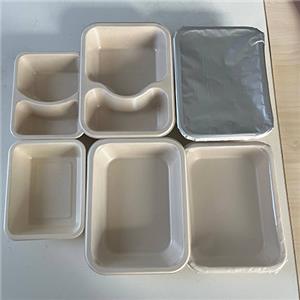
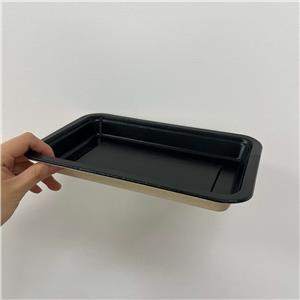
For buyers comparing origins, our sugarcane bagasse tray range and custom bagasse food packaging are produced across our China and Cambodia bases, and the top sealing solutions range illustrates why classification deserves attention: a lidded or film-sealed pack contains more than one material, and the duty follows the declared classification of each component rather than the marketing name of the product.
Certification documents, including our FDA and LFGB compliance, OK Compost INDUSTRIAL certification and the REACH, PFAS and total-fluorine test reports, are listed with their certificate numbers on our certifications page. If a claim is not on that page, we do not make it. If you need a specific document for a specific market, ask through our contact form and we will tell you whether we hold it.
Supply chain planning is usually the reason buyers start this conversation, and it is the reason we run more than one base. When one origin becomes expensive or slow, production moves; the 245 mm oval bagasse bowl with PET lid is an example of a product we can quote from either base, with the origin and the resulting duty position stated separately for each.
12. What to Watch Next
Three things could move this position, and a buyer holding inventory should be tracking all three rather than only the first.
The rate itself, because the Section 301 tiers are an administrative determination rather than a statutory formula. The assignment of economies to the 10 percent and 12.5 percent groups reflects commitments made in trade agreements, and commitments can be assessed again. A supplier whose entire cost advantage rests on sitting in the lower tier should say so, rather than presenting the tier as a permanent feature of geography.
The scope of the antidumping orders, because scope rulings and anti-circumvention inquiries are how Commerce reaches goods that were moved rather than transformed. The history of this exact product category in other origins is instructive: when Commerce concluded that operations in a third country amounted to simple assembly of components originating elsewhere, duties followed the components rather than the assembly site, and market access disappeared quickly. That risk is not removed by holding a certificate; it is removed by holding process evidence.
Classification, because a change in how molded fiber tableware is described at entry changes the additional-duty layer that applies, independently of any tariff negotiation. The safest position for a buyer is the boring one: a correct subheading, a documented origin, and a supplier who states the rate with a date attached and revises it when the law changes.
13. Conclusion
The tariff conversation around molded fiber tableware moved from a question about countries to a question about evidence. A reciprocal rate named in an annex was struck down; a bridge surcharge expired on schedule; a statutory investigation replaced it. Through all three changes, the number quoted to buyers stayed suspiciously stable, which is exactly why the underlying documentation matters more than the number.
For a buyer, the practical position on 3 November 2026 is this. Molded pulp tableware in HTS 4823.70.00 carries no Column 1 duty, so the entire cost of the tariff is an additional layer that must be identified by instrument and date. Cambodian-origin goods sit in the 10 percent Section 301 group. Chinese-origin goods carry 477.90 percent in antidumping cash deposits plus a 62.66 percent all-others countervailing rate plus the Section 301 layer, which is why sourcing conversations have moved. Vietnamese-origin goods carry both a Section 301 layer and a separate order with a punitive Vietnam-wide rate. And in every one of those cases, the operative question is not where the supplier says the goods were made, but where the article last changed in name, character or use.
We would rather answer that question with a process record than with a certificate, and we would rather quote a rate with a date on it than a rate that sounds better without one. If your current landed-cost model was built before July 2026, it is worth rebuilding before the next container is booked.
Primary sources
- Supreme Court of the United States, Learning Resources, Inc. v. Trump, No. 24-1287, decided 20 February 2026: opinion
- Office of the U.S. Trade Representative, Section 301 final action on the forced-labor investigations, 23 July 2026: press release
- Federal Register, notice of actions in the Section 301 investigations, published 28 July 2026: notice
- U.S. International Trade Commission, Harmonized Tariff Schedule, Chapter 48: schedule
This article states the position as of 3 November 2026 and is provided for general information. It is not legal or customs advice, and duty rates and origin rules are set by U.S. authorities and may change without notice. Confirm the applicable rate and origin basis with your customs broker and with us at the time of quotation.