What Is the Most Sustainable Packaging Material? A Guide for Food Businesses
Introduction
What is the most sustainable packaging material for a business? Is it recycled paper, reusable plastic, glass, or a plant-based material such as sugarcane bagasse?
There is no single answer that works for every product. The most sustainable packaging material depends on what it protects, how much material is required, how far it travels, how often it can be reused, and whether it can be recovered after use.
For food manufacturers, distributors, and wholesalers, choosing packaging is a practical business decision as well as an environmental one. Packaging must protect food, meet customer expectations, work with production equipment, and remain cost-effective at commercial volumes.
A material that appears environmentally friendly may not perform well for a particular food. Likewise, a lightweight plastic package may have certain environmental advantages over a heavier alternative in some applications, even though the materials have different end-of-life characteristics.
This guide compares six common packaging material options and explains how molded sugarcane bagasse packaging and coated bagasse food trays may fit into a more sustainable food packaging strategy.
What Makes a Packaging Material Sustainable?
A sustainable packaging material should be evaluated as part of the complete packaging system rather than by its name alone.
Businesses should consider the following factors:
- Raw materials: Does the material use recycled content, renewable resources, or virgin resources?
- Manufacturing: How much energy, water, and processing does it require?
- Material efficiency: How much packaging is needed to perform the same job?
- Product protection: Does it help prevent leakage, damage, contamination, and food waste?
- Transportation: What are its weight, dimensions, and shipping requirements?
- End of life: Can it be reused, recycled, or composted through a suitable system?
Life-cycle assessment studies compare environmental impacts across different stages of a product’s life. Their findings depend on the application, packaging design, assumptions, and impact categories being measured. This is why a material that performs well in one comparison may not be the best choice in another.
For food packaging buyers, the most useful question is not simply which material is the greenest. It is which material provides the required protection with the lowest practical environmental impact across its life cycle.
1. Reusable Packaging Materials
Reusable packaging can be made from durable plastics, glass, metal, or other materials designed to withstand repeated use.
It can be particularly useful in supply chains where packaging can be collected, cleaned, inspected, and returned for another cycle.
Advantages
- Can reduce the need for new packaging with repeated use.
- May lower the packaging impact per use in a well-managed return system.
- Can be suitable for transport crates, reusable food containers, and distribution packaging.
Limitations
Reusable packaging requires a practical collection and return system. Cleaning, transportation, losses, and the number of actual reuse cycles all affect its environmental performance.
A reusable container that is discarded after only a few uses may not deliver the expected benefits. By contrast, a well-managed system with frequent reuse may offer advantages over single-use alternatives.
Best suited for: Closed-loop food distribution, returnable transport packaging, and foodservice operations with established reuse systems.
For businesses selling single-use takeaway containers to many independent customers, a reusable model may be harder to implement without convenient collection and washing infrastructure.
2. Recycled Paper and Cardboard
Paper and cardboard are widely used in shipping cartons, product boxes, sleeves, and many food packaging applications.
Recycled paper-based materials can make use of recovered fiber and may be compatible with established recycling systems.
Advantages
- Can incorporate recycled content.
- Suitable for many outer packaging and dry-food applications.
- Can be designed in different shapes, sizes, and thicknesses.
- May be recoverable through local paper recycling programs.
Limitations
Paper and cardboard can lose strength when exposed to moisture or grease. Food packaging may therefore require coatings, liners, or other treatments.
These additional materials can affect recyclability. Buyers should confirm whether the complete package is accepted by recycling facilities in the intended market.
Best suited for: Shipping cartons, dry foods, bakery packaging, protective inserts, and paper sleeves.
Paper can be a suitable option for many applications, but it should not automatically be considered more sustainable than every plastic alternative. Weight, production, protection requirements, and end-of-life options all matter.
3. Recycled Plastic
Recycled plastic uses recovered plastic material as a feedstock, reducing reliance on virgin plastic in suitable applications.
Plastic is often lightweight and can provide useful resistance to moisture, impact, and leakage. These characteristics can be important in food packaging and transportation.
Advantages
- Can incorporate recovered material.
- Often lightweight for its protective function.
- Can provide useful moisture and barrier performance.
- Can support repeated use in suitable designs.
Limitations
Recycling depends on the polymer, package design, contamination, collection systems, and local processing capacity. Not every plastic package is recycled in practice.
Food-contact requirements also need to be considered when selecting recycled plastic for a particular application.
Best suited for: Selected bottles, containers, reusable crates, and applications where moisture protection and low weight are important.
For distributors, recycled plastic may be worth evaluating where it meets product requirements and a realistic recycling pathway is available.
4. Glass and Metal
Glass and metal are established packaging materials used for products requiring rigid protection or strong barriers.
Glass can be reused and recycled through suitable systems. Aluminum and steel can also be recycled, allowing valuable materials to be recovered.
Advantages
- Can provide strong protection against certain external factors.
- Suitable for many beverages and processed foods.
- Can be reused or recycled where appropriate infrastructure exists.
Limitations
Glass can be heavy and breakable, while metal production requires energy and resources. Transport weight, product protection, and recycling access can significantly influence the overall environmental assessment.
Best suited for: Bottles, jars, canned foods, and applications requiring particular barrier or storage properties.
Glass and metal can be excellent choices for specific products, but they are not automatically the most sustainable options for every food packaging requirement.
5. Sugarcane Bagasse and Molded Fiber
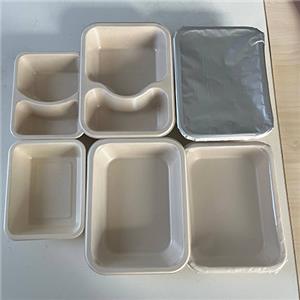
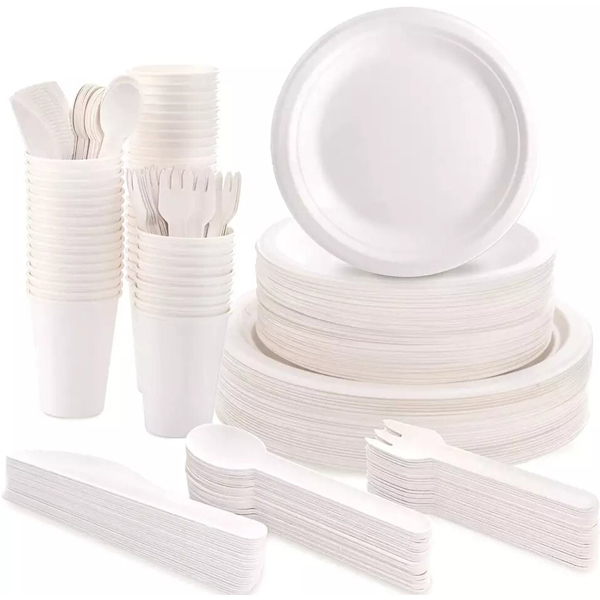
Sugarcane bagasse is the fibrous residue left after sugarcane juice extraction. It can be processed into molded fiber products such as plates, bowls, food containers, and trays.
Other molded fiber products may use recycled paper or different plant fibers.
For food packaging businesses, bagasse offers a way to evaluate molded plant-fiber packaging alongside conventional plastic and paper-based options. If you need the composition detail behind these categories, see our breakdown of sustainable packaging materials.
Why consider bagasse packaging?
Bagasse can make use of an agricultural by-product and can be molded into different shapes and compartment layouts.
Depending on the design, bagasse products may be suitable for:
- Takeaway meals
- Foodservice and catering
- Selected prepared-food applications
- Plates, bowls, and molded food trays
- Custom food packaging formats
The suitability of a specific product depends on its structure and tested performance. Buyers should check moisture resistance, oil resistance, temperature limits, and other requirements before choosing a tray for commercial use.
Is bagasse the most sustainable packaging material?
Bagasse may be a suitable option when molded plant-fiber packaging meets the product’s functional requirements and has an appropriate end-of-life pathway.
However, it cannot be assumed to outperform every other material in every environmental category. Manufacturing, transportation, product weight, additional coatings, and disposal conditions all influence the result.
It is also important to distinguish between uncoated bagasse products and coated bagasse trays. Their material structures and end-of-life options may differ.
For wholesalers and distributors, bagasse is worth evaluating when customers need molded fiber food packaging and the product’s performance, cost, and disposal requirements can be met.
6. Coated Bagasse Trays for Ready Meals
Some food applications require additional protection beyond the molded fiber base.
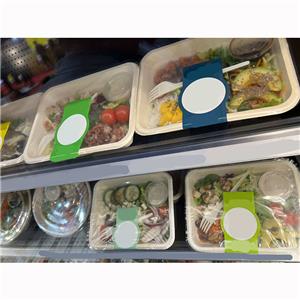
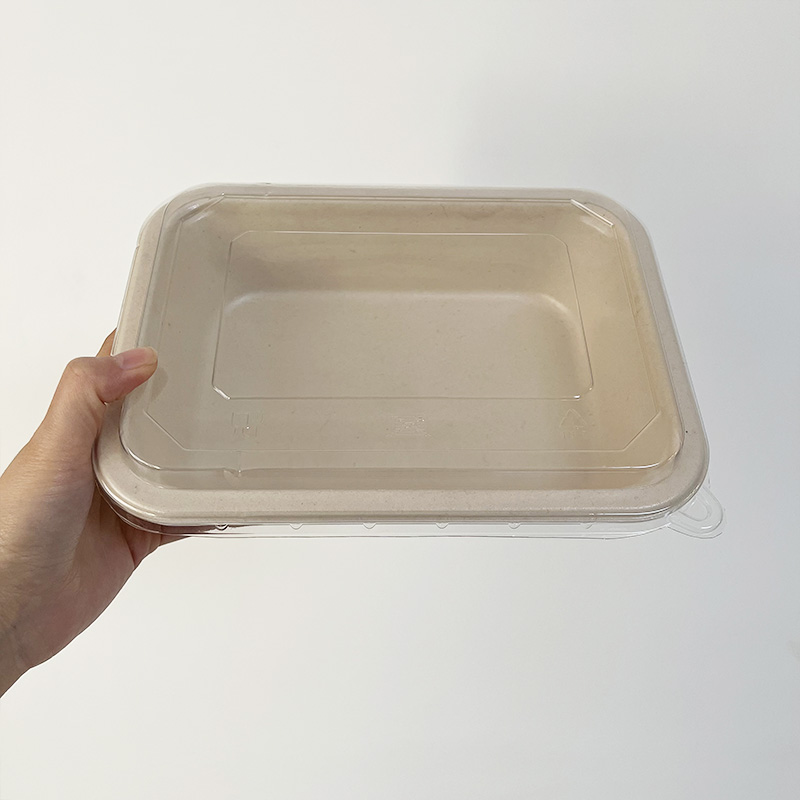
Ready meals, prepared foods, and other products may need a tray that resists moisture or grease and works with a lidding film and heat-sealing equipment.
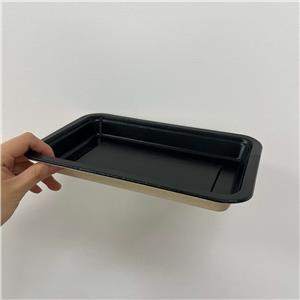
Coated bagasse trays combine a molded sugarcane fiber base with a functional coating or lining. The exact structure depends on the application.
What should buyers evaluate?
| Requirement | What to confirm |
|---|---|
| Moisture and oil resistance | Whether the tray performs with the intended food |
| Heat sealing | Compatibility with the lidding film and sealing machine |
| Temperature range | Verified limits for the complete tray structure |
| Barrier performance | Whether the package meets the food’s storage and shelf-life requirements |
| Food-contact compliance | Relevant documentation for the destination market |
| End-of-life options | Whether the complete structure qualifies for the claimed disposal route |
Different lining structures, including PP, PET, CPET, PLA, EVOH-based, and PBAT-based options, may be considered for different applications. They have different properties and should be selected according to the food, temperature, barrier needs, sealing process, and applicable requirements.
For MAP or vacuum skin packaging, buyers should confirm that the tray, barrier structure, lidding film, and packaging process have been evaluated together.
An important consideration: Some coated bagasse trays contain a plastic inner lining. The use of a bagasse base does not automatically mean that the finished package is plastic-free, recyclable, or compostable. These claims should be supported by evidence for the complete packaging structure and the relevant end-of-life conditions.
For food packaging distributors, the goal is to select a tray that meets the customer’s technical requirements while making accurate, supportable environmental claims.
Explore our coated bagasse food trays and ready meal packaging solutions.
Which Packaging Material Is Best for Different Applications?
The most suitable material depends on what the package needs to do.
| Packaging application | Materials worth evaluating | Key consideration |
|---|---|---|
| Shipping and outer cartons | Recycled cardboard, paperboard | Strength, recycled content, and recovery options |
| Dry food packaging | Paper, cardboard, selected plastics | Moisture exposure and product protection |
| Takeaway meals | Molded bagasse, selected plastics, paper-based formats | Leakage, grease resistance, and handling |
| Ready meals requiring sealing | Coated bagasse trays, plastic trays, other validated tray structures | Temperature, barrier performance, and sealing compatibility |
| Repeated transport between facilities | Reusable crates and containers | Number of reuse cycles and return logistics |
| Bottled beverages | Glass, selected plastics, metal cans | Weight, reuse, recycling, and transport |
This table is a starting point rather than a universal environmental ranking. Two packages made from the same material can have different environmental profiles because of differences in weight, design, manufacturing, and end-of-life treatment.
If your question is which format is better for a specific menu item rather than which material is better in general, our comparison of the most eco-friendly packaging options takes that narrower view.
How Distributors and Wholesalers Can Choose More Sustainable Packaging
For international buyers, a good material choice should also make commercial sense.
Before committing to a packaging supplier, consider these steps.
1. Define the target application
Identify the type of food, portion size, storage temperature, shelf-life requirements, and distribution conditions.
2. Compare complete packaging structures
Do not compare only the raw materials. Review the entire package, including coatings, lids, labels, and secondary packaging.
3. Check the destination market
Recycling programs, composting facilities, food-contact requirements, and packaging regulations differ across markets. Confirm the relevant requirements before placing a large order.
4. Request samples and technical documents
Test samples with the intended food and production equipment. Request material specifications, temperature information, sealing data, and relevant compliance documents.
5. Calculate total cost
Compare unit price alongside shipping volume, storage, equipment compatibility, potential product losses, and order consistency.
6. Evaluate supplier reliability
A suitable supplier should be able to explain the material structure, support product development, and maintain consistent specifications across repeat orders.
This process helps buyers select packaging based on evidence and real operating conditions rather than environmental labels alone. Teams setting policy across several product lines may also find our guide to environmentally friendly packaging strategies useful for sequencing the changes.
Bagasse Packaging Solutions for Business Buyers
Hebei Mountain Environmental Protection Technology Co., Ltd. focuses on molded sugarcane bagasse food packaging and coated bagasse food trays for business customers.
We work with buyers looking for packaging options suited to foodservice, takeaway, and selected prepared-meal applications.
Depending on project requirements, packaging discussions can include:
- Different tray sizes and compartment layouts
- Selected coating and lining options
- Heat-sealable tray structures and compatible lidding films
- Ready-meal packaging requirements
- Custom molds and OEM/ODM projects
- Coordinated tray, film, and sealing equipment requirements
For overseas distributors and wholesalers, we recommend starting with the target food application, destination market, required performance, expected order volume, and end-of-life objectives.
These details help determine which product structures should be sampled and what technical information is needed before commercial supply.
Explore our food tray range, view our customization services, or contact our team to discuss your application.
Frequently Asked Questions
What is the most sustainable packaging material?
There is no single material that is the most sustainable for every application. The best option depends on the product, material quantity, manufacturing, transportation, reuse potential, and end-of-life system.
Is bagasse more sustainable than plastic?
Bagasse can be a useful molded plant-fiber alternative for selected applications. However, the environmental comparison depends on the complete packaging structure, the performance required, and how both alternatives are manufactured, transported, used, and disposed of.
Is recycled plastic sustainable?
Recycled plastic can reduce demand for virgin plastic in suitable applications. Its overall performance depends on recycled content, manufacturing, package design, and whether the finished product can be recovered through local recycling systems.
Is paper more sustainable than plastic?
Not in every situation. Paper may be preferable in some applications, while lightweight plastic may perform better in others. A fair comparison considers equivalent packaging functions, material weight, product protection, transportation, and end-of-life options.
Is coated bagasse packaging compostable?
Not automatically. Compostability depends on the complete tray structure, including any lining, and on relevant certification and composting conditions. Buyers should verify the claim for the exact product.
What should wholesalers look for in a sustainable packaging manufacturer?
Wholesalers should review material specifications, food-contact documentation, performance test results, applicable certifications, customization options, minimum order quantities, lead times, and the supplier’s ability to maintain consistent product quality.
Conclusion
The most sustainable packaging material is not necessarily the one with the most appealing environmental label. It is the material that meets the product’s requirements while minimizing environmental impacts across its life cycle.
Reusable packaging may work well in return systems. Recycled paper and plastics can suit different applications, while glass, metals, and molded plant fibers each have their own strengths and limitations.
For food businesses looking for molded plant-fiber packaging, sugarcane bagasse is one option worth evaluating. Selected coated bagasse trays can also meet specific food packaging and sealing requirements, provided their complete structure and performance are suitable.
Looking for a bagasse packaging manufacturer for your wholesale or distribution business? Contact our team to discuss your application, custom packaging requirements, and expected order volume.