What Is Sustainable Packaging Made Of? A Guide to Materials for Food Businesses
Introduction
What is sustainable packaging made of, and which materials should businesses choose?
As more food brands, retailers, and distributors review their packaging choices, sustainable materials have become an important part of purchasing decisions. But sustainable packaging is not made from just one material. It can include recycled paper, cardboard, molded plant fibers, glass, metals, reusable plastics, and selected bio-based materials.
The right choice depends on more than where a material comes from. Businesses also need to consider how much material is used, whether the package protects the product, how far it travels, and what happens to it after use.
For food packaging buyers, these details matter. A container may look environmentally friendly but still be unsuitable if it leaks, fails during transportation, or cannot be processed by the local recycling system.
In this guide, we explain the main materials used in sustainable packaging, compare their practical applications, and explore how sugarcane bagasse packaging can support selected food packaging needs.
What Is Sustainable Packaging Made Of?
Sustainable packaging can be made from renewable resources, recycled materials, durable materials designed for repeated use, or materials that can be recovered through suitable waste-management systems.
Common examples include:
- Recycled paper and cardboard
- Responsibly sourced paper and wood fibers
- Molded plant fibers, including sugarcane bagasse
- Glass and metals that can be reused or recycled
- Recycled plastics
- Selected bio-based plastics
- Reusable packaging materials designed for multiple trips
No material is automatically sustainable in every situation. Its overall impact depends on its production, weight, durability, transportation, use, and end-of-life options.
For businesses, the goal is to choose packaging that meets product requirements while reducing avoidable environmental impacts.
1. Recycled Paper and Cardboard
Paper and cardboard are widely used in shipping boxes, retail packaging, sleeves, cartons, and foodservice packaging.
When made with recycled fiber, they can reduce demand for virgin fiber. Paper-based packaging may also be recoverable through established recycling systems, depending on local collection rules and the condition of the material.
Common applications
- Shipping cartons and corrugated boxes
- Retail product boxes
- Paper sleeves and outer packaging
- Inserts and protective dividers
- Some takeaway food containers
What should buyers consider?
Paper and cardboard can lose strength when wet or greasy. Food packaging may therefore require a barrier coating, lining, or other treatment.
These additions can affect recyclability, so buyers should check whether the complete package is accepted by the intended recycling system.
Paper packaging is a useful option for many dry products and outer packaging applications, but it is not necessarily the best choice for every food that contains liquid, oil, or sauce.
2. Sugarcane Bagasse and Other Molded Plant Fibers
Sugarcane bagasse is the fibrous residue left after sugarcane is processed to extract its juice. Instead of treating this material only as an agricultural residue, manufacturers can process it into molded fiber food packaging products.
Other molded fiber materials may be made from recycled paper or different plant fibers, depending on the manufacturer and product.
What is bagasse packaging used for?
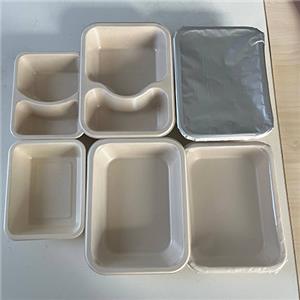
Molded bagasse packaging is used for products such as:
- Plates and bowls
- Takeaway food containers
- Food trays
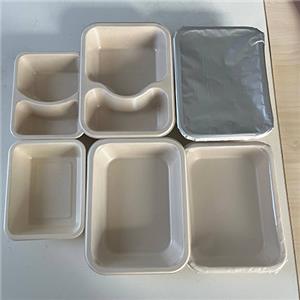
- Compartment meal trays
- Selected prepared-food packaging formats
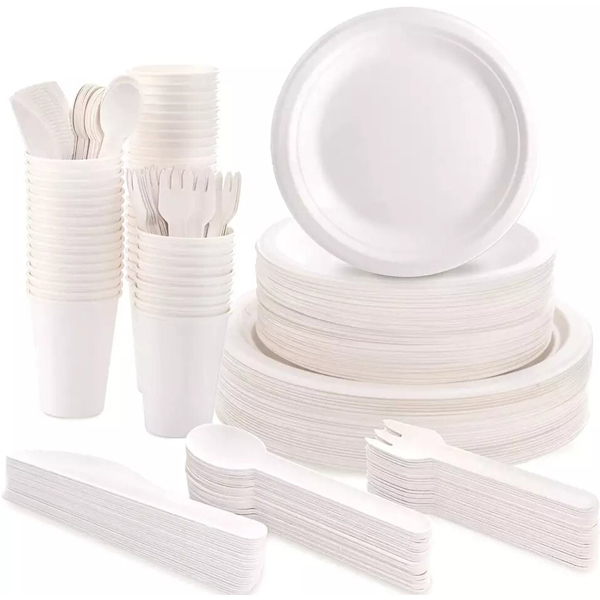
Bagasse is particularly relevant to foodservice and food packaging businesses looking for molded plant-fiber products.
Its shape can be customized for different foods and serving formats. However, actual performance depends on the design, manufacturing process, and whether the product has additional coatings or liners.
Is bagasse packaging sustainable?
Bagasse can make use of a sugarcane-processing by-product and can be a useful alternative to some conventional packaging formats.
However, buyers should evaluate the finished product rather than relying on the raw material alone. Manufacturing processes, transport, additives, coatings, and disposal conditions all influence the environmental profile.
Uncoated bagasse products and coated bagasse trays may have different end-of-life characteristics. Compostability claims should be supported by relevant evidence for the complete product and the applicable composting conditions.
For wholesale buyers, bagasse packaging is worth evaluating when the target market, product requirements, and customer expectations align with molded fiber food packaging.
3. Recycled and Reusable Plastics
Plastic is often discussed as the opposite of sustainable packaging, but the picture is more complicated.
Some plastic packaging is lightweight, durable, and effective at protecting food. Recycled plastic can reduce demand for virgin plastic, while reusable plastic containers can serve multiple trips when a suitable return and cleaning system is in place.
Common applications
- Reusable transport crates
- Returnable containers
- Bottles and tubs
- Selected food trays
- Protective packaging for distribution
What should buyers consider?
Recyclability varies by polymer type, color, format, attached materials, contamination, and local recycling infrastructure. A package that is technically recyclable may not be collected or processed in every market.
Reusable plastic packaging also needs enough reuse cycles to justify the resources used in its production, cleaning, and transportation.
Rather than ruling out every plastic format, businesses should compare the full packaging system and select the option that meets their performance and environmental goals.
4. Glass
Glass is commonly used for beverage bottles, jars, sauces, spreads, and other food products.
It can be reused or recycled in suitable systems, and it provides a strong barrier against moisture and gases. It is also suitable for many food applications that require a rigid container.
Its main limitations include weight, breakage risk, and the energy required for manufacturing and transport.
When is glass a suitable choice?
Glass may work well when product visibility, product protection, reuse, or established bottle-return systems are important.
For businesses shipping large volumes over long distances, however, transportation weight and packaging protection should be included in the overall assessment.
5. Aluminum and Steel
Metals such as aluminum and steel are used in cans, food trays, lids, and other protective packaging.
They can provide strong barriers against light, oxygen, and moisture. Metal packaging can also be recycled through suitable collection and processing systems.
Common applications
- Beverage and food cans
- Metal food trays
- Lids and closures
- Protective packaging for products requiring strong barriers
Buyers should consider material weight, manufacturing requirements, transport, and local recycling access. For food trays, they should also assess the compatibility of the container with the food, heating process, and sealing system.
The most suitable material depends on the required performance rather than a simple ranking of packaging materials.
6. Bio-Based Plastics
Bio-based plastics are made partly or entirely from biological resources rather than exclusively from fossil-based feedstocks. Depending on the material, the feedstock may include plant-derived sugars, starches, oils, or other biomass.
However, bio-based does not automatically mean biodegradable or compostable.
Some bio-based plastics have properties similar to conventional plastics and are designed for durability. Some materials may be biodegradable under specific conditions, while others are not. Compostability depends on the exact material, applicable standards, and disposal environment.
For food packaging, bio-based materials may be considered for films, coatings, containers, or other components where their technical properties meet the application requirements.
Buyers should ask suppliers for the exact material identification, performance data, food-contact documentation, and evidence supporting any environmental claims.
7. Hybrid Packaging: Combining Fiber With a Functional Lining
Some food applications need a combination of materials rather than a single-material package.
For example, a molded fiber tray can provide the package's shape and structure, while a coating or inner lining helps it resist moisture or grease. A compatible lidding film may also be needed to seal the food.
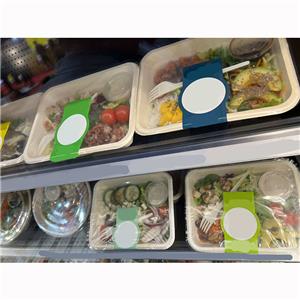
This type of packaging can be useful for selected prepared meals, chilled foods, and applications that require heat sealing.
What is coated bagasse packaging made of?
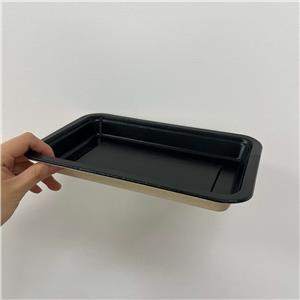
A coated bagasse tray typically has a molded sugarcane fiber base and an additional functional coating or lining. Depending on the product, that lining may contain plastic or another material selected for the intended use.
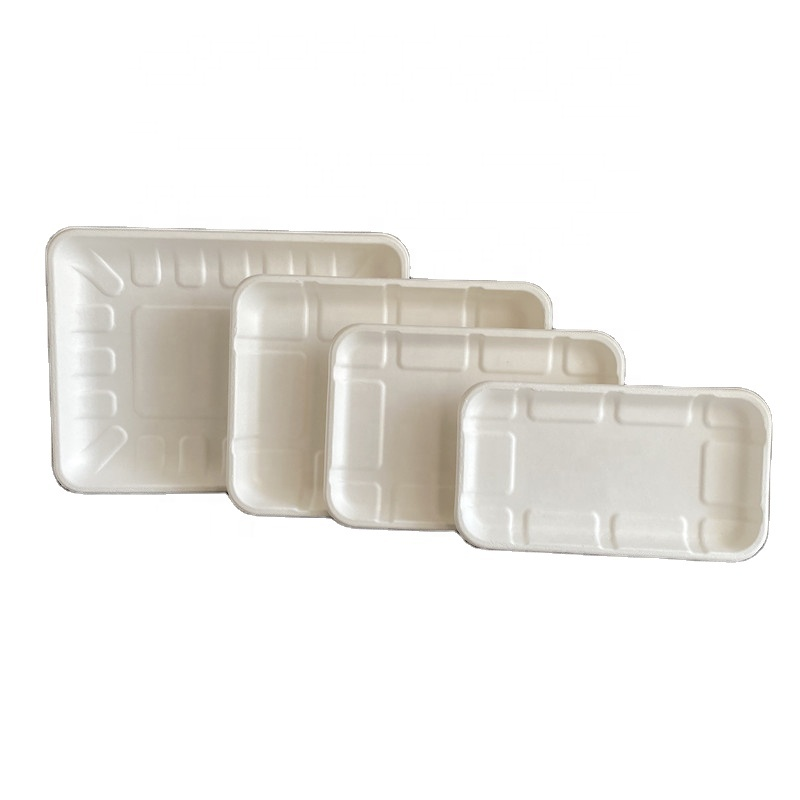
The complete structure determines the tray's performance. Buyers should confirm:
- The exact base material and lining composition
- Moisture and grease resistance
- Heat-sealing compatibility
- The validated temperature range
- Barrier performance where shelf life requires it
- Food-contact requirements for the target market
- Recycling or compostability options for the complete package
For example, PP, PET, CPET, PLA, EVOH-based, and PBAT-based structures may be considered for different packaging projects, but they are not interchangeable. Their suitability depends on the specific formulation, construction, food, temperature, and sealing requirements.
A coated bagasse tray should not automatically be described as plastic-free, recyclable, or compostable simply because its main structural material is sugarcane fiber.
For food businesses, the aim is to find the right balance between material selection, reliable product protection, production requirements, and a realistic end-of-life pathway.
How to Choose Sustainable Packaging Materials for Your Business
Choosing a material should begin with the product and the supply chain, not with a material trend.
Here are six questions to guide the process.
1. What does the package need to protect?
Dry snacks, fresh produce, oily meals, sauces, and frozen foods have different packaging requirements. Define the necessary resistance to moisture, grease, impact, temperature, and leakage before comparing materials.
2. Is the package single-use or reusable?
Reusable packaging may suit closed-loop distribution systems. Single-use packaging may be more practical where products are shipped directly to consumers and return systems are unavailable.
3. What happens after use?
Check whether the package can realistically be reused, recycled, or composted in the intended market. Consider the complete package, including coatings, lids, labels, and other components.
4. Does the material meet local requirements?
Different markets have different food-contact rules, packaging regulations, and waste-management systems. Ask the supplier for documentation relevant to the destination country and intended application.
5. What is the total cost?
Compare more than the unit price. Consider carton packing, freight, storage, equipment compatibility, damage rates, and product losses.
6. Can the supplier provide consistent quality?
For distributors and wholesalers, consistent specifications and repeat-order reliability are important. Ask about sampling, customization, quality checks, production capacity, and lead times before making a large commitment.
Why Food Packaging Buyers Consider Bagasse Manufacturers
For distributors and wholesalers serving foodservice, retail, and prepared-food markets, molded bagasse packaging can add a plant-fiber option to an existing product range.
A capable manufacturer should be able to explain the product's material structure and help buyers determine whether it suits the intended food, sealing process, storage conditions, and market requirements.
Hebei Mountain Environmental Protection Technology Co., Ltd. focuses on molded sugarcane bagasse food packaging and coated bagasse trays for business customers.
Depending on the project, our product development discussions can cover:
- Different tray sizes and compartment designs
- Selected coatings and lining options
- Heat-sealable tray structures and compatible lidding films
- Ready-meal packaging requirements
- Custom molds and OEM/ODM projects
- Packaging specifications for different food applications
For international buyers, the right starting point is to share the food type, target market, required performance, estimated order volume, and any relevant certification or disposal requirements.
Visit our food tray product page, explore our ready meal packaging solutions, or learn about custom packaging projects.
Frequently Asked Questions
What is sustainable packaging made of?
Sustainable packaging may be made from recycled paper and cardboard, molded plant fibers such as sugarcane bagasse, reusable materials, glass, metals, recycled plastics, and selected bio-based materials. The most suitable option depends on the application and the package's full life cycle.
Is sustainable packaging always biodegradable?
No. Recyclable, reusable, bio-based, biodegradable, and compostable describe different characteristics. A package may meet one criterion without meeting the others.
Is bagasse better than plastic for food packaging?
It depends on the specific products being compared. Bagasse can provide a molded plant-fiber alternative for selected applications, while plastic may offer useful sealing, barrier, and durability properties. Buyers should compare complete packaging structures, actual performance, and end-of-life options.
Is coated bagasse packaging plastic-free?
Not necessarily. Some coated bagasse trays contain a plastic lining. Buyers should request the full material specification and verify any plastic-free claim against the exact product.
Can sustainable packaging protect ready meals?
Yes, suitable packaging materials and structures can protect ready meals. The required performance depends on the food, storage temperature, shelf life, sealing process, and distribution conditions. Tray, lining, and lidding film should be evaluated together.
What should wholesalers ask a sustainable packaging supplier?
Wholesalers should ask for material specifications, food-contact documentation, test reports, applicable certifications, customization options, minimum order quantities, lead times, and evidence supporting environmental claims.
Conclusion
Sustainable packaging can be made from many different materials, including recycled paper, cardboard, glass, metals, recycled plastics, bio-based materials, and molded plant fibers such as sugarcane bagasse.
There is no single material that is best for every application. Businesses should consider product protection, material use, transportation, cost, local recycling or composting infrastructure, and the complete packaging structure.
For food packaging distributors and wholesalers, bagasse products, including selected coated bagasse trays, may provide another option to evaluate when developing a more varied packaging portfolio.
Looking for a bagasse food packaging manufacturer? Contact our team to discuss your product requirements, custom designs, and wholesale packaging needs.