What Environmentally Friendly Packaging Strategies Might a Firm Adopt?
Introduction
What environmentally friendly packaging strategies might a firm adopt to reduce waste, meet customer expectations, and stay competitive?
For food manufacturers, retailers, distributors, and wholesalers, the answer is not always as simple as replacing plastic with paper. A more sustainable packaging strategy should consider the amount of material used, product protection, transportation efficiency, recycling options, and the environmental impact of the complete package.
Packaging also has a commercial role. It protects products, supports food safety, helps products stand out on shelves, and affects storage and shipping costs. Changing a package without considering these functions can create new problems, even when the replacement material appears more environmentally friendly.
The most practical approach is to review the entire packaging system and identify where improvements will make a real difference.
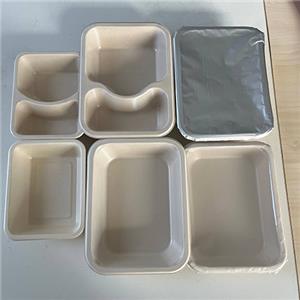
In this guide, we explain eight environmentally friendly packaging strategies that businesses can consider, with examples for food packaging buyers and distributors. We will also look at how molded sugarcane bagasse packaging and coated bagasse food trays can fit into a company's sustainability plans.
1. Reduce Unnecessary Packaging Materials
One of the simplest environmentally friendly packaging strategies is to use less packaging in the first place.
Some products are packed with several layers that serve overlapping purposes. Others use oversized boxes, unnecessary inserts, or excessive void fill. Reviewing these details can help businesses reduce material consumption, packaging costs, and shipping volume.
Companies can start by asking a few practical questions:
- Is the outer box larger than necessary?
- Can an unnecessary insert or secondary layer be removed?
- Can several packaging components be combined?
- Can the package be redesigned without reducing product protection?
- Is the current packaging specification based on an old requirement that no longer applies?
For food businesses, however, reducing packaging should not come at the expense of food safety or product quality. A container that fails to prevent leakage or protect food during transportation may create more waste than it saves.
For distributors and wholesalers: Look for packaging suppliers that can help optimize dimensions, tray depth, compartment layout, and carton packing. Small design improvements can make a difference when products are ordered in large quantities.
2. Choose Materials That Match the Recycling Infrastructure
Recyclable packaging can support a circular economy, but the material must be compatible with the collection and recycling systems available in the target market.
Paper, cardboard, glass, metals, and certain plastics can all be recyclable under suitable conditions. However, food residue, mixed materials, adhesives, inks, and barrier coatings may affect how a package is collected or processed.
For example, a paper container with a functional inner lining may not be accepted by every paper recycling facility. A plastic package may be recyclable in one region but excluded from local collection programs in another.
Before changing materials, businesses should confirm:
- Whether the material is accepted by local recycling programs.
- Whether food residue needs to be removed before disposal.
- Whether coatings or attached components affect recyclability.
- Whether the package needs to be separated into different materials.
- Whether the supplier can provide relevant material specifications and test reports.
The goal is not simply to select a material labeled "recyclable." It is to choose a package that has a realistic end-of-life pathway in the market where it will be sold.
For international distributors, this is particularly important because disposal systems and packaging requirements can differ between countries and regions.
3. Consider Reusable Packaging Where It Makes Sense
Reusable packaging is another strategy worth evaluating, especially in closed-loop supply chains.
Businesses that move products repeatedly between factories, warehouses, distribution centers, and retail locations may be able to use returnable crates, totes, pallets, or containers. These systems can reduce the need for new transport packaging when items are returned and reused enough times.
Reusable packaging is not automatically the best option for every application. Its environmental performance depends on factors such as the number of reuse cycles, cleaning requirements, return transport, durability, and the material used to make it.
For takeaway food and other single-use applications, a returnable system may be difficult to operate unless a suitable collection and washing system is available.
A practical rule: Consider reusable packaging first where the supply chain allows reliable returns. For applications that still require single-use food packaging, focus on reducing material use and selecting a package suited to the product and local waste-management system.
4. Explore Plant-Based and Recycled Packaging Materials
Another environmentally friendly packaging strategy is to evaluate materials made from recycled resources or renewable feedstocks.
Depending on the application, options may include recycled paperboard, molded fiber, agricultural by-products, and selected bio-based materials. Each has different performance characteristics, costs, and disposal requirements.
For food packaging, the right material must do more than look sustainable. It may need to withstand moisture, grease, pressure, temperature changes, transportation, and contact with food.
What is sugarcane bagasse packaging?
Sugarcane bagasse is the fibrous residue left after sugarcane is processed for juice extraction. This fiber can be molded into food containers, trays, bowls, and other packaging formats.
Bagasse is useful to consider because it makes use of an agricultural by-product as a raw material. Molded bagasse packaging can be a practical option for foodservice companies, supermarkets, catering businesses, prepared-food producers, and packaging distributors looking for alternatives to conventional plastic formats.
However, the environmental profile of a finished package depends on more than its fiber base. Manufacturing, transport, coatings, lids, and disposal conditions all matter.
For example, an uncoated molded bagasse plate and a heat-sealable bagasse tray with an inner film are not the same packaging structure. They should not automatically carry the same recyclability or compostability claims.
When should a firm consider bagasse packaging?
Bagasse packaging may be worth evaluating when a business needs:
- A molded plant-fiber food container or tray.
- A different appearance and material story from conventional plastic packaging.
- Custom shapes, sizes, or compartment layouts.
- A packaging option for takeaway food, catering, or prepared meals.
- A molded fiber structure that can be adapted for selected moisture- or oil-resistant applications.
For buyers comparing suppliers, the key questions are how the package performs, what the complete material structure contains, and whether the product meets the requirements of the intended market.
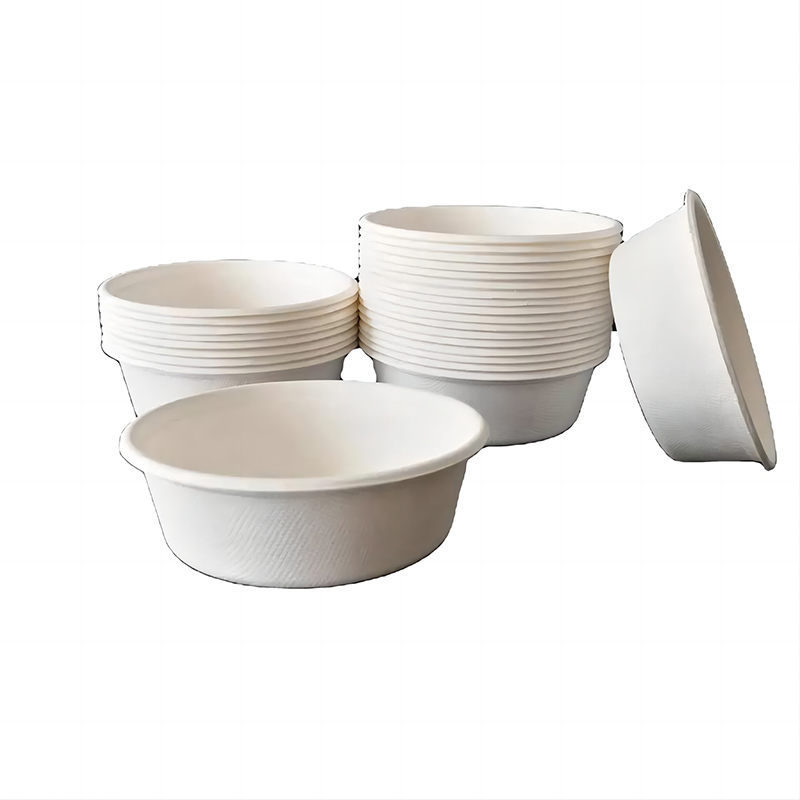
5. Use Coated Bagasse Trays for Applications That Need More Protection
Plain molded fiber works for many food applications, but some products require better resistance to moisture and grease or need to be sealed with a lidding film.
This is where coated bagasse food trays may be worth considering.
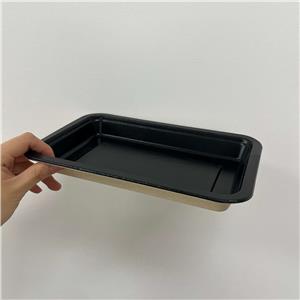
A coated bagasse tray combines a molded sugarcane fiber base with a functional coating or lining. Depending on the selected structure, the coating can improve moisture resistance, oil resistance, barrier performance, or compatibility with heat-sealing.
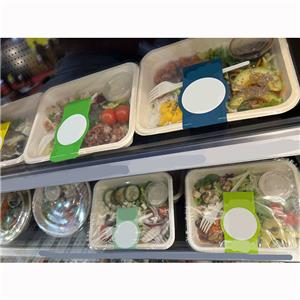
For ready meals and prepared foods, packaging performance can affect the entire distribution process. A tray may need to hold sauces, maintain its shape during transport, work with a sealing machine, and protect the food during chilled or frozen storage.
The correct specification depends on the food and the intended use.
What should buyers evaluate?
| Requirement | What to confirm with the supplier |
|---|---|
| Moisture and grease resistance | Test performance with the actual food and storage conditions |
| Heat sealing | Compatibility between the tray coating, lidding film, and sealing equipment |
| Temperature performance | Verified operating range for the complete tray structure |
| Barrier performance | Whether the structure meets the product's shelf-life requirements |
| Recycling or composting | Whether the complete package qualifies under the relevant system or certification |
| Food-contact compliance | Applicable documentation for the target market and intended food use |
Different coating structures may be suitable for different applications. PP, PET, CPET, PLA, EVOH-based, and PBAT-based options should be evaluated according to the required temperature range, sealing method, barrier performance, and end-of-life objective.
For products requiring modified atmosphere packaging (MAP) or vacuum skin packaging (VSP), buyers should also confirm that the tray, barrier structure, lidding material, and packaging process have been tested together.
An important point about environmental claims: A bagasse base does not automatically make a coated tray plastic-free, recyclable, or compostable. Some coated trays contain a plastic inner lining. Compostability and recyclability claims should be based on the complete packaging structure and appropriate evidence, not just the plant-fiber base.
For businesses that want to compare coated bagasse packaging with conventional plastic trays, the most useful starting point is to define the performance requirements before choosing the material.
Learn more about coated bagasse food trays in our guide to ready meal packaging solutions.
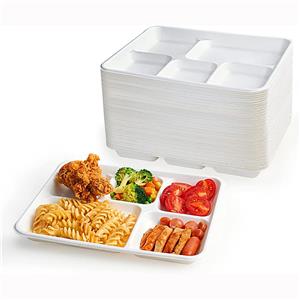
6. Design Packaging to Protect Products and Reduce Food Waste
Sustainable packaging is not only about what happens to a container after use. It is also about how well the package protects the product before it reaches the consumer.
This matters especially in food distribution. Damaged packaging, leaking containers, contamination, and premature spoilage can lead to rejected shipments and wasted food.
A company should therefore consider the packaging's full purpose:
- Does it protect the food during handling and transportation?
- Can it maintain the required seal?
- Is it suitable for the expected storage temperature?
- Does it help prevent leakage and contamination?
- Can the package work reliably with the filling and sealing process?
For ready meals, chilled foods, meat, seafood, and other prepared products, a suitable barrier structure may be necessary to meet the product's storage and shelf-life requirements.
A lighter or simpler package is not necessarily a better choice if it fails during distribution. The better strategy is to use only the protection the product needs—and verify that it works under real operating conditions.
For packaging buyers, testing samples with the actual food and production equipment is an important step before placing a large order.
7. Improve Packaging Efficiency Across Storage and Transportation
Packaging decisions also influence warehouse operations, container loading, and transportation.
A package that uses less space can allow more units to fit into a carton or shipment. Consistent dimensions can simplify palletizing and warehouse handling. Stronger or better-designed packaging may also reduce damage during transit.
Businesses can evaluate:
- How many units fit into each shipping carton.
- Whether the packaging nests or stacks efficiently.
- Whether cartons use available pallet space effectively.
- Whether the package can withstand the planned transport conditions.
- Whether packaging dimensions can be standardized across related products.
For distributors and wholesalers, these details can affect total landed cost—not just the unit price quoted by a supplier.
When comparing packaging options, calculate the cost per usable packaged product and consider shipping volume, damage rates, storage requirements, and handling. A slightly different tray design may be worthwhile if it improves packing efficiency without compromising performance.
8. Work With a Supplier That Can Support Long-Term Packaging Improvements
An environmentally friendly packaging strategy is easier to implement when the supplier can support technical evaluation, product development, and reliable repeat orders.
For distributors and wholesalers, a supplier should be able to explain the material structure, provide samples, clarify the intended applications, and identify which performance claims have been verified.
Before selecting a packaging manufacturer, consider asking:
- What materials and coatings are used in the finished package?
- Which food-contact documents and test reports are available?
- What are the verified temperature and sealing limits?
- Can the supplier develop custom sizes, shapes, or compartment layouts?
- Can samples be tested before mass production?
- What are the minimum order quantities and production lead times?
- Can the supplier support repeat orders and consistent specifications?
- What evidence supports any recycling, compostability, or environmental claims?
A supplier that can coordinate the tray, coating, lidding film, and sealing requirements may also help reduce compatibility issues during product development.
For wholesale buyers, this can simplify sourcing and make it easier to build a consistent product range for foodservice, retail, and prepared-food customers.
How Hebei Mountain Environmental Protection Technology Co., Ltd. Supports More Considered Food Packaging Choices
Hebei Mountain Environmental Protection Technology Co., Ltd. focuses on molded sugarcane bagasse packaging and coated bagasse food trays for business customers.
Our approach is to match the packaging structure to the product's practical requirements rather than use the same material for every application.
Depending on the project, we can discuss:
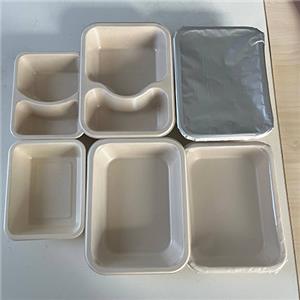
- Molded bagasse food trays in different sizes and compartment layouts.
- Coating and lining options for selected moisture- and oil-resistant applications.
- Heat-sealable tray structures with compatible lidding films.
- Packaging development for selected ready-meal applications.
- Custom molds and OEM/ODM projects.
- Coordinated tray, film, and sealing equipment requirements.
For international distributors and wholesalers, product selection should begin with the intended market, food type, required performance, expected order volume, and disposal objectives.
We can evaluate these requirements with you to identify a suitable packaging structure and determine what testing or documentation is needed before commercial supply.
Explore our custom coated bagasse packaging solutions or browse our product range to learn more about the formats we offer.
How to Choose the Right Environmentally Friendly Packaging Strategy
There is no single packaging material that works best for every business. The right choice depends on the product, distribution process, budget, local waste-management infrastructure, and performance requirements.
For many firms, a practical starting plan is:
- Review current packaging. Identify unnecessary components, oversized formats, and recurring damage or leakage problems.
- Set clear goals. Decide whether the priority is material reduction, recycled content, reuse, plastic reduction, or a verified end-of-life route.
- Compare suitable materials. Evaluate paper, recycled materials, molded fiber, bagasse, and other options according to the application.
- Test the complete package. Check performance with the actual product, storage conditions, transport process, and sealing equipment.
- Confirm environmental claims. Request relevant specifications, test reports, and certifications for the finished packaging structure.
- Review results after launch. Track material use, damage rates, shipping efficiency, customer feedback, and disposal requirements.
This process helps businesses avoid choosing a package based only on appearance or a broad environmental label.
Frequently Asked Questions
What environmentally friendly packaging strategies might a firm adopt?
A firm can reduce unnecessary packaging, use reusable transport packaging where practical, choose materials compatible with local recycling systems, evaluate recycled or renewable materials, improve product protection, optimize shipping dimensions, and work with suppliers that provide reliable technical information.
What is the most sustainable packaging material for food?
There is no universal answer. The best choice depends on the food, required barrier performance, transportation, storage temperature, package weight, manufacturing process, and end-of-life options. Paper, plastic, molded fiber, and bagasse can each be appropriate in different circumstances.
Is sugarcane bagasse packaging environmentally friendly?
Bagasse is a plant-fiber material made from a sugarcane-processing by-product. It can be a useful alternative to conventional packaging formats in selected applications. Its overall environmental performance depends on manufacturing, the complete package structure, transportation, and how the package is managed after use.
Is coated bagasse packaging plastic-free?
Not necessarily. Some coated bagasse trays contain a plastic inner lining or other components. Buyers should request the complete material specification and verify any plastic-free claim against the actual product.
Are coated bagasse food trays compostable?
Not automatically. Compostability depends on the tray base, coating, lidding film, and other components, as well as the relevant certification and composting conditions. Buyers should verify claims for the complete packaging system.
Can coated bagasse trays be used for ready meals?
Selected coated bagasse trays can be developed for ready-meal applications, including suitable heat-sealing formats. Temperature resistance, barrier performance, storage conditions, and compatibility with lidding films and packaging equipment must be confirmed for the specific structure.
What should distributors check before buying sustainable food packaging?
Distributors should review material specifications, food-contact documentation, test reports, verified performance, applicable certifications, customization options, minimum order quantities, lead times, and the manufacturer's ability to support consistent repeat orders.
Final Thoughts
Environmentally friendly packaging strategies work best when they are based on the real needs of the product and the supply chain.
Reducing unnecessary materials is a good first step. Reuse, recycling, renewable materials, better product protection, and more efficient transportation can also contribute to a more considered packaging system.
For food businesses exploring alternatives to conventional plastic trays, molded sugarcane bagasse packaging—including selected coated bagasse food trays—may be worth evaluating. The key is to select the right structure for the application and verify its performance and environmental claims.
Looking for a bagasse packaging manufacturer for your distribution or wholesale business? Contact our team to discuss your food packaging requirements, target market, custom design needs, and expected order volume.