Is Paper Packaging Eco-Friendly? A Guide for Food Packaging Buyers
Introduction
Is paper packaging eco-friendly? For many businesses, paper seems like an obvious choice when looking for alternatives to conventional plastic packaging. It is familiar, easy to print on, and widely used for shopping bags, cartons, takeaway boxes, and food sleeves.
But the answer is not as simple as it looks.
Paper packaging can be a good option when it uses responsibly sourced or recycled fibers, protects the product efficiently, and can be recovered through local recycling systems. However, paper production requires resources, and coatings or plastic liners can make some packages more difficult to recycle.
For food packaging distributors, importers, and wholesalers, the real question is not whether paper is always better than plastic. It is which material provides the right balance of product protection, cost, practical disposal options, and customer expectations.
In this guide, we explain the environmental advantages and limitations of paper packaging, compare it with molded bagasse food packaging, and explore how coated bagasse trays may fit into modern food packaging projects.
1. Is Paper Packaging Eco-Friendly?
Paper packaging can be an environmentally preferable option, but its impact depends on how it is made, used, and disposed of.
Paper and paperboard are widely used for cartons, shipping boxes, bakery packaging, bags, and many foodservice products. They can be made from virgin or recycled fibers, and many paper-based packages can be recycled where suitable collection and processing systems exist.
Several factors influence the environmental performance of paper packaging.
The Source of the Paper Fibers
Paper can be made from virgin wood fibers, recycled paper, or a combination of both.
Responsible sourcing and recycled content may help improve a package's environmental profile, depending on the production process and the product's requirements. Buyers should ask suppliers about fiber sourcing and any relevant certifications rather than assuming all paper comes from the same source.
The Amount of Material Used
A lightweight paper box may use fewer materials than an oversized package with several unnecessary components.
However, reducing the thickness of paperboard too much can weaken the package and increase product damage. The goal is to use enough material to protect the product without unnecessary excess.
Manufacturing and Transportation
Paper production uses energy and water. Transportation also contributes to a package's overall environmental impact.
Weight, package dimensions, manufacturing efficiency, and shipping arrangements all matter. A useful comparison should consider the full packaging system rather than focusing on just one stage.
What Happens After Use
Paper and paperboard can often be recycled, but the finished package must be suitable for the collection and processing systems available in the target market.
Food residue, plastic laminates, certain coatings, adhesives, and other components can complicate recycling.
For overseas distributors and wholesalers, this means environmental claims should be based on the complete package and the disposal options available to customers.
2. What Are the Environmental Benefits of Paper Packaging?
Paper packaging offers several practical advantages for food and consumer goods businesses.
It Can Be Recycled
Many paper and cardboard packages are accepted by established recycling systems. Corrugated shipping boxes, for example, are widely recovered in many markets.
However, acceptance varies by package type and local infrastructure. A clean cardboard shipping box may be straightforward to recycle, while a grease-resistant takeaway box with a plastic liner may require a different disposal route.
It Supports Printing and Branding
Paperboard provides a useful surface for product information, logos, instructions, and retail branding.
For wholesalers serving private-label brands, this can make paper sleeves and cartons valuable additions to a packaging range.
It Can Contain Recycled Fibers
Some paper packaging incorporates recycled content, reducing the need for virgin fiber in the finished product.
The suitable recycled content depends on the application, quality requirements, and food-contact rules. Not every paper product is appropriate for direct contact with every type of food.
It Can Be Designed for Efficient Shipping
Paperboard boxes and corrugated cartons can be designed to stack efficiently and protect goods during transport.
For distributors, better carton dimensions and pallet utilization may reduce unused shipping space. These benefits depend on the complete packaging design and logistics arrangement.
3. What Are the Limitations of Paper Packaging?
Paper packaging is useful, but it does not solve every packaging problem.
Food businesses should understand its limitations before replacing an existing container or tray.
Paper Can Absorb Moisture
Paper fibers naturally interact with moisture. Plain paper may soften, lose strength, or allow liquid to pass through when exposed to wet or greasy foods.
This is why some takeaway boxes and food cartons use coatings, liners, or other barrier treatments.
Grease Resistance May Require Extra Treatment
Foods such as fried chicken, burgers, pastries, and dishes containing oil can require better grease resistance than untreated paper provides.
A coating can improve performance, but its composition may affect the package's recyclability or compostability.
Barrier Performance Can Be Limited
Some foods need protection from oxygen, moisture, odors, or other external factors.
Paper alone may not provide the barrier performance needed for certain chilled foods, prepared meals, or products with longer shelf-life requirements. Additional materials may be necessary.
Coatings Can Complicate Recycling
A paper package with a plastic liner or a multilayer structure is different from an uncoated paper package.
Whether it can be recycled depends on its construction and the capabilities of the local recycling system. Buyers should confirm the complete material structure rather than relying on the word "paper" alone.
It May Not Suit Every Foodservice Application
Paper boxes are often practical for dry foods and some takeaway meals. But a food tray that must withstand a particular temperature, resist liquid, or work with a specific sealing machine needs more detailed evaluation.
For demanding food applications, a different material or a composite structure may be necessary.
4. Is Paper Packaging Better Than Plastic Packaging?
There is no universal answer. Paper and plastic have different strengths, and their environmental performance depends on the application and the end-of-life system.
| Factor | Paper and paperboard | Plastic packaging |
|---|---|---|
| Raw material | Usually wood-based or recycled fibers | Usually polymer-based; some polymers use recycled or renewable feedstocks |
| Printing and branding | Generally offers a good printable surface | Depends on the material and printing method |
| Moisture resistance | May require a coating or liner | Depends on the polymer and package design |
| Weight | Varies by product and thickness | Often lightweight |
| Recycling | Depends on fiber quality, coatings, contamination, and local systems | Depends on polymer type, design, and local collection and processing |
| Food protection | Suitable for many applications; barriers may be needed | Can provide useful moisture, oxygen, or other barrier properties depending on structure |
| Environmental evaluation | Requires consideration of fiber sourcing, production, coatings, transport, and disposal | Requires consideration of resin, package design, production, reuse, recycling, and disposal |
The best choice depends on what the package needs to do.
For example, a paper sleeve around a dry product may be a straightforward choice. A chilled ready meal that requires heat sealing and specific barrier performance may need a more specialized tray-and-film system.
For procurement teams, it is more useful to compare packaging against a defined application than to rank materials in isolation.
5. Is Paper Packaging Suitable for Food?
Yes. Paper and paperboard are used for many food packaging applications, but the design must match the food.
Bakery Products
Paper bags, cartons, and paperboard boxes are common for bread, cookies, cakes, and other baked goods.
The required package depends on whether the food is dry, greasy, fragile, or sensitive to moisture.
Takeaway Food
Paper takeaway boxes and cartons are widely used for selected meals, snacks, and foodservice products.
For foods with sauces, grease, or substantial moisture, the package may need a barrier layer or another material structure.
Dry Foods
Paperboard cartons and paper bags can be suitable for dry foods when they provide adequate protection against moisture, contamination, and handling damage.
Some products also require an inner bag or liner to maintain product quality.
Chilled and Prepared Foods
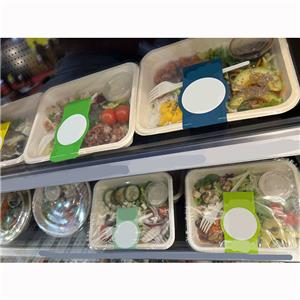
Prepared meals can require more demanding packaging performance, including resistance to moisture, compatible sealing, and temperature suitability.
Plain paperboard is not automatically suitable for these conditions. A coated paper package, plastic tray, molded fiber container, or another specialized structure may be more appropriate depending on the food and processing requirements.
6. What Is the Difference Between Paper Packaging and Bagasse Packaging?
Paper packaging and bagasse packaging both use plant fibers, but they are produced and designed differently.
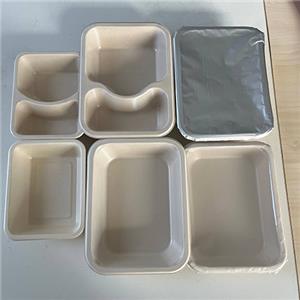
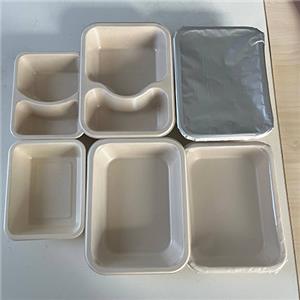
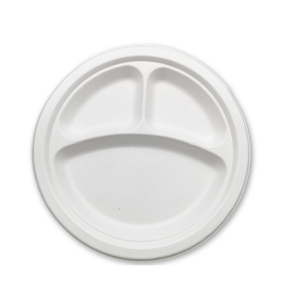
Paper and paperboard are commonly formed into sheets, rolls, cartons, and boxes. Bagasse packaging is generally made by molding sugarcane fiber into three-dimensional products such as plates, bowls, takeaway containers, and trays.
Bagasse is the fibrous residue left after sugarcane juice extraction.
Why Consider Molded Bagasse Packaging?
For foodservice distributors and wholesalers, molded bagasse products can offer an additional option for applications where a formed container is more suitable than a paper box.
Potential advantages include:
- Molded shapes: Products can be formed into plates, bowls, trays, and containers.
- Product variety: Different sizes and compartment configurations can serve different foodservice needs.
- Customization: Custom molds may help meet specific customer requirements.
- A plant-fiber material: Bagasse provides an alternative raw material for selected foodservice packaging products.
However, bagasse is not automatically more sustainable than paper in every situation. Fiber sourcing, manufacturing, transport, product performance, coatings, and end-of-life conditions all affect the overall result.
The correct comparison should consider two complete packages performing the same job, not simply compare the names of their raw materials.
7. Are Coated Bagasse Food Trays More Eco-Friendly Than Paper Trays?
It depends on the design and intended use.
Some prepared foods need a tray that can resist oil and moisture while supporting heat sealing. In these cases, a coated bagasse tray may be worth evaluating alongside coated paperboard and plastic tray options.
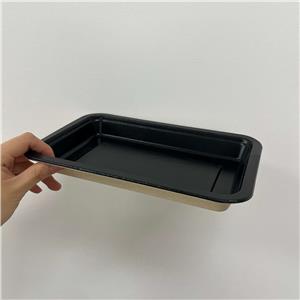
A coated bagasse tray combines a molded fiber base with an inner film or functional coating.
Depending on the structure, the coating may help provide:
- Improved resistance to oil and moisture.
- Compatibility with suitable heat-sealing systems.
- Selected barrier properties.
- Performance tailored to specified storage conditions.
These functions can be useful for certain ready meals and prepared-food applications. But the tray, inner film, lidding material, and sealing conditions must be considered together. The way a seal is qualified on the finished pack is described in our article on heat-sealing systems for bagasse trays.
Which Inner Film Should You Choose?
Different coated tray structures may use materials such as PP, PET, CPET, PLA, EVOH-based structures, or PBAT-based options, depending on the product range and application.
The correct material depends on the food, temperature range, required barrier performance, sealing equipment, and applicable food-contact requirements.
For example, a chilled ready meal may have different requirements from a frozen meal or a product intended for reheating.
MAP and vacuum skin packaging also require specific performance validation. Not every coated bagasse tray is suitable for every sealing or shelf-life application.
Are Coated Bagasse Trays Plastic-Free?
Not necessarily. Many coated bagasse trays contain a plastic inner film.
This means the environmental profile of the complete package cannot be judged by its bagasse base alone. The coating affects material use, disposal, and potentially recycling or compostability.
If your customers require compostable packaging, ask for certification covering the exact finished product. If recyclability is the goal, check whether the complete structure is accepted by the intended recycling system.
For distributors and wholesalers, transparent material information is essential when comparing packaging products and explaining them to customers.
Explore our bagasse food tray products to review packaging options for selected foodservice applications.
8. How Should Distributors and Wholesalers Choose Sustainable Food Packaging?
If you are sourcing packaging for multiple customers, the best option may differ from one application to another.
Use the following checklist when evaluating a supplier or comparing products.
Identify the Intended Application
Define the food type, portion size, storage temperature, shelf-life target, transportation conditions, and whether the package needs to be sealed.
Request Complete Material Information
Ask whether the package contains coatings, liners, adhesives, or other components. Confirm the materials used in both the main container and any lid or lidding film.
Check Samples and Performance
Evaluate the package with the actual food and production process where possible.
For heat-sealed trays, check compatibility with the intended film and sealing equipment. For frozen or reheated products, verify the temperature limits of the complete package.
Review Food-Contact Documentation
Request relevant documentation for the exact product and intended market. Do not assume that a document for one material or product automatically applies to every item in a supplier's range.
Compare Total Delivered Cost
Include unit price, tooling, minimum order quantity, shipping, storage, and potential product damage.
A product with a lower unit price is not necessarily the more economical option if it causes operational problems or fails to meet customer specifications.
Verify Environmental Claims
Ask for evidence supporting claims such as recycled content, recyclability, compostability, or plastic-free construction. The documents we make available on request are listed in our certification and test report section.
For international sales, confirm the applicable requirements in the destination market before using these claims in product listings or customer marketing.
9. Why Source Bagasse Food Packaging From Hebei Mountain Environmental Protection Technology Co., Ltd.?
For buyers who want to expand their foodservice packaging range beyond conventional paper and plastic formats, working directly with a specialized manufacturer can help simplify product evaluation and customization.
Hebei Mountain Environmental Protection Technology Co., Ltd. focuses on molded bagasse food packaging, including tableware and coated food trays for selected applications.
Our B2B product and project scope includes:
- Molded bagasse plates, bowls, and food containers.
- Coated bagasse trays for selected prepared-food applications.
- Different tray sizes and compartment configurations.
- Custom mold development and OEM/ODM projects.
- Coordination of compatible lidding films and sealing solutions for suitable applications.
For distributors, importers, and wholesalers, we recommend starting with your actual requirements rather than choosing a material based on a general environmental label.
Share your intended food application, dimensions, storage conditions, sealing requirements, target market, and expected order volume. These details help determine which products are worth evaluating.
For coated trays, confirm the inner-film structure, temperature limits, and sealing compatibility for the specific application before bulk production.
Looking for a bagasse food packaging manufacturer? Contact our team to discuss wholesale products, samples, and customization options.
Conclusion: Is Paper Packaging Eco-Friendly?
Paper packaging can be an effective option for many products, particularly when the material is responsibly sourced, used efficiently, and compatible with local recycling systems.
However, paper is not automatically the best environmental choice for every application. Moisture resistance, barrier performance, coatings, food protection, and end-of-life options all matter.
Molded bagasse packaging offers another plant-fiber option for selected foodservice applications. Coated bagasse trays may also be worth considering when prepared foods require additional oil or moisture resistance or compatible heat-sealing functionality.
For distributors and wholesalers, the best approach is to compare complete packaging systems based on real performance, cost, material structure, and disposal conditions.
A well-chosen package should protect the food, meet customer requirements, and support credible environmental goals without making claims that the product cannot substantiate.
Frequently Asked Questions
1. Is paper packaging eco-friendly?
Paper packaging can be an environmentally preferable option, depending on fiber sourcing, material use, manufacturing, coatings, transportation, and end-of-life conditions. The complete package should be evaluated rather than assuming all paper products have the same impact.
2. Is paper packaging better than plastic?
Not in every situation. Paper may be suitable for cartons and dry-food packaging, while certain plastic formats provide moisture resistance, sealing, or barrier performance that paper alone cannot offer. Compare products designed for the same application.
3. Can paper food packaging be recycled?
Many paper and cardboard packages can be recycled, but acceptance depends on the material structure, food contamination, coatings, and local recycling systems. Check the requirements for the specific package and destination market.
4. Is coated paper packaging recyclable?
It depends on the coating, package construction, and recycling system. Some coatings or plastic liners can complicate fiber recovery. Ask the supplier for details and verify acceptance with the relevant recycling program.
5. Is bagasse packaging better than paper packaging?
Neither material is always better. Bagasse is commonly molded into three-dimensional foodservice products, while paperboard is often used for boxes and cartons. The best option depends on product performance, manufacturing, transport, and end-of-life conditions.
6. Are coated bagasse trays compostable?
Not automatically. Compostability depends on the complete package, including the coating or inner film, the relevant certification, and the available composting conditions.
7. Can coated bagasse trays be used for ready meals?
Selected products may be suitable for ready meals, depending on their temperature limits, sealing compatibility, and barrier performance. The complete tray-and-film system should be validated for the intended application.
8. What should wholesalers ask a sustainable packaging supplier?
Ask about material structure, product specifications, samples, food-contact documentation, environmental certifications, minimum order quantities, lead times, customization, and repeat-order consistency.