How Can I Make My Product Packaging More Eco-Friendly? 8 Practical Steps for Businesses
Introduction
How can I make my product packaging more eco-friendly without increasing costs or compromising product quality?
For many businesses, this is no longer just a design question. Packaging affects purchasing decisions, shipping costs, product protection, waste management, and the way customers perceive a brand.
The challenge is finding a solution that works in the real world. A package made from recycled materials may be suitable for one product but not another. Paper packaging can work well for dry goods, while food containing oil or moisture may need additional protection. Plant-fiber packaging offers another option for selected applications, but its performance and end-of-life requirements still need to be checked.
For importers, distributors, and wholesalers, there is also a commercial consideration: customers need packaging that meets their requirements at a price and order quantity that makes sense.
The good news is that improving packaging does not always mean replacing everything at once. You can start by reviewing your current packaging, removing unnecessary components, comparing material options, and working with suppliers to test practical alternatives.
In this guide, we explain eight ways to make product packaging more eco-friendly and explore how molded bagasse packaging and coated bagasse food trays can support selected food packaging projects.
1. Review Your Current Packaging Before Changing Materials
The first step is to understand what you already use.
Many products have several layers of packaging: a primary container, an inner liner, a printed sleeve, a retail box, and an outer shipping carton. Some components are essential, while others may add material without providing much practical value.
Before switching to a different material, ask a few simple questions:
- Does every packaging component serve a necessary purpose?
- Can the package be made smaller or lighter?
- Are multiple materials being combined unnecessarily?
- Is the packaging suitable for the way the product is stored and transported?
- Can customers realistically recycle, reuse, or compost the package after use?
For B2B buyers, it helps to review packaging by product category or SKU rather than making a general decision for the entire business.
For example, a food distributor may find that its bakery products need a different solution from its ready meals. A single packaging strategy may not work equally well for both.
Practical tip: Start with products that use a large amount of packaging or generate frequent customer complaints about damaged products, leakage, or difficult disposal. These categories may offer the clearest opportunities for improvement.
2. Reduce Unnecessary Packaging Materials
One of the simplest ways to make packaging more eco-friendly is to use less material without reducing the protection the product needs.
This may involve reducing oversized boxes, removing unnecessary inserts, optimizing tray dimensions, or simplifying secondary packaging.
For food packaging, however, reducing material should never mean ignoring performance. A tray that bends under the weight of food or a container that leaks during transport may create product waste and additional costs.
The goal is to find the right balance between material efficiency and reliable protection.
For distributors and wholesalers, packaging design also affects shipping and storage. More efficient carton dimensions can help improve pallet utilization and warehouse planning, depending on the product and packing configuration.
When reviewing a package, compare:
- Packaging weight per unit.
- Product-to-package size ratio.
- Number of packaging components.
- Carton dimensions and units per carton.
- Product damage and leakage rates.
These measurements give your business a more useful starting point than simply choosing packaging that looks more environmentally friendly.
3. Choose Materials Based on the Product's Actual Needs
There is no single material that is best for every product. A better approach is to match the packaging material to the product's physical properties, storage conditions, and disposal options.
Here is a comparison of common packaging choices.
| Material | Suitable applications | What to consider |
|---|---|---|
| Paper and paperboard | Dry foods, bakery boxes, sleeves, cartons | Grease and moisture may require additional protection |
| Recyclable plastic | Containers, bottles, trays and tubs | Confirm the exact polymer and local recycling options |
| Molded bagasse fiber | Plates, bowls, takeaway containers and selected trays | Check strength, moisture resistance, and intended use |
| Glass | Bottles and jars | Weight, breakage, reuse systems, and transport |
| Metal | Cans and selected food trays | Weight, product requirements, and available recovery systems |
| Compostable packaging | Specific applications with suitable disposal pathways | Verify certification and local composting access |
A material change should be based on the performance and environmental requirements of the complete package.
For example, replacing a plastic tray with an uncoated fiber tray may be appropriate for one food application but unsuitable for another that requires extended moisture resistance or a specific sealing system.
The best solution is the one that meets the product's needs while offering a credible environmental benefit.
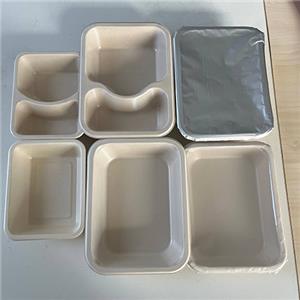
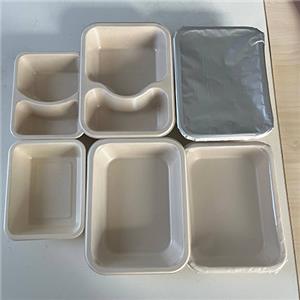
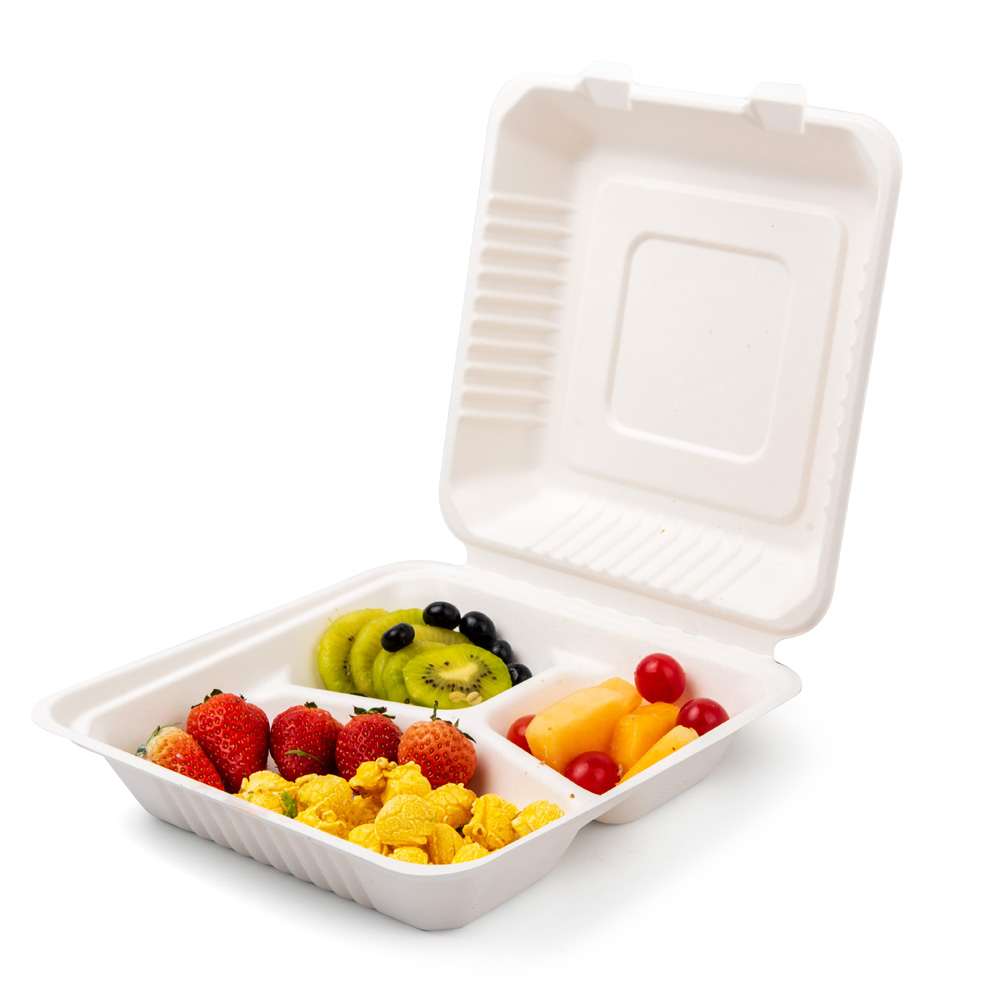
4. Consider Molded Bagasse Packaging for Foodservice Products
For businesses selling takeaway food, catering supplies, and disposable foodservice packaging, molded bagasse products are worth evaluating.
Bagasse is the fibrous residue left after sugarcane juice extraction. This plant fiber can be molded into products such as plates, bowls, takeaway containers, and food trays.
Instead of relying only on conventional plastic packaging, buyers can consider bagasse products for applications where molded fiber meets the required functional specifications.
Why Do Buyers Consider Bagasse Packaging?
A plant-fiber raw material
Bagasse provides an alternative raw material for molded foodservice packaging.
Flexible product design
Molded fiber can be formed into different shapes, sizes, depths, and compartment configurations to suit various foodservice needs.
A broad range of applications
Depending on product specifications, bagasse plates, bowls, and containers may be suitable for selected takeaway, catering, and prepared-food applications.
Customization opportunities
Custom molds can help distributors and food brands develop packaging for specific portion sizes, menus, or customer requirements.
For wholesalers, bagasse packaging may provide an additional product category for customers seeking alternatives to conventional foodservice formats.
However, not all bagasse products have the same performance. Buyers should check the product's strength, resistance to oil and moisture, temperature limitations, and relevant food-contact documentation before ordering in bulk.
It is also important to distinguish between the use of a plant-fiber raw material and the environmental performance of the finished package. Compostability, recyclability, and other claims depend on the complete product and the applicable conditions.
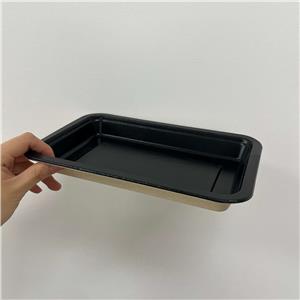
5. Evaluate Coated Bagasse Food Trays for More Demanding Applications
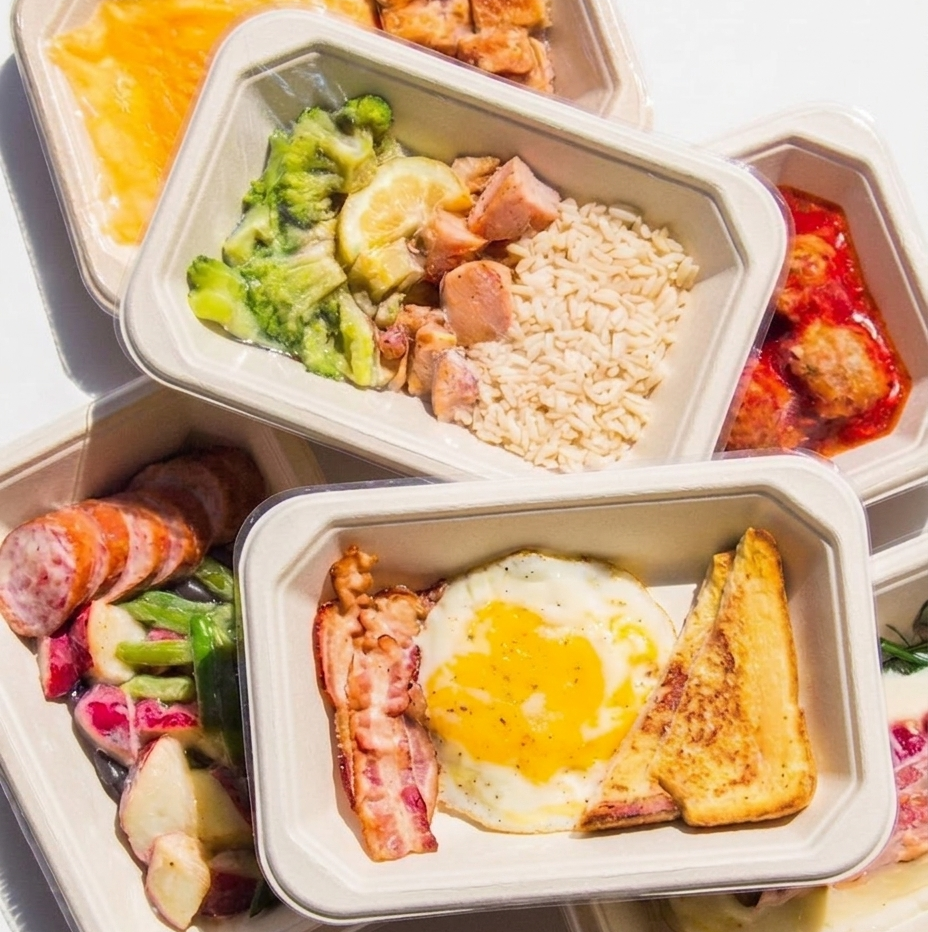
Some foods require functions that an uncoated molded fiber container may not provide on its own.
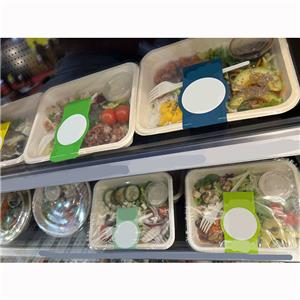
Ready meals, saucy dishes, oily foods, and certain prepared foods may require additional resistance to moisture or oil. Food manufacturers may also need trays that work with heat-sealing equipment and compatible lidding films. How a seal is qualified on the finished pack is explained in our article on whether bagasse trays can be heat sealed.
Coated bagasse food trays combine a molded bagasse base with an inner film or functional coating selected for the intended application.
Depending on the structure, the coating may provide:
- Improved moisture resistance.
- Improved oil and grease resistance.
- Compatibility with suitable heat-sealing systems.
- Selected barrier performance.
- A tray structure designed for particular storage conditions.
For food manufacturers and packaging distributors, this can offer another format to evaluate when developing a food packaging range.
Which Coating Should You Choose?
Different inner-film materials have different properties. Options used in coated tray projects may include PP, PET, CPET, PLA, EVOH-based structures, and PBAT-based structures, depending on the supplier's product range and the intended application.
The correct choice depends on several factors:
- The type of food being packed.
- Whether the food is chilled, frozen, or intended for reheating.
- The required resistance to oil, moisture, and gases.
- The sealing machine and lidding film.
- Applicable food-contact requirements.
- The desired end-of-life route.
For example, a chilled ready meal and a frozen meal may need different tray specifications. A package intended for modified atmosphere packaging (MAP) also needs suitable barrier performance and seal integrity verified for the specific food and shelf-life target.
Not every coated bagasse tray is suitable for microwave use, oven use, MAP, or vacuum skin packaging. These functions must be confirmed for the complete tray-and-film system.
Does Coated Bagasse Packaging Contain Plastic?
It can. Many coated bagasse trays have a plastic inner film.
This matters when evaluating environmental goals. A molded bagasse base does not automatically make the complete package plastic-free or compostable.
If your business wants to reduce conventional plastic use, ask suppliers to explain the material structure and compare it with your existing packaging. If your customers require compostable packaging, request documentation covering the exact finished product, including its coating.
You can explore our molded fiber and coated tray options for potential B2B applications.
6. Make Packaging Easier to Recycle, Reuse, or Compost
Reducing packaging materials is only part of the process. You should also consider what happens after customers finish using the package.
Different end-of-life options suit different materials and local systems.
Design for Recycling Where Practical
If recycling is the preferred route, review the entire package rather than looking only at the main material.
Mixed materials, liners, adhesives, labels, and coatings can affect whether a package is accepted by local recycling systems.
Ask suppliers which components are included and check the disposal guidance for your target market.
Consider Reuse for Suitable Applications
Reusable packaging may be worth evaluating for closed-loop operations, such as food distribution between a central kitchen and several local sites.
The business case depends on the number of reuse cycles, cleaning requirements, return logistics, and the durability of the packaging.
For single-use foodservice products, reuse may not always be practical. The appropriate choice depends on the operating model.
Verify Compostability Claims
Compostable packaging is not automatically the right solution for every customer.
Some products require industrial composting conditions, and access to suitable collection and processing facilities varies by market.
If you plan to sell compostable packaging, check whether certification covers the complete product and whether the target customers have a realistic disposal route.
For coated bagasse products, the inner film must be considered alongside the fiber base. Where documents are needed for a specific market, the reports we make available on request are listed in our certification and test report section.
Clear disposal instructions and accurate claims help distributors avoid confusing their customers.
7. Work With Suppliers to Develop Better Packaging
Changing packaging is often easier when suppliers are involved early.
A packaging manufacturer can help review dimensions, material options, tooling, production requirements, and samples. For more complex food packaging projects, it is also important to consider how the package will work with filling, sealing, labeling, and distribution equipment.
When evaluating a supplier, consider the following questions.
Can the supplier explain the material structure?
You should understand what the package is made from, including any liners, coatings, or other components.
Can the supplier provide samples?
Samples let your team check the dimensions, appearance, stacking, handling, and fit with the intended product.
Can the supplier support customization?
For certain products, custom shapes, compartment layouts, dimensions, and branding may help meet specific customer requirements.
Can the supplier provide relevant documentation?
Ask for product specifications, applicable food-contact documentation, and evidence supporting any environmental claims.
Can the supplier support repeat orders?
For wholesalers and importers, consistent quality, clear production schedules, and practical minimum order quantities are important to long-term business planning.
It is usually better to test a proposed packaging change on a limited scale before moving to a large order.
8. Measure Whether the New Packaging Is Actually Better
A packaging change should be evaluated using clear criteria rather than appearance alone.
Before changing materials, define what your business wants to improve. This might include reducing packaging weight, using fewer components, improving shipping efficiency, meeting customer specifications, or accessing a more suitable waste-management route.
After testing a new package, compare the results with the existing one.
Useful indicators include:
- Material weight per packaged product.
- Number of components and material types.
- Shipping and storage efficiency.
- Leakage, damage, or rejection rates.
- Unit cost and total delivered cost.
- Verified recycling or compostability status.
- Customer feedback and operational performance.
Where possible, use reliable data to compare environmental impacts across the package's life cycle. A plant-based material is not automatically better in every environmental category, and a package that fails to protect food can create additional waste.
For international distributors, this measured approach also makes it easier to explain the benefits and limitations of a product to different customers.
9. How Hebei Mountain Environmental Protection Technology Co., Ltd. Supports Bagasse Food Packaging Projects
For foodservice suppliers and distributors exploring molded fiber packaging, working directly with a manufacturer can help simplify product selection and customization.
Hebei Mountain Environmental Protection Technology Co., Ltd. focuses on bagasse food packaging, including molded fiber tableware and coated food trays for selected applications.
Our B2B product and project scope includes:
- Bagasse plates, bowls, and food containers.
- Coated bagasse trays for selected prepared-food applications.
- Different tray sizes and compartment configurations.
- Custom mold development and OEM/ODM projects.
- Coordination of compatible lidding film and sealing solutions for suitable tray applications.
For a new project, the most useful starting point is to tell us what food you need to package, your required dimensions, storage conditions, expected order volume, and target market.
We can then discuss available products and customization requirements. For coated trays, the inner film, sealing conditions, and temperature limitations should be confirmed for the specific application.
Looking for a bagasse food packaging manufacturer for wholesale or distribution?
Contact our team to discuss your product range, sample requirements, and packaging project.
Conclusion
Making product packaging more eco-friendly does not always require a complete redesign. Start by reviewing your current package, removing unnecessary components, choosing materials that match the product, and checking realistic end-of-life options.
For food businesses, protection and functionality remain essential. Packaging must work with the food, storage conditions, production equipment, and distribution process.
Molded bagasse packaging can be a useful option for selected foodservice applications. Coated bagasse trays may also be suitable for prepared foods that require additional resistance to oil or moisture or compatibility with a heat-sealing system.
The important thing is to evaluate the complete package, including its inner film and disposal requirements, rather than relying on material names or broad environmental claims.
For distributors and wholesalers, the most effective approach is to work with a supplier that can explain the specifications, provide samples, and help match products to actual customer needs.
Frequently Asked Questions
1. How can I make my product packaging more eco-friendly?
Start by reviewing your existing packaging, removing unnecessary components, reducing material use where practical, and choosing materials that suit the product and available disposal systems. Test alternatives before making large-scale changes.
2. What is the most eco-friendly packaging material?
There is no single best material for every product. Paperboard, recycled materials, molded bagasse, and other packaging formats have different strengths and limitations. The best option depends on product protection, material use, manufacturing, transport, and end-of-life conditions.
3. Is bagasse packaging a good alternative to plastic?
Bagasse packaging can be an alternative to conventional plastic formats for selected foodservice applications. Suitability depends on the product's strength, oil and moisture resistance, temperature requirements, and intended use.
4. Is coated bagasse packaging plastic-free?
Not necessarily. Many coated bagasse products contain a plastic inner film. Buyers should confirm the full material structure before describing the product as plastic-free.
5. Are coated bagasse food trays compostable?
This depends on the complete tray structure and the applicable certification. The coating or inner film may affect compostability, so buyers should request evidence for the exact finished product.
6. Can coated bagasse trays be used for ready meals?
Selected coated bagasse trays may be suitable for ready meals. The correct specification depends on the food, storage temperature, sealing method, barrier requirements, and any reheating instructions.
7. How can wholesalers find a reliable eco-friendly packaging supplier?
Look for suppliers who can provide clear specifications, samples, relevant documentation, customization options, consistent quality, and realistic lead times. Verify environmental claims and test products before placing large orders.
8. Is sustainable packaging more expensive?
Not always, but the cost depends on material, design, order quantity, tooling, freight, and production requirements. Compare the total delivered cost and package performance rather than looking at unit price alone.