How to Choose the Right Film for a Bagasse Food Tray: PP vs PET vs CPET vs PLA vs EVOH
When a food manufacturer starts looking for coated bagasse food trays, one of the first questions is usually:
Which film should I choose?
PP, PET, CPET, PLA, EVOH, and PBAT-based films can all be used in different food packaging applications. However, they are not interchangeable.
The right film depends on the food, storage temperature, heating method, sealing process, shelf-life requirements, packaging equipment, and the performance expected from the final package.
For this reason, choosing a film should not start with the question of which material is “best.”
It should start with:
What does the food package actually need to do?
This guide explains the main film options used with molded bagasse food trays and how food manufacturers, brands, supermarkets, and distributors can evaluate them.
Why Does a Bagasse Tray Need a Functional Film?
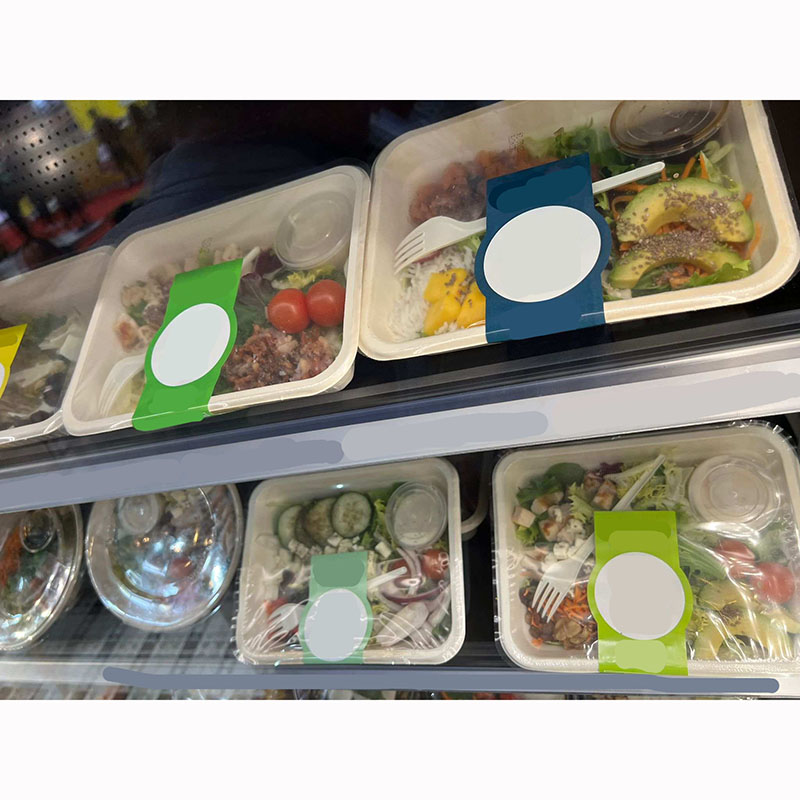
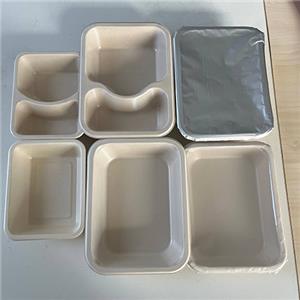
Molded bagasse fiber provides the main structure of the tray.
For many foodservice applications, untreated molded fiber can be sufficient.
Ready meals and industrial food packaging can be more demanding.
A package may need to contain:
- Water
- Oil
- Sauce
- High-moisture foods
- Frozen foods
- Prepared meals
It may also need to be:
- Heat sealable
- Leak resistant
- Suitable for refrigeration
- Suitable for freezing
- Suitable for microwave heating
- Suitable for oven heating
- Compatible with MAP
- Compatible with VSP
- Suitable for longer shelf-life applications
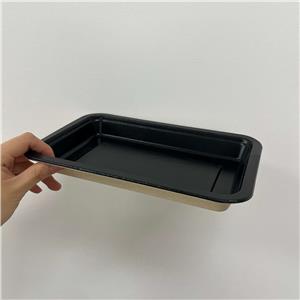
A functional film can be added to the bagasse tray to provide properties that the fiber structure alone may not provide.
The basic concept is:
Molded bagasse fiber = tray structure
Functional film = application-specific performance
Lidding film = final closure
This allows a molded fiber tray to be developed for applications that require more than a standard disposable container.
The Main Film Options for Bagasse Food Trays
The most commonly considered film structures include:
- PP
- PET
- CPET
- PLA
- EVOH-enhanced structures
- PBAT-based structures
Each has a different role.
There is no single film that should be used for every food application.
Quick Comparison
| Film | Main Considerations | Typical Applications |
|---|---|---|
| PP | Good option for many heated and chilled food applications | Ready meals, prepared food, foodservice |
| PET | Useful where PET-based performance is required | Food trays, prepared foods |
| CPET | Designed for higher-temperature applications | Ovenable and heat-intensive ready meals |
| PLA | Compostable film option for suitable applications | Compostable-oriented food packaging |
| EVOH | High oxygen-barrier layer used in multilayer structures | MAP and extended shelf-life applications |
| PBAT | Flexible compostable film option | Compostable packaging applications |
The table is only a starting point.
The actual film structure and temperature range must be confirmed for the specific tray and application.
1. PP Film for Bagasse Trays
PP, or polypropylene, is widely used in food packaging.
When used as a functional film on a molded bagasse tray, PP can be considered for applications requiring good sealing performance and suitable temperature resistance.
It can be suitable for many:
- Chilled ready meals
- Prepared foods
- Takeaway meals
- Supermarket food products
- Heated food applications
One advantage of PP is that many food manufacturers are already familiar with PP-based packaging systems.
This can make PP a practical option when a company is transitioning from conventional PP trays toward a molded-fiber-based packaging format.
When Should You Consider PP?
PP may be worth considering when:
- Your existing packaging uses PP
- Your application involves chilled or heated food
- Your sealing equipment is already configured for compatible PP structures
- You need a practical heat-sealable solution
- Compostable film is not a requirement for the application
The exact operating range should be confirmed based on the complete tray construction and sealing system.
2. PET Film for Bagasse Trays
PET, or polyethylene terephthalate, is another established material in food packaging.
A PET-based functional film can be considered when the packaging application requires PET-related performance characteristics.
PET structures are used in many food packaging applications because of their dimensional stability and established packaging performance.
For bagasse trays, PET can be considered for:
- Prepared meals
- Fresh food
- Chilled products
- Foodservice packaging
- Applications where PET-based packaging characteristics are preferred
As with PP, the film should be evaluated as part of the complete bagasse tray construction rather than as an independent material.
3. CPET Film for High-Temperature Applications
CPET, or crystallized polyethylene terephthalate, is particularly relevant when temperature performance is important.
Some ready meals are designed to go directly from refrigerated or frozen storage to consumer heating.
In these applications, the tray needs to maintain its structural and sealing performance during the heating process.
CPET-based structures can therefore be considered for applications such as:
- Ovenable ready meals
- Microwave meals
- Frozen meals
- Prepared foods requiring higher-temperature heating
For example, if a food manufacturer currently uses a CPET tray and wants to investigate a molded bagasse replacement, a CPET-compatible functional layer may be one option to evaluate.
The actual temperature capability depends on the specific film, tray construction, and packaging process.
Important:
Do not select a tray simply because the film is called “CPET.”
The complete package should be tested under the actual heating conditions, including:
- Heating temperature
- Heating time
- Food weight
- Food moisture
- Oven or microwave type
- Cooling conditions
- Sealing structure
4. PLA Film for Compostable-Oriented Applications
PLA, or polylactic acid, is a bio-based polymer commonly used in compostable packaging applications.
For molded bagasse trays, PLA-based films can be considered when the customer wants a fiber-based package with a compostable-oriented film structure.
PLA can be relevant for:
- Compostable food packaging projects
- Chilled food
- Selected ready meals
- Foodservice applications
- Applications where compostable materials are part of the packaging specification
However, PLA should not automatically be selected simply because it is bio-based.
Temperature performance and the final compostability requirements need to be considered carefully.
If the package will be exposed to high temperatures, the specific PLA structure needs to be evaluated before production.
5. EVOH for High Oxygen Barrier Applications
EVOH is different from the other materials in this comparison.
It is commonly used as a high oxygen-barrier layer within a multilayer packaging structure rather than simply functioning as a standalone film.
This makes EVOH particularly relevant to applications where oxygen transmission is an important consideration.
One example is:
Modified Atmosphere Packaging (MAP)
For MAP ready meals, the package may need to maintain a controlled atmosphere for the required storage period.
The packaging system therefore needs suitable:
- Oxygen barrier
- Moisture barrier
- Seal integrity
- Tray structure
- Lidding film
An EVOH-enhanced bagasse tray structure can be considered when higher oxygen-barrier performance is required.
When Should EVOH Be Considered?
EVOH can be considered when:
- The product uses MAP
- Oxygen transmission is a critical packaging parameter
- Longer shelf life is required
- The food is sensitive to oxygen
- A higher-barrier structure is needed
However, EVOH is not automatically necessary for every ready meal.
If the food does not require high oxygen barrier performance, a simpler film structure may be more appropriate.
6. PBAT-Based Film for Compostable Applications
PBAT is a biodegradable polymer often used in flexible compostable film formulations.
For selected bagasse packaging projects, PBAT-based film structures can be considered where compostable packaging is part of the customer's requirements.
Potential applications include:
- Compostable food packaging
- Foodservice products
- Selected chilled food applications
- Flexible film structures
As with PLA, the final package needs to be evaluated based on its complete material structure and the requirements of the intended compostability certification or disposal system.
PP vs PET vs CPET: Which One Should You Choose?
This is one of the most common questions from food manufacturers.
The answer depends primarily on the application.
If You Need a Practical PP-Based Solution
Consider PP when the project is based around PP packaging characteristics and suitable chilled or heated food applications.
If PET Performance Is Required
Consider PET when the packaging specification calls for a PET-based structure.
If High Temperature Is a Priority
Consider CPET when the package needs to handle higher-temperature heating conditions.
But remember:
Film selection should follow the actual temperature requirement, not the other way around.
PLA vs Conventional Polymer Films
PLA is often considered when compostability is an important part of the packaging strategy.
However, choosing PLA does not automatically make every bagasse tray suitable for every food application.
Before choosing PLA, check:
- Storage temperature
- Heating requirements
- Sealing conditions
- Food type
- Required shelf life
- Compostability requirements
- Certification requirements
For applications involving higher temperatures, a different film structure may be necessary.
This is why a material should always be selected based on the complete packaging specification.
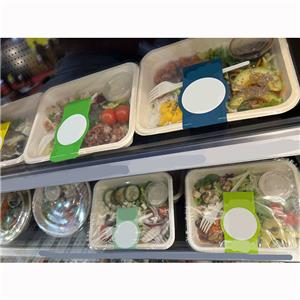
Which Film Is Best for Ready Meals?
There is no universal answer.
For example:
Chilled Ready Meal
A chilled meal may require:
Bagasse tray + PP/PET/PLA-based structure + suitable lidding film
Frozen Ready Meal
A frozen meal may require:
Bagasse tray + low-temperature-compatible functional layer + suitable lidding film
Ovenable Ready Meal
A high-temperature meal may require:
Bagasse tray + CPET-based structure + compatible lidding film
MAP Ready Meal
A MAP product may require:
Bagasse tray + high-barrier structure + MAP-compatible lidding film
Compostable-Oriented Food Packaging
A compostable packaging project may consider:
Bagasse tray + PLA or PBAT-based film structure
These are examples rather than universal specifications.
The final material should always be confirmed through product and packaging testing.
Film Selection Should Start With Temperature
Temperature is one of the easiest ways to narrow down the options.
Ask these questions first:
What is the lowest temperature?
For example, will the package be frozen?
What is the highest temperature?
Will the customer use a microwave or oven?
How long will the package remain at that temperature?
A short heating cycle and prolonged high-temperature exposure can create very different packaging requirements.
A useful evaluation process is:
Minimum storage temperature → Maximum heating temperature → Heating time → Food characteristics → Film selection
This is much more reliable than selecting a film based only on its material name.
Film Selection Should Also Consider the Food
The food inside the tray can affect the packaging requirements.
High-Moisture Foods
Meals containing significant moisture or sauce require good resistance to water and leakage.
Oily Foods
Oil can interact differently with packaging materials than water.
The actual food should therefore be used during testing.
Acidic Foods
Foods with acidic ingredients may require additional compatibility evaluation.
Frozen Foods
Low temperatures can affect material behavior and sealing performance.
High-Protein Foods
Meat and protein-rich foods may have stricter shelf-life and oxygen-control requirements.
There is no universal film specification for all these foods.
What About Heat Sealing?
Film selection and heat sealing are closely connected.
A tray may have excellent material properties but still fail if the sealing system is not correctly matched.
The sealing process can depend on:
- Tray film
- Lidding film
- Sealing temperature
- Pressure
- Dwell time
- Rim design
- Machine tooling
- Food contamination
- Production speed
This means the tray supplier should ideally evaluate the tray and lidding film together.
For commercial production, the goal is not simply to achieve a seal once.
The goal is to achieve a consistent seal throughout the production run.
What About MAP and VSP?
Film selection becomes even more important for MAP and VSP.
MAP
MAP requires suitable sealing and barrier performance.
For products sensitive to oxygen, a higher-barrier structure may be required.
EVOH can be considered as part of a multilayer structure when higher oxygen barrier performance is needed.
VSP
VSP requires the tray, film, and machine to work together under vacuum.
The tray should have suitable:
- Structural strength
- Rim design
- Sealing surface
- Film compatibility
A VSP project should be tested on the customer's actual equipment whenever possible.
Can You Match the Film to an Existing Plastic Tray?
Yes.
This is often the most practical approach for food manufacturers that already have a successful plastic package.
For example, if a company currently uses:
PP plastic tray → lidding film → heat sealing
the new project can be developed around:
Bagasse tray → PP-compatible functional film → lidding film → heat sealing
Likewise, an existing CPET tray can be evaluated as a reference for a molded bagasse replacement.
The manufacturer can review:
- Existing tray dimensions
- Film structure
- Filling volume
- Sealing area
- Temperature range
- Packaging equipment
- Storage conditions
The new bagasse tray can then be developed around these requirements.
Why the Film Should Be Selected Before Mold Development
In a custom project, it is important to define the material structure early.
The film can affect:
- Tray thickness
- Rim design
- Sealing area
- Forming process
- Tray dimensions
- Temperature requirements
- Packaging-line performance
If the customer changes the film after the mold has already been finalized, additional adjustments may be required.
For this reason, we recommend defining the intended application and film structure before finalizing the production mold.
How We Recommend Choosing a Film
A practical film-selection process looks like this:
Step 1 — Define the Food
What product will be packaged?
Step 2 — Define Storage
Chilled, frozen, ambient, or another condition?
Step 3 — Define Heating
No heating, microwave, oven, or other process?
Step 4 — Define Shelf Life
How long does the package need to protect the product?
Step 5 — Define Packaging Method
Standard heat sealing, MAP, VSP, or another process?
Step 6 — Check Existing Equipment
What tray dimensions and sealing machine are already being used?
Step 7 — Select the Film
Choose PP, PET, CPET, PLA, EVOH-enhanced, PBAT-based, or another suitable structure.
Step 8 — Test the Complete Package
Test the tray, film, lidding material, equipment, and actual food together.
This process helps avoid selecting a material based only on marketing claims.
A Simple Film Selection Matrix
For an initial discussion with a packaging supplier, the following matrix can be useful:
| Application | Film Options to Evaluate |
|---|---|
| Chilled ready meals | PP / PET / PLA |
| Frozen meals | PP / PET / selected compostable structures |
| Microwave meals | PP / CPET / application-specific structures |
| Ovenable meals | CPET / other high-temperature structures |
| MAP meals | High-barrier / EVOH-enhanced structures |
| VSP meals | Application-specific heat-sealable structures |
| Compostable-oriented packaging | PLA / PBAT-based structures |
| Existing PP tray replacement | PP-based structure |
| Existing CPET tray replacement | CPET-based structure |
This matrix should be treated as a starting point, not a final material specification.
The final choice should be confirmed through testing.
Why a One-Stop Manufacturer Can Make Film Selection Easier
For a B2B food packaging project, film selection can become complicated when the tray, film, mold, lidding film, and sealing machine come from different suppliers.
A one-stop packaging manufacturer can evaluate these elements together.
For example:
- Bagasse tray
- Functional film
- Lidding film
- Custom mold
- Sealing machine
- MAP/VSP equipment
This approach allows the packaging system to be developed around the actual production requirements.
It can also simplify communication during sampling and production testing.
Film Selection Is Not Only About Sustainability
Sustainability is an important consideration, but it should not be the only factor.
A food manufacturer should evaluate:
Food compatibility
Temperature performance
Sealing performance
Barrier requirements
Shelf life
Packaging equipment
Regulatory and certification requirements
Supply stability
Total packaging cost
A package that meets the sustainability target but cannot reliably protect the food or run on the production line is not a successful commercial packaging solution.
The best approach is to balance environmental goals with the technical requirements of the actual food product.
Why Choose Hebei Mountain for Coated Bagasse Food Trays?
Hebei Mountain Environmental Protection Technology Co., Ltd. focuses on molded bagasse food packaging and coated or laminated bagasse trays for commercial food applications.
We offer different film options according to customer requirements, including:
- PP
- PET
- CPET
- PLA
- EVOH-enhanced structures
- PBAT-based structures
Our team can help customers evaluate the appropriate structure based on:
- Food type
- Temperature
- Sealing process
- MAP/VSP requirements
- Existing plastic tray
- Packaging machine
- Shelf-life requirements
We also support custom mold development and 1:1 replacement projects based on existing plastic trays.
With more than 3,000 existing molds and 200+ new molds developed each year, we can support both standard products and customized B2B packaging projects.
Final Thoughts: Choose the Film Based on the Application
PP, PET, CPET, PLA, EVOH, and PBAT-based films each have different roles in bagasse food packaging.
The right choice depends on what the final package needs to do.
If the priority is a practical PP-based replacement, PP may be worth evaluating.
If PET performance is required, PET may be appropriate.
For higher-temperature applications, CPET can be considered.
For compostable-oriented packaging, PLA or PBAT-based structures may be options.
For applications requiring higher oxygen barrier performance, an EVOH-enhanced structure can be considered.
The key is to avoid choosing a film simply because it sounds more sustainable, more advanced, or more popular.
Instead, start with the actual packaging requirements:
Food → Temperature → Shelf Life → Sealing → Barrier → Equipment → Film
That is the foundation for developing a reliable coated bagasse food tray.
Need Help Choosing the Right Film?
If you are developing a new bagasse ready meal tray or replacing an existing PP, PET, or CPET tray, send us your product information and current packaging specifications.
Our team can evaluate the application and recommend a suitable bagasse tray, functional film, lidding solution, and sealing system.
Contact Hebei Mountain to discuss your coated bagasse food packaging project and request samples.