Ready Meal Packaging 2026: The B2B Buyer's Guide to EVOH-Laminated Bagasse Trays for MAP & VSP Lines
① What Is Ready Meal Packaging and Why the Material Decision Now Determines Market Access
Ready meal packaging refers to the complete packaging system that protects, preserves, and presents prepared meals—chilled ready meals, frozen dinners, microwave meals, meal kits, and fresh convenience food—from the production line to the consumer's oven or microwave. For wholesalers, food manufacturers, and meal kit brands, the packaging decision is no longer only about cost per unit. It now determines shelf life performance, automated line compatibility, regulatory access, and end-of-life story.
The numbers explain why this category is moving fast. The global ready-to-eat food packaging market was valued at USD 452.0 billion in 2026 and is projected to reach USD 647.4 billion by 2033 (Grand View Research). Within this, biodegradable meal trays are growing at a compound annual rate of 8.5%, from USD 1.63 billion in 2026 toward USD 3.68 billion by 2036 (Future Market Insights). Buyers are consolidating supplier lists around packaging that can seal on high-speed tray sealers, survive the cold chain, and satisfy PFAS and packaging-waste regulations in the EU and North America.
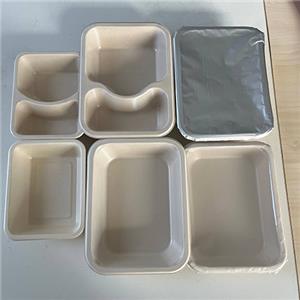
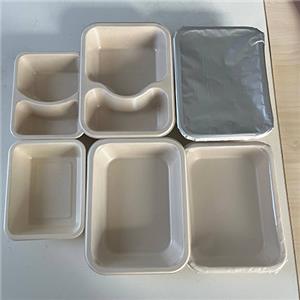
Traditional plastic CPET and PP trays still dominate ready meal packaging volumes, but they carry rising compliance costs: the EU Packaging and Packaging Waste Regulation (PPWR), state-level PFAS bans in the U.S., and growing industrial-compostability requirements across Europe and Australia. Laminated sugarcane bagasse trays—a molded fiber base with an ultra-thin functional lamination film—have emerged as the leading fiber-based alternative for ready meal packaging because they replicate the sealing and barrier behavior of plastic trays while keeping plastic content at or below 5%.
This guide explains what to specify: materials, films, temperature ranges, sealing systems, certifications, and the tariff picture for U.S. buyers—so your next ready meal packaging project clears both the quality gate and the compliance gate.
② Technical Parameters: What to Specify in a Ready Meal Tray
A reliable ready meal tray is defined by measurable parameters, not adjectives. When evaluating laminated bagasse trays for ready meal packaging, request specifications against the following baseline:
| Parameter | Specification | Why It Matters |
|---|---|---|
| Base material | 100% virgin sugarcane bagasse (molded pulp fiber) | Renewable agricultural fiber, stable supply, food-safe |
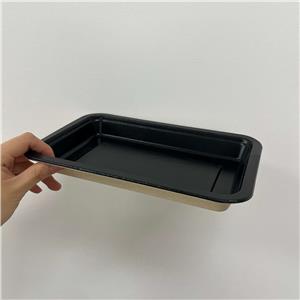
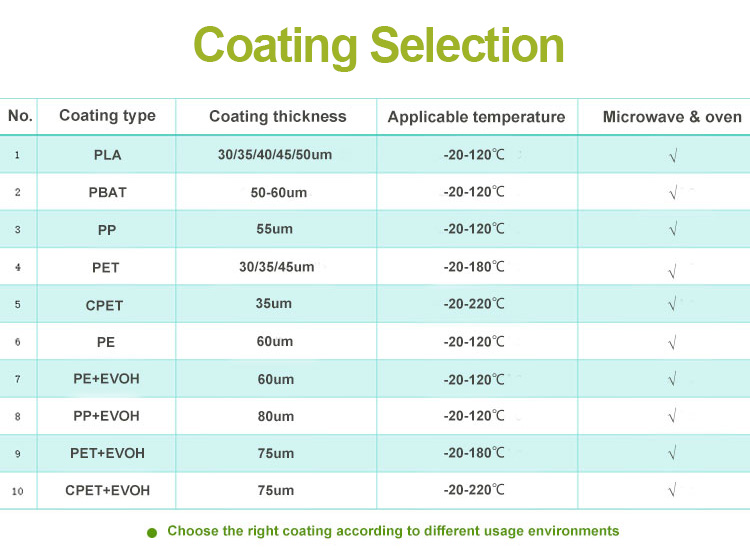
| Lamination film | PP / PET / CPET / PLA / EVOH (functional lamination film, customizable thickness) | Sealing, barrier, and heating performance are film-driven |
| Plastic content (laminated series) | ≤ 5% plastic (functional lamination film) | Qualifies as low-plastic fiber packaging under EU single-use-plastic rules |
| Plastic content (unlaminated series) | 100% plastic-free | For cold, non-sealed applications |
| Temperature range | -20°C to 120°C (PP) / -20°C to 180°C (PET) / -40°C to 220°C (CPET) | Covers freezer, microwave, and conventional-oven reheating |
| PFAS | PFAS-FREE, <10 ppm (ND) | Meets EU PFAS restrictions and U.S. state PFAS bans (e.g., California AB 1200) |
| Oxygen barrier | EVOH 5-layer high-barrier film; very low oxygen transmission rate (OTR) | Extends chilled shelf life; supports MAP and VSP |
| Sealing type | Heat-sealable / MAP compatible / VSP lamination | Runs on standard tray sealers with matched lidding films |
| Compostability | OK Compost Industrial; AS 4736 (ABAP Certificate No. 10587, ABA) | Industrial composting acceptance in EU/AU infrastructure |
| Food contact | FDA, LFGB, REACH compliant; SGS-tested samples | Legal entry documentation for US/EU markets |
The film matrix is the core engineering decision. PP film suits everyday microwave reheating; PET adds oven capability; CPET is the choice for bake-ready meals up to 220°C; PLA film enables an industrial-compostable system when paired with bagasse; and EVOH high-barrier film is specified when oxygen sensitivity drives shelf life, such as fresh meat, seafood, and premium ready meals under modified atmosphere packaging (MAP) or vacuum skin packaging (VSP).
③ Integrated Solutions: From Tray Sealer to Retail Shelf
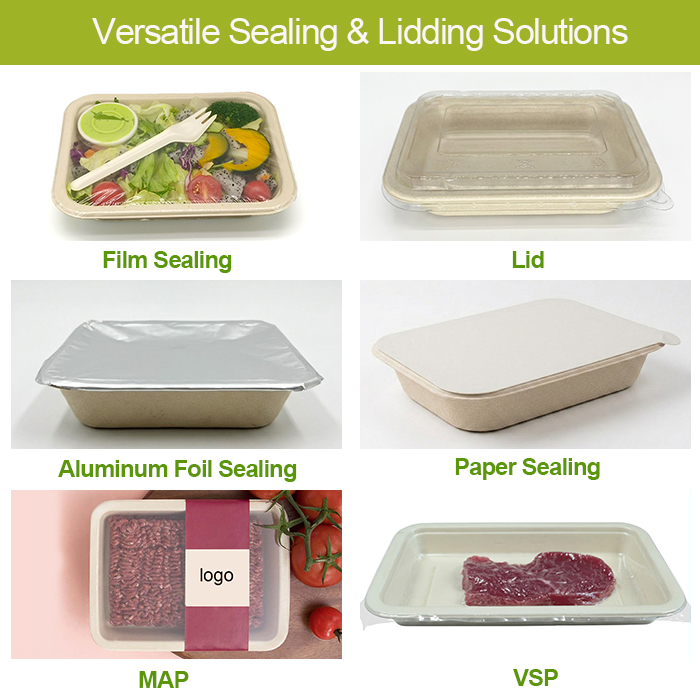
Ready meal packaging only performs when the tray, the film, the lid, and the machine work as one system. Hebei Mountain supplies the complete thermoseal ecosystem:
Tray sealing machines: manual, semi-automatic, and fully automatic models; matched sealing temperature, pressure, and dwell-time parameters for every tray.
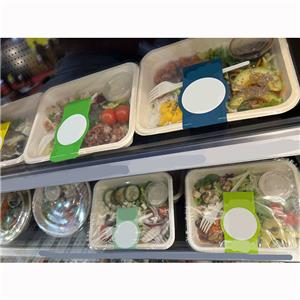
Lidding films: heat-sealable paper-based composite lids (fully industrially compostable), high-clarity anti-fog CPET/PET/PP films for retail display, aluminum foil lids for long-shelf-life meals, and PLA lidding films for a fully compostable sealed pack.
MAP compatible trays: low oxygen transmission rates through EVOH lamination extend chilled shelf life by 2–5x, keeping modified atmospheres stable inside the sealed pack.
VSP lamination trays: rigid, deformation-resistant fiber trays that hold a 99% vacuum pull during vacuum skin packaging, ideal for premium chilled meat and seafood meal kits.
Leak-proof engineering: flange flatness, film adhesion, and peel-strength controls ensure a 100% airtight seal with zero leakage in transport and retail display.
For a meal manufacturer, this integration removes the classic failure point: trays, films, and sealers from different suppliers that never quite align. A single qualified supplier shortens validation time and keeps the packaging line running at speed.
④ Customization: 1:1 Mold Replication Without Line Changes
The strongest argument for fiber-based ready meal packaging is a painless switch. Hebei Mountain develops molds that replicate an existing plastic tray's outer dimensions, nesting geometry, corner radii, and flange widths at 1:1 scale. A brand currently sealing PP or CPET trays can move to laminated bagasse without modifying denesters, filling lines, or sealing molds.
Available customization:
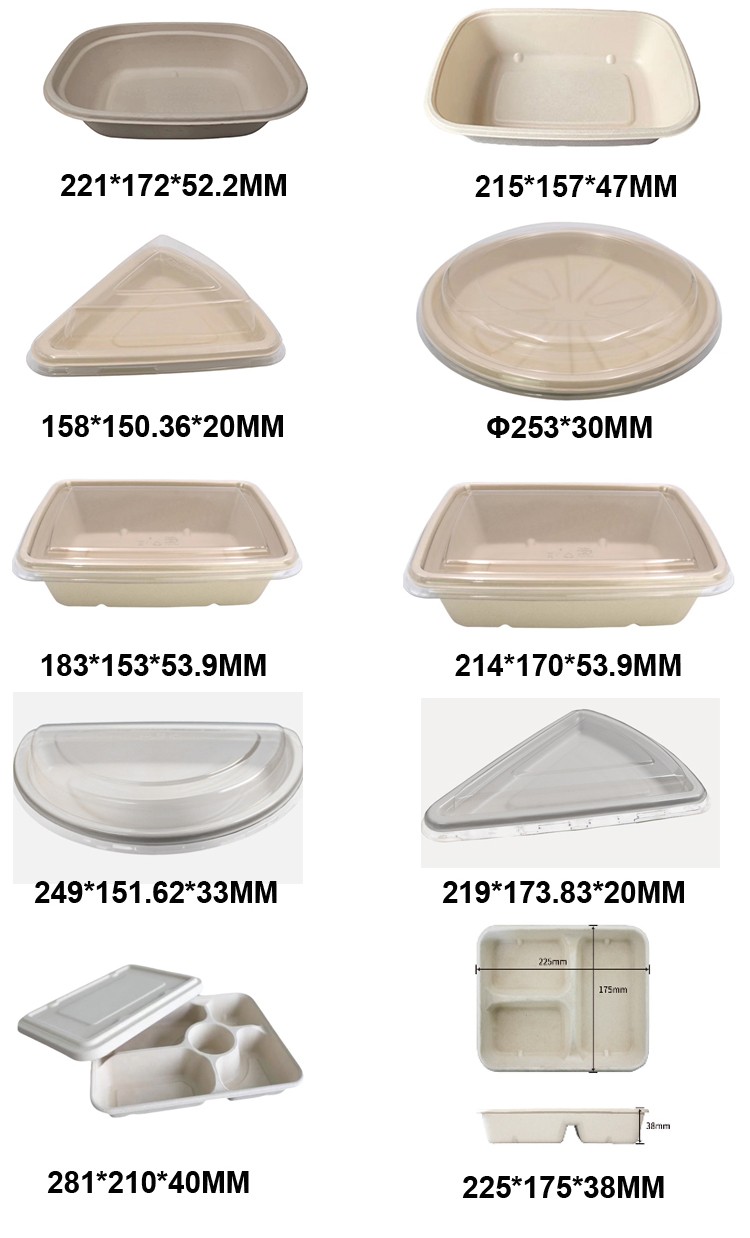
Shapes and sizes: 1 to 5+ compartments, custom length/width/depth.
Branding: embossed or debossed logos formed directly into the pulp during molding.
Film selection: unlaminated, or PP/PET/CPET/PLA/EVOH lamination matched to reheating and barrier needs.
Lidding and cartons: custom-printed films and branded outer cartons.
Tooling: 3,000+ existing molds; 200+ new molds developed annually; mold fee rebate programs at agreed order volumes.
⑤ Compliance: Certifications, Regulations, and the Tariff Picture
Certifications held (documents available on request):
OK Compost Industrial (TÜV AUSTRIA)
AS 4736 industrial composting — ABAP Certificate No. 10587 (ABA)
FDA food-contact compliance
LFGB (German Food and Feed Code) compliance
REACH compliance; SGS reports covering the laminated tray series for PPWR Total Fluorine, PFAS (ND), BPA (ND), and related food-contact parameters
Note on compostability: the laminated series is engineered for industrial composting (AS 4736 / OK Compost Industrial). Verify local commercial composting acceptance before claiming end-of-life outcomes in any specific municipality.
Regulatory context for 2026 buyers:
EU: PPWR entered into force; the EU-wide restriction on PFAS in food-contact fiber packaging takes effect August 12, 2026. PFAS-FREE (ND) documentation is now a market-entry requirement for ready meal packaging in the EU.
U.S.: California SB 54 and state-level PFAS bans (AB 1200) reward packaging with verified low plastic content and documented PFAS-free status.
Australia: AS 4736 industrial compostability is the recognized standard for fiber tableware labeling.
Tariff note for U.S. importers: molded pulp tableware from Hebei Mountain's Cambodia facility currently carries a 10% U.S. import duty with 0% antidumping duty (HTS 4823.70). Always confirm the current HTS classification and tariff schedule with your customs broker, as rates can change.
⑥ Expert FAQ
Q1: Can ready meal trays with lamination film go in the microwave or oven? Yes, depending on the film. PP-laminated trays are microwave-safe up to 120°C for daily reheating. PET extends this to 180°C. CPET-laminated trays are dual-ovenable and withstand baking at up to 220°C for 30–40 minutes—suitable for bake-ready frozen meals and airline catering.
Q2: How much shelf life can MAP and VSP add to a chilled ready meal? With EVOH 5-layer high-barrier lamination and matched barrier lidding film, chilled shelf life typically extends 2–5x compared with non-barrier packaging. The oxygen transmission rate of the EVOH layer keeps the modified atmosphere (MAP) or vacuum (VSP) stable, slowing oxidation of proteins and discoloration of fresh ingredients.
Q3: What certifications do your ready meal trays hold? OK Compost Industrial; AS 4736 industrial composting (ABAP Certificate No. 10587, ABA); FDA; LFGB; REACH. SGS reports cover the laminated tray series for PPWR Total Fluorine, PFAS (ND), BPA (ND), and related parameters.
Q4: If the tray is laminated, is it still "low plastic"? Yes. In the laminated series the functional lamination film is ≤ 5% of total product weight, so the packaging is classified as low-plastic fiber packaging under EU single-use-plastic definitions. Unlaminated bagasse products are 100% plastic-free.
Q5: Can we switch from our current CPET/PP tray to bagasse without changing our line? In most cases, yes. Hebei Mountain provides 1:1 mold replication of your existing tray geometry, so denesters, filling lines, and sealing molds remain unchanged. Send a sample or 3D file to start a compatibility assessment.
Q6: What is the U.S. import duty situation for bagasse trays? Molded pulp tableware (HTS 4823.70) from our Cambodia facility currently faces a 10% U.S. import duty with 0% antidumping duty. Confirm the applicable rate with your customs broker at the time of shipment.
About Hebei Mountain Environmental Protection Technology: manufacturer of laminated sugarcane bagasse tableware and total thermoseal packaging solutions—trays, lidding films, and sealing machines—serving ready meal, fresh food, and foodservice brands worldwide. PFAS-FREE (ND) fiber-based packaging, ≤ 5% plastic laminated series, industrial-compostable options (AS 4736 / OK Compost Industrial).