What Are the Options for Compostable Trays for Prepared Meals?
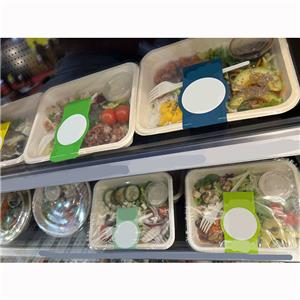
Prepared meals are no longer a niche category. From supermarket ready-to-heat dishes to subscription meal kits and airline catering, demand continues to grow. At the same time, consumers are paying closer attention to packaging waste.
That’s why one question keeps coming up:
What are the real options for compostable trays for prepared meals?
The answer depends on heating method, barrier performance, certification standards, and cost. Below is a practical breakdown of the most common materials used today — and what food brands should consider before switching.
Why Compostable Trays Matter in Prepared Meals
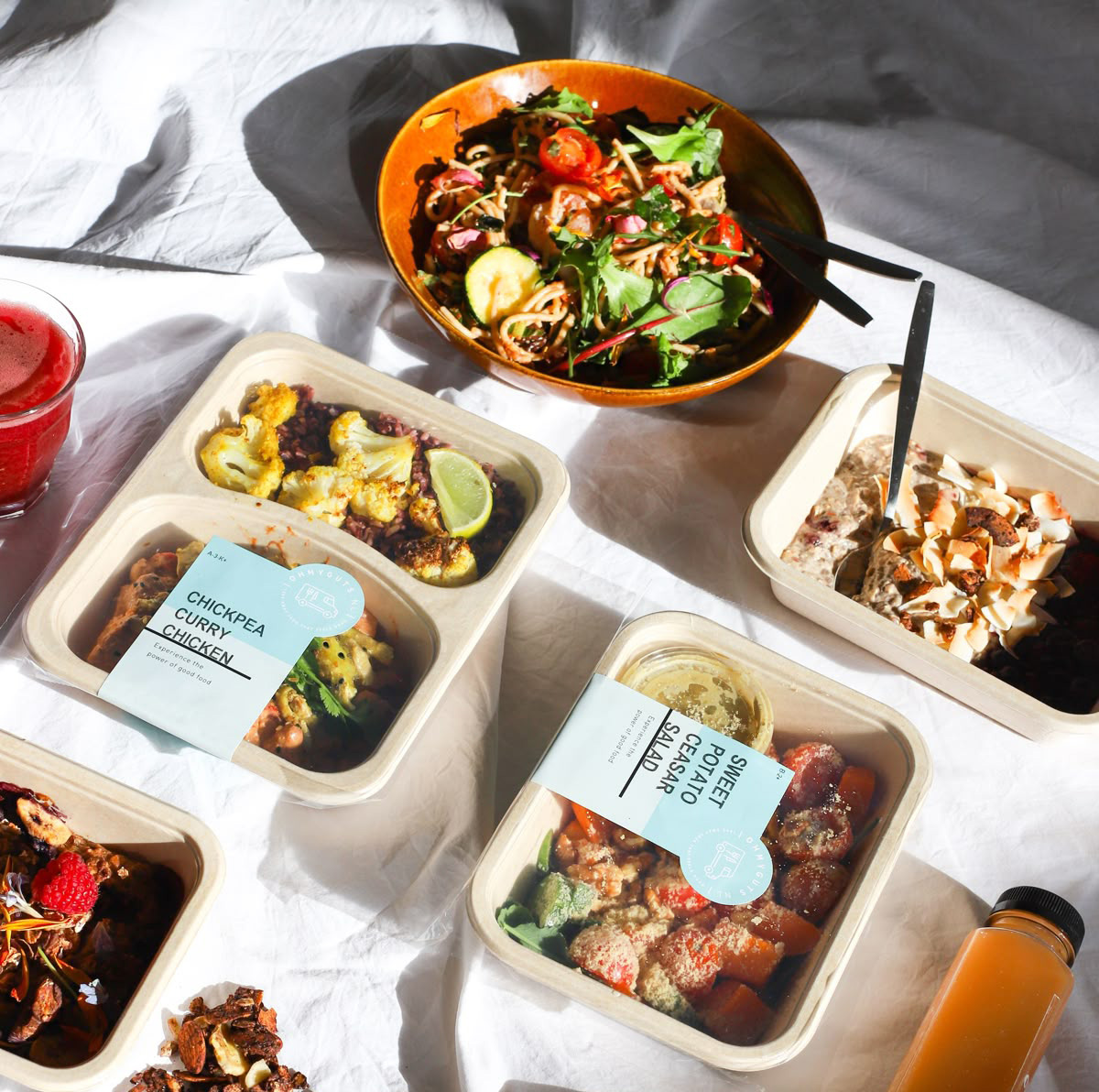
Prepared meals typically require:
Refrigeration or freezing
Moisture and grease resistance
Microwave or oven reheating
Stackable, durable structure
Traditional plastic trays (PP, CPET) perform well, but they create disposal challenges. Compostable alternatives aim to reduce long-term waste while maintaining performance.
However, not all “eco-friendly” trays are truly compostable — and not all compostable trays work for every application.
1️⃣ Molded Fiber (Bagasse) Trays
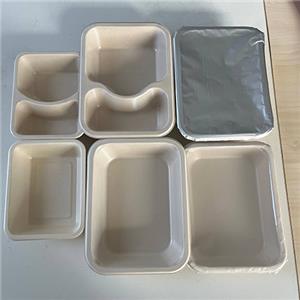
One of the fastest-growing options is molded fiber made from sugarcane bagasse.
Bagasse is a byproduct of sugar production. Instead of being discarded, it’s pulped and thermoformed into rigid food trays.
Advantages:
Made from renewable plant fiber
Strong structure for hot or cold foods
Suitable for microwave reheating (when properly designed)
Lower plastic content than traditional trays
Important Consideration:
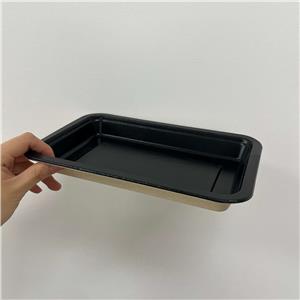
To handle oily or saucy meals, most commercial bagasse trays include a thin plastic or bioplastic lining for moisture and grease resistance.
This lining may be:
PE (polyethylene)
PLA (plant-based bioplastic)
Water-based barrier coating
The compostability of the final product depends on the chosen barrier layer.
For many prepared meal brands, bagasse trays with optimized coating thickness offer a balanced solution — reducing plastic usage while maintaining real-world performance.
2️⃣ PLA (Plant-Based Bioplastic) Trays
PLA trays are made from fermented plant starch (typically corn).
Advantages:
Industrially compostable under proper conditions
Transparent options available
Suitable for cold or moderately warm foods
Limitations:
Lower heat resistance than PP or CPET
May warp under high microwave temperatures
Requires industrial composting facilities
For chilled ready meals without intense reheating, PLA can work. For high-heat microwave applications, it may not be ideal.
3️⃣ CPLA (Crystallized PLA) Trays
CPLA is a heat-resistant form of PLA.
Advantages:
Higher heat tolerance
Suitable for hot food service
Compostable in industrial facilities
Limitations:
More brittle than molded fiber
Cost is typically higher
Compostability still depends on local infrastructure
CPLA works well for catering and hot deli meals but is less common in heavy prepared meal packaging.
4️⃣ Paperboard Trays with Compostable Coating
Paperboard trays can be treated with compostable barrier coatings.
Advantages:
Lightweight
Printable for branding
Familiar format for retailers
Limitations:
May lose rigidity with high moisture foods
Performance varies based on coating technology
For dry or semi-moist prepared meals, coated paperboard can be sufficient.
5️⃣ Bagasse Coated Meal Trays (Balanced Performance Solution)
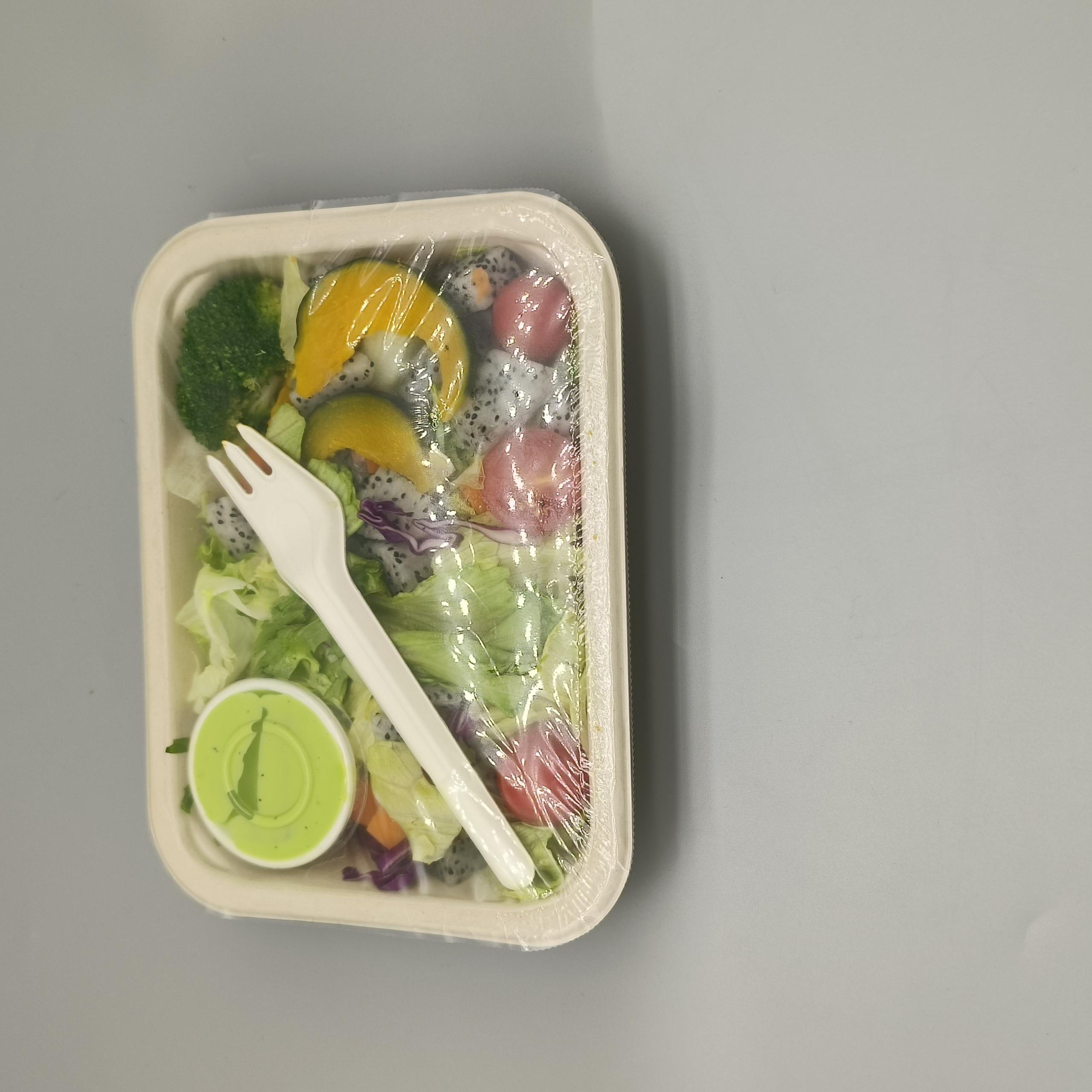
In real commercial settings, fully uncoated fiber trays often struggle with oily, saucy, or long shelf-life meals.
This is where coated bagasse trays become practical.
At our manufacturing facility, we produce bagasse coated prepared meal trays designed specifically for:
Microwave reheating
Grease-heavy dishes
Frozen storage
Leak resistance
These trays combine:
A molded sugarcane fiber structure
A thin functional lining for barrier protection
The result is:
Reduced overall plastic compared to full plastic trays
Strong structural integrity
Heat resistance for prepared meal applications
Customizable barrier options depending on compostability goals
Brands can choose between performance-first or compost-certified designs depending on their market.
Key Questions to Ask Before Choosing a Compostable Tray
Will the meal be microwaved or oven-heated?
Is the product chilled, frozen, or shelf-stable?
What composting infrastructure exists in your target market?
Do you need industrial compost certification?
How important is leak resistance for sauces and oils?
Compostable packaging must function in real kitchens — not just in marketing claims.
Are Compostable Trays Always Fully Plastic-Free?
Not necessarily.
Many commercially viable compostable trays — especially for prepared meals — include thin functional barrier layers. The goal is to reduce plastic content while maintaining food safety and durability, not to eliminate performance.
For brands transitioning away from full plastic trays, molded fiber with optimized lining offers a realistic and scalable path.
Final Thoughts
There is no single “best” compostable tray for prepared meals. The right solution depends on:
Heating requirements
Food type
Shelf life
Sustainability targets
Regional composting standards
Among the available options, bagasse coated trays provide one of the most balanced combinations of structure, heat resistance, and reduced plastic usage.
As prepared meal demand continues to grow, packaging must evolve with it — delivering both performance and environmental responsibility.
FAQ (Optimized for Featured Snippets)
What is the best compostable tray for prepared meals?
Molded fiber (bagasse) trays with compostable or reduced-plastic coatings are widely used due to their strength and microwave compatibility.
Are bagasse meal trays compostable?
They can be, depending on the barrier coating. Industrial composting is usually required.
Can compostable trays go in the microwave?
Some can. Heat resistance depends on material type and coating structure.
Are compostable trays leak-proof?
Only when designed with proper barrier technology.