Where Can I Find Environmentally Friendly Packaging Solutions?
Introduction
Where can you find environmentally friendly packaging solutions that meet your product requirements, budget, and sustainability goals?
For food brands, manufacturers, distributors, and wholesalers, finding the right packaging supplier can take time. There are many materials to compare, including paper, recycled plastics, molded fiber, and plant-based packaging. Each option has different strengths, costs, and end-of-life requirements.
The challenge is not simply finding a package described as eco-friendly. It is finding a supplier that understands your application, provides clear product specifications, and can deliver consistent quality at the quantities your business needs.
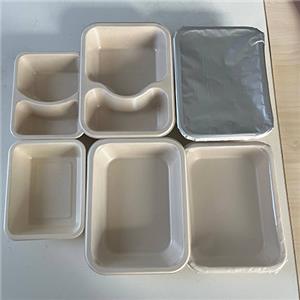
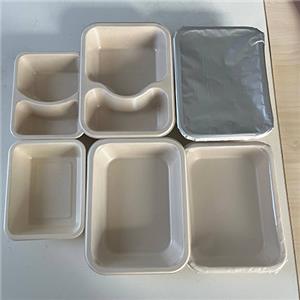
For food packaging buyers, this may mean looking for a manufacturer that offers molded sugarcane bagasse containers, coated bagasse food trays, custom designs, or coordinated tray and sealing-film solutions.
This guide explains where to find environmentally friendly packaging solutions, how to evaluate suppliers, and what distributors and wholesalers should check before placing an order.
1. Where Can Businesses Find Environmentally Friendly Packaging Solutions?
There are several ways to source sustainable packaging. The best channel depends on whether you need standard products quickly, custom packaging, or a long-term manufacturing partner.
Packaging manufacturers
Manufacturers are often a good starting point for businesses that purchase packaging in commercial quantities or need products made to specific requirements.
Direct communication with a manufacturer can help you understand material structures, product dimensions, customization options, minimum order quantities, and production lead times.
Manufacturers may also be able to develop custom molds, adjust packaging designs, or coordinate compatible packaging components.
Best for: Importers, distributors, wholesalers, food manufacturers, and businesses developing their own packaging ranges.
Packaging distributors and wholesalers
Packaging distributors typically offer ready-made products from multiple suppliers. This can be convenient when you need standard sizes, smaller mixed orders, or products available from existing inventory.
However, the available designs and customization options may be more limited than those offered through direct manufacturing.
Best for: Businesses that prioritize ready-stock availability, product variety, or smaller initial orders.
Sustainable packaging directories and sourcing platforms
Online supplier directories can help buyers discover manufacturers and compare packaging categories.
For example, Packaged Sustainable provides a platform for exploring packaging solutions and connecting with suppliers. The Flexible Packaging Association Buyers’ Guide is another resource for businesses sourcing flexible packaging and related services.
These platforms are useful starting points, but a listing does not replace supplier due diligence. Buyers should independently verify specifications, certifications, production capabilities, and commercial terms.
Industry exhibitions and trade shows
Packaging exhibitions allow buyers to meet suppliers, examine product samples, and discuss technical requirements in person.
They can be especially useful when you need to compare tray designs, packaging machinery, sealing films, or custom manufacturing capabilities.
If attending an exhibition is not practical, request product samples, technical documents, and a video meeting with shortlisted manufacturers.
2. Which Environmentally Friendly Packaging Solutions Should You Consider?
The right packaging material depends on the product, how it will be used, and what happens to it after use.
Paper and cardboard packaging
Paper and cardboard are common options for shipping cartons, retail boxes, sleeves, and many dry-food applications.
Buyers should check recycled content, strength, moisture resistance, and whether coatings or liners affect recyclability.
Recycled plastic packaging
Recycled plastic can reduce the demand for virgin material in suitable applications. It may be useful where moisture resistance, durability, and low weight are important.
Its practical environmental benefits depend on the material, packaging design, recycled content, and availability of suitable collection and recycling systems.
Reusable packaging
Reusable crates and containers can be useful in distribution systems where packaging can be collected, cleaned, and returned repeatedly.
The number of reuse cycles, cleaning requirements, and return transportation all affect the results.
Molded sugarcane bagasse packaging
Sugarcane bagasse is the fibrous residue left after sugarcane juice extraction. It can be molded into foodservice products such as plates, bowls, takeaway containers, and food trays.
For food packaging distributors and wholesalers, bagasse offers another option to evaluate when customers are looking for molded plant-fiber products.
Potential applications include:
- Takeaway and foodservice packaging
- Catering and prepared-food containers
- Molded food trays
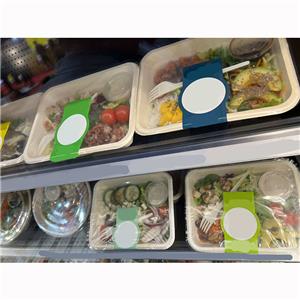
- Selected ready-meal packaging formats
- Custom shapes and compartment layouts
Bagasse is not automatically the best material for every application. Buyers should compare actual performance, material structure, manufacturing requirements, transportation, and end-of-life options.
3. How to Find a Reliable Bagasse Food Packaging Manufacturer
If your business is looking for sugarcane bagasse packaging, choosing the right manufacturer is just as important as choosing the material.
Start by searching for suppliers that specialize in the product category you need. For example, a business sourcing molded plates may have different requirements from a buyer looking for heat-sealable trays for prepared meals.
When evaluating manufacturers, consider the following questions.
Does the supplier understand your application?
A suitable manufacturer should ask about your food type, portion size, storage conditions, temperature requirements, and distribution process.
A tray for dry food may require different properties from one used for oily meals or products that need heat sealing.
Can the supplier explain the complete material structure?
Ask for details about the molded fiber base, coatings, inner lining, lids, and lidding films.
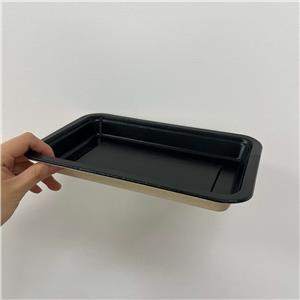
This is especially important for coated bagasse trays. Some products contain a plastic inner lining, so they should not automatically be described as plastic-free or compostable.
Can the supplier provide samples and technical documents?
Before placing a large order, request samples and relevant documentation. Test the packaging with your actual food and production equipment where possible.
Depending on the application, you may need to confirm food-contact compliance, temperature limits, sealing performance, barrier properties, and applicable certifications.
Can the supplier support customization?
For distributors and brand owners, customization can help create a product range suited to a particular market.
Ask whether the manufacturer can support different sizes, compartment layouts, custom molds, printing, labels, or other project requirements.
Can the supplier handle repeat orders?
A competitive quotation is only one part of a successful supply relationship. Consistent quality, clear specifications, dependable communication, and realistic lead times are equally important.
For wholesale buyers, these factors can help reduce sourcing problems as order volumes grow.
4. What to Look for in Environmentally Friendly Food Packaging Solutions
Food packaging has to perform reliably before it can be considered a suitable option.
When comparing products, build a specification checklist around the actual application.
| Requirement | What to confirm |
|---|---|
| Food type | Whether the packaging suits dry, oily, moist, or liquid-containing foods |
| Temperature | Verified limits for storage, transport, and use |
| Moisture and oil resistance | Performance with the intended food |
| Heat sealing | Compatibility with the lidding film and sealing equipment |
| Barrier requirements | Whether the complete structure meets shelf-life needs |
| Food-contact compliance | Relevant documents for the destination market |
| Environmental claims | Evidence supporting recyclability or compostability claims |
| Commercial terms | MOQ, lead time, shipping, samples, and repeat-order capacity |
For ready meals, the tray, lining, lidding film, and sealing process should be evaluated together. If modified atmosphere packaging (MAP) or vacuum skin packaging (VSP) is required, confirm the suitability of the complete system rather than relying on a general product description.
5. Are Coated Bagasse Food Trays a Good Option for Ready Meals?
For businesses selling prepared meals, a standard molded fiber container may not provide all the performance required.
Some applications need a tray with improved moisture or grease resistance, compatibility with heat sealing, or barrier properties suited to the food and intended shelf life.
Coated bagasse trays combine a molded sugarcane fiber base with a functional coating or lining. The selected structure should match the product’s temperature, sealing, and storage requirements.
Different projects may consider PP, PET, CPET, PLA, EVOH-based, or PBAT-based structures. These materials have different properties and are not interchangeable. The correct choice depends on the specific construction and intended application.
Before selecting a coated bagasse tray, buyers should confirm:
- The exact lining and coating materials.
- The verified temperature range.
- Compatibility with the selected lidding film.
- Moisture, oil, and barrier performance.
- Food-contact requirements.
- Applicable end-of-life options for the complete package.
Important: A bagasse base does not automatically make a coated tray fully compostable, recyclable, or plastic-free. Claims should be based on the complete packaging structure and appropriate evidence.
For distributors looking to expand their ready-meal packaging range, the most useful approach is to define the application first and then compare suitable tray structures.
Explore our bagasse food trays and our ready meal packaging solutions.
6. How to Compare Packaging Suppliers Before Ordering
Once you have shortlisted several suppliers, compare them using the same requirements rather than choosing based on price alone.
A practical sourcing process includes six steps.
Step 1: Prepare a product brief. Include the food type, dimensions, temperature conditions, expected order quantity, destination market, and required packaging performance.
Step 2: Request comparable quotations. Make sure suppliers are quoting products with similar dimensions, material structures, and specifications.
Step 3: Ask for samples. Check product fit, durability, sealing performance, and suitability for your filling or packing process.
Step 4: Review documentation. Request relevant material specifications, food-contact documents, test reports, and certification details.
Step 5: Calculate total landed cost. Include unit price, tooling if applicable, freight, packaging volume, storage, and any required equipment changes.
Step 6: Confirm production and quality expectations. Agree on specifications, sample approval, inspection requirements, lead times, and how changes will be managed for repeat orders.
This process helps reduce the risk of choosing packaging that looks suitable in a product catalogue but fails in real operating conditions.
7. Where to Find Custom Bagasse Packaging Solutions for Wholesale Orders
If you need molded bagasse packaging in commercial quantities, a manufacturer with product-development and customization capabilities may be worth considering.
Our team at Hebei Mountain Environmental Protection Technology Co., Ltd. focuses on molded sugarcane bagasse food packaging and coated bagasse food trays for business customers.
Depending on your project requirements, we can discuss:
- Different tray sizes and compartment layouts
- Selected coatings and lining structures
- Heat-sealable tray formats and compatible lidding films
- Packaging for selected ready-meal applications
- Custom molds and OEM/ODM projects
- Coordinated tray, film, and sealing equipment requirements
We encourage distributors and wholesalers to share their target market, food application, required performance, estimated order volume, and relevant compliance or end-of-life requirements.
This information helps identify suitable product options and determine which samples and technical checks are needed before commercial supply.
Explore our custom packaging services, browse our heat-sealable bagasse tray range, or talk to our team about your project.
Frequently Asked Questions
Where can I find environmentally friendly packaging solutions?
You can find them through direct packaging manufacturers, packaging distributors, supplier directories, sourcing platforms, and industry exhibitions. The best option depends on your order volume, customization needs, delivery schedule, and target market.
How do I find a sustainable food packaging supplier?
Start by defining the food application and required performance. Then compare suppliers’ material specifications, samples, relevant documentation, customization capabilities, minimum order quantities, and repeat-order reliability.
Where can I buy sugarcane bagasse food packaging wholesale?
Wholesale buyers can contact molded fiber packaging manufacturers directly or work with packaging distributors. For custom or larger-volume projects, request product samples and a quotation based on your required dimensions, specifications, and estimated order volume.
Is bagasse packaging suitable for ready meals?
Selected bagasse trays can be developed for ready-meal applications, including heat-sealable formats. Suitability depends on the complete tray structure, lining, lidding film, storage conditions, and required barrier performance.
Is coated bagasse packaging plastic-free?
Not necessarily. Some coated bagasse trays contain a plastic inner lining. Buyers should request the complete material specification and verify any plastic-free claim against the exact product.
What should I ask a sustainable packaging manufacturer before ordering?
Ask about the material structure, product performance, food-contact documentation, relevant certifications, samples, customization options, MOQ, production lead time, shipping arrangements, and repeat-order quality controls.
Conclusion
Finding environmentally friendly packaging solutions starts with understanding your product requirements and identifying suppliers that can meet them.
Manufacturers, distributors, supplier directories, and industry exhibitions can all help you explore options. The next step is to compare complete packaging structures, verify technical claims, test samples, and calculate total cost before placing a large order.
For food packaging distributors and wholesalers, molded sugarcane bagasse products and selected coated bagasse food trays may provide useful options to evaluate for foodservice and prepared-meal applications.
Looking for a bagasse food packaging manufacturer for your wholesale business? Contact our team to discuss your product requirements, customization needs, and expected order volume.