Why Is Sustainable Food Packaging Important? 7 Key Benefits for Businesses
Why Is Sustainable Food Packaging Important?
Food packaging does much more than hold food. It protects products, supports transportation, helps maintain food quality, and makes storage and distribution easier. However, packaging also consumes resources and can create waste after use.
As food manufacturers, restaurants, supermarkets, and distributors look for ways to improve their environmental performance, sustainable food packaging has become an important part of business planning.
The goal is not simply to replace plastic with another material. It is to choose packaging that protects food, uses resources efficiently, meets business requirements, and has a realistic end-of-life solution.
In this article, we explain why sustainable food packaging is important, how it can benefit businesses, and what buyers should consider when choosing packaging materials such as sugarcane bagasse.
1. Reduce Packaging Waste and Use Resources More Efficiently
One of the main reasons sustainable food packaging matters is its potential to reduce unnecessary material use and waste.
Disposable food containers, takeaway boxes, cups, trays, and wrappers are used across restaurants, supermarkets, catering operations, and food manufacturing facilities. When packaging is oversized, unnecessarily complicated, or difficult to recover after use, valuable resources may be wasted.
Businesses can improve packaging efficiency by:
- Choosing package dimensions that fit the food.
- Reducing unnecessary layers and accessories.
- Using material efficiently without sacrificing protection.
- Evaluating packaging that can be reused or recovered where suitable systems exist.
- Reviewing how packaging is collected and managed after use.
For example, a ready-meal manufacturer may be able to improve carton and pallet utilization by selecting trays that stack efficiently. A food service distributor may reduce unnecessary packaging components across a product range.
The US Environmental Protection Agency explains that more lightweight and efficient packaging can reduce material use, lower waste, and potentially save businesses money. Source: US EPA — Sustainable Packaging.
The important point is that reducing packaging should not mean reducing protection. A package that fails during transport may cause food loss, product returns, and additional waste.
2. Help Protect Food and Reduce Food Waste
Sustainable food packaging is not only about the package itself. It is also about protecting the food inside.
Food production requires land, water, energy, labor, processing, and transportation. When food spoils, leaks, or becomes damaged before it reaches consumers, those resources are wasted as well.
The right packaging can help reduce certain types of food loss by providing suitable protection against moisture, contamination, handling damage, and other risks.
For different food applications, businesses may need to consider:
- Moisture and oil resistance.
- Container strength and rigidity.
- Seal integrity and leak resistance.
- Chilled or frozen storage requirements.
- Protection during stacking and transportation.
- Shelf-life and food-contact requirements.
For example, a ready-meal tray needs to suit the moisture level of the food, the storage temperature, and the sealing process. A tray designed for a dry product may not perform well with a meal containing sauces or oily ingredients.
Packaging must therefore be tested against the real application rather than selected based on environmental claims alone.
The EPA identifies preventing wasted food as a high-priority action because it also avoids wasting the resources used to produce, process, and transport that food. Source: US EPA — Prevent Wasted Food Through Source Reduction.
A more sustainable package should protect the food effectively while avoiding unnecessary material and complexity.
3. Lower Packaging Costs Through Better Design
Sustainable packaging can also support better cost management.
The cheapest package per unit is not always the most economical choice. Businesses also need to consider filling efficiency, shipping volume, product damage, storage space, and disposal costs.
A well-designed packaging solution may help a business:
- Reduce unnecessary material consumption.
- Improve packing and handling efficiency.
- Fit more products into cartons or pallets.
- Reduce leakage and damage during delivery.
- Simplify packaging specifications across similar products.
- Avoid unsuitable materials that require costly changes later.
For food manufacturers and distributors, these factors can affect the total cost of a packaging project.
For example, changing the dimensions of a food tray may improve stacking and shipping efficiency. However, any redesign must be tested to ensure that the tray still protects the food and works with existing production equipment.
When comparing packaging suppliers, evaluate the total cost of the solution rather than looking only at the initial purchase price.
4. Respond to Customer and Buyer Expectations
Sustainable packaging is increasingly relevant to businesses selling food through retail, food service, catering, and distribution channels.
Brand owners may have internal sustainability targets. Retailers may request more information about packaging materials. Distributors may want products that fit the requirements of customers in different markets.
For packaging suppliers, understanding these needs can help support better product recommendations and long-term customer relationships.
Businesses can prepare by reviewing:
- What packaging materials are currently used.
- Which environmental requirements apply to their customers.
- Whether customers need recyclable, reusable, or compostable options.
- What product certifications and test reports are available.
- Whether disposal instructions need to be provided.
- How environmental claims will be communicated.
It is important to distinguish customer preferences from formal legal or certification requirements. Buyers should confirm the actual requirements for each market and product.
Clear material information and evidence-based claims are more useful than broad statements that cannot be substantiated.
5. Explore Alternative Materials Such as Sugarcane Bagasse
Choosing an appropriate material is one part of a sustainable food packaging strategy.
Common options include paper and cardboard, recyclable plastics, reusable containers, glass, metal, molded plant fibers, and certain certified compostable materials. Each has different strengths and limitations.
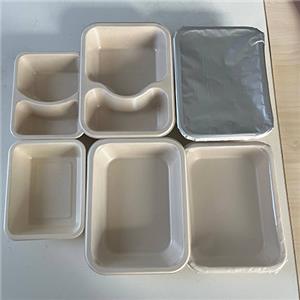
Sugarcane bagasse is the fibrous residue left after juice is extracted from sugarcane. It can be processed into molded food packaging, including plates, bowls, takeaway containers, and food trays.
For businesses looking for plant-fiber alternatives to selected conventional disposable products, bagasse is one option worth evaluating.
Potential advantages include:
Molded shapes and sizes: Bagasse can be formed into different product designs to suit food service and takeaway applications.
Practical food service use: Suitable products can be developed for serving, packing, and transporting a range of foods.
Product customization: Depending on the project, buyers may be able to request different dimensions, compartments, and molded shapes.
Material choice: Bagasse gives buyers another option to consider when reviewing their food packaging range.
However, the environmental performance of a finished package depends on more than its main raw material. Manufacturing processes, transportation, product durability, coatings, and end-of-life conditions also matter.
Is Bagasse Packaging Always the Most Sustainable Choice?
No single material is best for every food product or market.
A bagasse container may suit a takeaway application, while a reusable container may work better in a controlled return-and-wash system. A recyclable package may be appropriate where collection and recycling facilities are well established.
The right decision depends on the full application and the available waste management system.
Businesses should compare actual performance, material requirements, costs, and disposal options before changing their packaging.
6. Choose Packaging That Matches the Food Application
Sustainable packaging must still meet the technical requirements of the product.
For example, dry bakery products, chilled prepared meals, frozen foods, and hot takeaway dishes may need different packaging structures.
The key considerations include:
- Food type and portion size.
- Storage and transportation temperature.
- Moisture and oil exposure.
- Required barrier performance.
- Heat sealing or closure requirements.
- Compatibility with filling and packaging equipment.
- Applicable food-contact requirements.
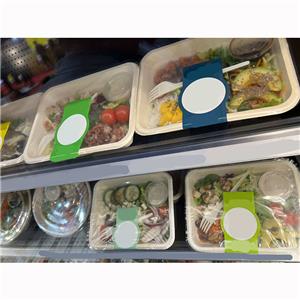
For prepared meals, the tray, lid or sealing film, and any secondary packaging should be assessed as a complete system.
Sustainable Packaging for Ready Meals
Ready-meal manufacturers often need packaging that combines practical food protection with efficient filling, sealing, storage, and transportation.
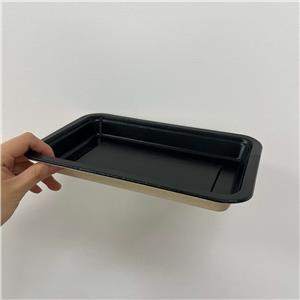
Molded bagasse trays may be considered for certain ready-meal applications. Some designs use an inner film or coating to support heat sealing, moisture resistance, or other specific performance requirements.
Depending on the application, the lining may use materials such as PP, PET, CPET, PLA, or other selected structures.
These coated trays should be evaluated according to the actual food and operating conditions.
Buyers should confirm:
- The complete tray and lining material structure.
- The required temperature and storage conditions.
- Sealing performance and equipment compatibility.
- Required moisture, oil, or gas-barrier performance.
- Relevant product specifications and test reports.
- The actual end-of-life options for the package.
Important: A bagasse tray with a plastic lining is not automatically plastic-free, recyclable, or compostable. The full package must be assessed before making these claims.
If compostability is a key requirement, ask for relevant documentation covering the complete finished product and verify whether the intended composting facility accepts it.
7. Support Waste Management and Circular Resource Use
Packaging sustainability does not end when the food is consumed. What happens to the package afterward is also important.
Depending on the material and local infrastructure, packaging may be suitable for reuse, recycling, composting, or another approved waste management route.
These systems work differently.
Reusable Packaging
Reusable packaging can be useful when containers can be collected, cleaned, and returned efficiently. Its performance depends on factors such as durability, return rates, washing requirements, and the number of times each container is reused.
Recyclable Packaging
Recyclable packaging can help recover materials for further use when suitable collection and processing systems are available. Packaging design, food residues, mixed materials, and local acceptance rules can affect recycling.
Compostable Packaging
Compostable packaging may be appropriate for certain food service applications when the complete product meets the relevant requirements and a suitable composting facility accepts it.
Industrial compostability does not automatically mean that a product is suitable for composting in a domestic setting. Nor should businesses assume that compostable packaging will break down as intended in a landfill.
The best approach is to design packaging and disposal instructions around the systems available to the end user.
How Can Food Businesses Start Using More Sustainable Packaging?
Businesses do not need to change every packaging product at once. A step-by-step approach can help identify improvements without creating unnecessary disruption.
Step 1: Review Existing Packaging
List the materials, dimensions, weights, and functions of the packages currently used. Identify products with excessive packaging, high damage rates, or limited end-of-life options.
Step 2: Identify the Main Problem
Decide what needs improvement. The priority may be reducing material use, preventing food leaks, improving shipping efficiency, meeting customer requirements, or finding a more suitable disposal route.
Step 3: Compare Suitable Alternatives
Evaluate different materials and designs based on performance, total cost, supply reliability, and local recovery options.
Step 4: Test Samples
Test new packaging with the actual food, storage conditions, transport process, and equipment. Confirm that it provides the necessary protection before placing a large order.
Step 5: Verify Environmental Claims
Request product specifications, relevant certifications, and test reports. Confirm that the evidence applies to the exact product and its complete material structure.
Step 6: Track the Results
Measure packaging use, damage rates, food waste, shipping efficiency, and end-of-life outcomes. Use the results to guide future improvements.
This process helps businesses make practical decisions based on measurable results rather than relying only on material labels or marketing language.
Sustainable Food Packaging Solutions From Our Team
Our team at Hebei Mountain Environmental Protection Technology Co., Ltd. provides bagasse food packaging and coated bagasse food tray solutions for business customers, including wholesalers, distributors, food manufacturers, and food service companies.
Different food products require different packaging structures. A takeaway container, a molded plate, and a heat-sealed ready-meal tray should not be treated as interchangeable products.
Packaging projects can be evaluated according to:
- Product dimensions, shape, and compartment design.
- Food type and intended application.
- Moisture resistance and sealing requirements.
- Suitable material and lining options.
- Custom mold and branding needs.
- Product specifications and relevant supporting documents.
For coated bagasse ready-meal trays, material selection should be based on the required packaging performance. Environmental claims should be supported by evidence for the complete finished product.
If you are reviewing your food packaging range, our team can discuss your application and help identify suitable product options.
Explore our bagasse food trays, learn about our ready-meal packaging solutions, or visit our customization page to discuss your project.
Looking for a food packaging supplier for your next project? Contact our team to discuss your product specifications, customization requirements, and wholesale supply needs.
Frequently Asked Questions
Why is sustainable food packaging important?
Sustainable food packaging is important because it can help businesses reduce unnecessary material use, manage packaging waste, protect food, improve resource efficiency, and respond to customer requirements. Its actual benefits depend on packaging performance and how the product is handled after use.
What are the main benefits of sustainable food packaging?
Potential benefits include reduced packaging waste, more efficient material use, better protection against food damage, improved shipping efficiency, and support for business sustainability goals. The results depend on the specific product and packaging system.
What materials are used in sustainable food packaging?
Options include paper and cardboard, reusable containers, recyclable plastics, glass, metal, molded plant fibers such as bagasse, and certain certified compostable materials. The most suitable choice depends on the food application and local waste management infrastructure.
Is sustainable food packaging always plastic-free?
No. Some packages combine paper or molded plant fibers with plastic coatings, inner films, or other components. Buyers should check the full material structure rather than assuming that a plant-based outer layer means the entire package is plastic-free.
Is sugarcane bagasse good for food packaging?
Bagasse can be used to make molded plates, bowls, takeaway containers, and trays. It is worth evaluating for selected food service applications, but buyers should test product performance and confirm the material structure and disposal options for the finished product.
Can sustainable packaging help reduce food waste?
Appropriately designed packaging can help protect food from leakage, damage, and certain causes of spoilage. However, the package must be matched to the food, storage conditions, and distribution process. Packaging should be assessed alongside food waste prevention measures.
Is compostable packaging better than recyclable packaging?
Not always. Compostable packaging may be useful where suitable composting systems accept it, while recyclable packaging may be a better fit where effective recycling is available. Businesses should evaluate the complete package and the actual disposal route.
How can businesses choose a sustainable food packaging supplier?
Look for clear material specifications, relevant documentation, samples for testing, consistent product quality, customization support, reliable supply, and recommendations based on the intended food application.