Why Use Compostable Packaging? Benefits for Businesses
Why Businesses Use Compostable Packaging
Businesses are under growing pressure to reduce packaging waste and find more responsible ways to package their products. For food manufacturers, restaurants, supermarkets, catering companies, and packaging distributors, compostable packaging can be one option worth considering.
Unlike conventional packaging designed to remain in use or be recycled, certified compostable packaging is designed to break down under specified composting conditions and become part of usable compost.
But compostable packaging is not automatically the best choice for every product. Its benefits depend on the material, packaging design, food protection requirements, and whether a suitable composting service is available.
In this guide, we explain why businesses use compostable packaging, which materials are available, and how to choose a solution that fits your products and customers.
1. Help Reduce Conventional Packaging Waste
One major reason to use compostable packaging is to provide an alternative to conventional disposable packaging, particularly in food service applications.
Takeaway meals, prepared foods, fresh produce, and catering services can generate large amounts of single-use packaging. When suitable compostable packaging is collected with food scraps and sent to a facility that accepts it, the packaging may be processed together with other organic waste.
This can help businesses support a more effective organic waste management system.
However, simply choosing a compostable product does not guarantee less waste. The packaging must be accepted by the local composting program and disposed of correctly. If it ends up in a landfill, its intended composting benefits may not be achieved.
2. Support Food Waste Collection and Composting
Food packaging often comes into contact with leftovers, sauces, oils, and other food residues. In some commercial composting programs, compatible compostable food packaging can be collected alongside food waste.
This may make waste sorting more convenient for restaurants, cafeterias, food service operators, and event catering companies.
For example, a food service business could use suitable compostable plates or containers as part of a system that collects food scraps and accepted packaging for commercial composting.
Before adopting this approach, businesses should confirm three things:
- The packaging is certified for the intended composting conditions.
- The local waste collection program accepts the specific packaging.
- The composting facility can process the complete material structure of the product.
The US Environmental Protection Agency explains that composting can divert organic materials from disposal and turn them into useful soil amendments. However, the accepted materials vary by facility. Source: US EPA — Composting.
3. Meet Customer Expectations for More Sustainable Packaging
Many food brands and retailers are reviewing their packaging choices as they respond to customer expectations and sustainability goals.
Compostable packaging can be part of that effort, especially for businesses selling takeaway meals, ready-to-eat foods, prepared produce, or food service products.
For brands, the benefits may include:
- Offering an alternative to selected conventional disposable packaging.
- Supporting a clearly defined packaging waste strategy.
- Providing more material choices for customers and business partners.
- Aligning packaging decisions with documented sustainability targets.
The key is to make specific, accurate claims. A business should not describe a package as universally compostable if it requires an industrial facility or if the full package has not been tested.
Clear disposal instructions can also help customers understand what to do with the packaging after use.
4. Explore Plant-Fiber Packaging Materials
Compostable packaging can be made from different materials, including molded plant fibers and certain specially formulated bioplastics.
One option for food service packaging is sugarcane bagasse.
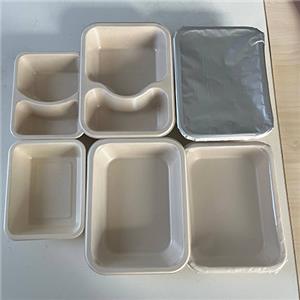
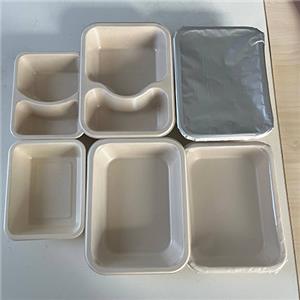
Bagasse is the fibrous material left after juice is extracted from sugarcane. It can be processed into molded products such as plates, bowls, and food trays.
Depending on the product design and verified performance, bagasse packaging may offer:
- A plant-fiber alternative to selected conventional food containers.
- A rigid molded structure suitable for many food service applications.
- Different shapes and sizes for takeaway meals and prepared foods.
- Opportunities for customized packaging designs and product development.
Bagasse is a material, not a guarantee that every finished product is compostable. Additives, coatings, films, inks, and other components can affect the disposal options of the final product.
Businesses should check the certification and disposal guidance for the exact product they intend to purchase.
5. Choose Packaging Designed for Real Food Applications
Sustainable packaging must still protect the food it contains. If a package leaks, loses its shape, or fails during transport, food waste and replacement costs may offset some of the intended benefits.
That is why packaging buyers should assess performance alongside environmental claims.
Important factors include:
Food type: Is the package intended for hot meals, chilled foods, oily dishes, sauces, or fresh produce?
Temperature: Will the package be stored in a refrigerator, frozen, reheated, or exposed to high temperatures? These uses require product-specific validation.
Moisture and oil resistance: Does the package need to resist liquids, grease, or condensation?
Transport and storage: Can it maintain its shape during stacking, delivery, and storage?
End-of-life requirements: Can the complete package be composted, recycled, or disposed of through the waste system available to the customer?
For food manufacturers and distributors, the right solution is one that meets the functional requirements of the product while offering a realistic and clearly documented end-of-life option.
6. Consider Compostable Bagasse Packaging for Food Service
Molded bagasse packaging is worth evaluating for businesses that need plates, bowls, takeaway containers, or molded food trays.
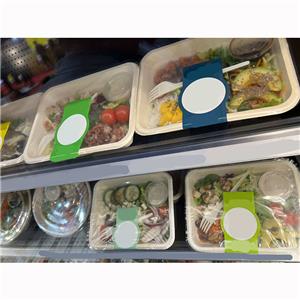
For example, a food service distributor may want to offer plant-fiber tableware to restaurants and catering companies. A ready-meal producer may need molded trays that provide a particular shape, portion size, and stacking performance.
These applications are not identical, so buyers should select products based on their intended use rather than relying on the material name alone.
What About Coated Bagasse Food Trays?
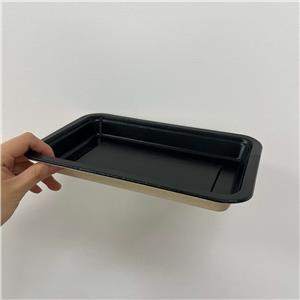
Some bagasse food trays use an inner film or coating to improve moisture resistance, support heat sealing, or meet specific food packaging requirements.
Depending on the application, the lining may use materials such as PP, PET, CPET, PLA, or other specially selected structures.
These products should not automatically be described as compostable just because the outer tray is made from bagasse. The complete tray, including its lining and other components, must meet the relevant compostability requirements for the claim being made.
For ready-meal packaging projects, buyers should confirm:
- The exact tray and lining materials.
- The required sealing and barrier performance.
- The intended storage and temperature conditions.
- Compatibility with the waste collection and disposal system available to the customer.
- Any applicable test reports and certifications.
If compostability is the main purchasing requirement, ask the supplier for evidence covering the complete finished package, not just the molded fiber component.
If the application requires a particular barrier film or sealing performance, a coated tray may still be appropriate, but its environmental claims and end-of-life route must be assessed separately.
7. Help Build a Clearer Packaging Sustainability Strategy
Compostable packaging works best when it is part of a broader waste management plan rather than a standalone purchasing decision.
Businesses can improve their approach by combining several practical steps:
- Reduce unnecessary packaging. Use only the material and space needed to protect the product.
- Evaluate reusable options. Where collection, washing, and return systems are practical, reuse may be worth considering.
- Select materials based on the application. Consider recycled, recyclable, reusable, or compostable solutions according to the actual use case.
- Check local disposal infrastructure. Confirm what local waste collectors and composting facilities accept.
- Request supporting documentation. Review relevant certifications, test reports, and disposal instructions.
- Measure results. Track packaging weight, product damage, food waste, and the actual disposal route.
The guidance of the US Environmental Protection Agency on sustainable food service ware places reusable products first where suitable systems exist and recognizes certified commercially compostable products as an option when they can be properly collected and processed. Source: US EPA — Identifying Sustainable Food Service and Food Service Ware.
There is no single material that is best for every application. The goal is to choose packaging that performs well and fits the waste management system available at the end of its useful life.
8. How to Choose a Reliable Compostable Packaging Supplier
For importers, wholesalers, distributors, and food brands, supplier selection affects product quality, documentation, delivery reliability, and the long-term suitability of the packaging.
Before placing an order, consider the following questions.
Does the Supplier Understand Your Application?
A supplier should ask about food type, dimensions, portion size, temperature requirements, storage conditions, transport, and sealing needs before recommending a product.
Can the Supplier Provide Relevant Documents?
Request documentation that matches the exact product and its complete material structure. Check which standard or certification applies and whether it covers industrial composting only or also composting in a domestic setting.
A certification for one product should not automatically be assumed to cover another product made from a similar material.
Can the Packaging Be Customized?
Depending on the project, you may need a custom shape, mold, dimensions, compartments, labeling, or branding. Confirm development requirements, sample availability, minimum order quantities, and production lead times.
Can the Supplier Support Consistent Orders?
For wholesale and distribution businesses, consistent product specifications, quality control, packaging performance, and dependable supply are important considerations.
A supplier should be able to explain its production process and how it manages product consistency between orders.
Does the Proposed Solution Match Your Environmental Goals?
Ask for a clear explanation of the materials, disposal options, and any limitations of the package. Avoid relying only on broad descriptions such as green, eco-friendly, or biodegradable.
The environmental marketing guidance of the US Federal Trade Commission states that compostability claims should be supported by reliable evidence and qualified when necessary to avoid misleading buyers. Source: Federal Trade Commission — Environmental Claims: Summary of the Green Guides.
9. Explore Bagasse Food Packaging Solutions With Us
Our team at Hebei Mountain Environmental Protection Technology Co., Ltd. supplies sustainable food packaging solutions for business customers looking for alternatives to selected conventional disposable packaging.
Our product range includes molded bagasse food packaging and coated bagasse food trays for applications that require specific packaging structures and performance.
For distributors, wholesalers, food manufacturers, and food service businesses, packaging projects can be evaluated according to:
- Product shape, size, and compartment requirements.
- Food type and intended application.
- Required moisture resistance and sealing performance.
- Suitable material and lining options.
- Customization and branding needs.
- Relevant product documentation and disposal requirements.
For coated bagasse ready-meal trays, material selection should reflect the actual storage, sealing, and barrier requirements of the project. Compostability should be confirmed separately for the complete finished structure whenever it is a purchasing requirement.
Looking for a food packaging supplier for your next project?
Explore our bagasse food trays, learn about our ready-meal packaging solutions, or discuss your requirements through our customization page.
Contact our team to discuss your product specifications, customization needs, and wholesale packaging requirements.
Frequently Asked Questions
Why should businesses use compostable packaging?
Businesses may use compostable packaging to support organic waste collection, offer alternatives to selected conventional disposable packaging, and align packaging choices with sustainability goals. The benefits depend on product certification, correct disposal, and the availability of a suitable composting facility.
Is compostable packaging better than plastic packaging?
Not in every situation. The comparison depends on the materials, product performance, manufacturing impacts, reuse or recycling options, and end-of-life conditions. Compostable packaging can be useful where an appropriate composting system exists, but recyclable or reusable options may be more suitable for other applications.
Does compostable packaging break down in a landfill?
Not necessarily within the conditions or timeframe required for composting. Landfills are not designed to provide the same conditions as managed composting systems. Businesses should not assume that compostable packaging will deliver its intended benefits if it is sent to landfill.
What materials are used for compostable food packaging?
Options may include molded plant fibers such as bagasse, paper-based products, and certain certified compostable bioplastics. The formulation, coatings, inks, and other components of the finished product determine whether the complete package meets the relevant compostability requirements.
Is all sugarcane bagasse packaging compostable?
No. Bagasse is a plant-fiber material, but the composition of the final product matters. Coatings, inner films, adhesives, inks, or other components may affect compostability. Buyers should verify the documentation for the exact finished product.
Can coated bagasse food trays be composted?
It depends on the complete tray structure. Some coated bagasse trays use linings that are not compostable under the intended conditions. Do not assume that a tray is compostable based only on its bagasse base; request evidence covering the complete package.
What should buyers check before ordering compostable packaging?
Confirm the intended application, product performance, complete material structure, applicable certification, local disposal options, customization requirements, minimum order quantity, and supplier quality controls.
Is industrially compostable packaging suitable for composting in a domestic setting?
Not automatically. Products designed for industrial composting may require controlled temperatures and other conditions that a domestic composting setup cannot reliably provide. Always follow the certification and disposal instructions for the product.