Compostable Ready Meal Containers 2026: What Industrial Compostability Really Means for Fiber Trays
① What "Compostable" Means for Ready Meal Containers — and What It Does Not
Compostable ready meal containers are packaging formats designed to break down into biomass, water, and CO₂ under controlled composting conditions, rather than persisting in landfills. For chilled meals, frozen dinners, meal kits, and foodservice takeaway, the promise is simple: a sealed, leak-proof package that does not leave a permanent footprint.
The commercial pull is real. The compostable tray market is forecast to expand from USD 1.84 billion in 2026 to USD 3.29 billion by 2035, a compound annual growth rate of 6.65% (Toward Packaging, report retrieved 2026-09-07). Biodegradable meal trays specifically are growing at a CAGR of 8.5%, from USD 1.63 billion in 2026 toward USD 3.68 billion by 2036 (Future Market Insights, 2026-04-13). Most of that demand is being directed at fiber-based formats—sugarcane bagasse, bamboo pulp, and molded pulp—because they combine renewable feedstock with genuine end-of-life pathways.
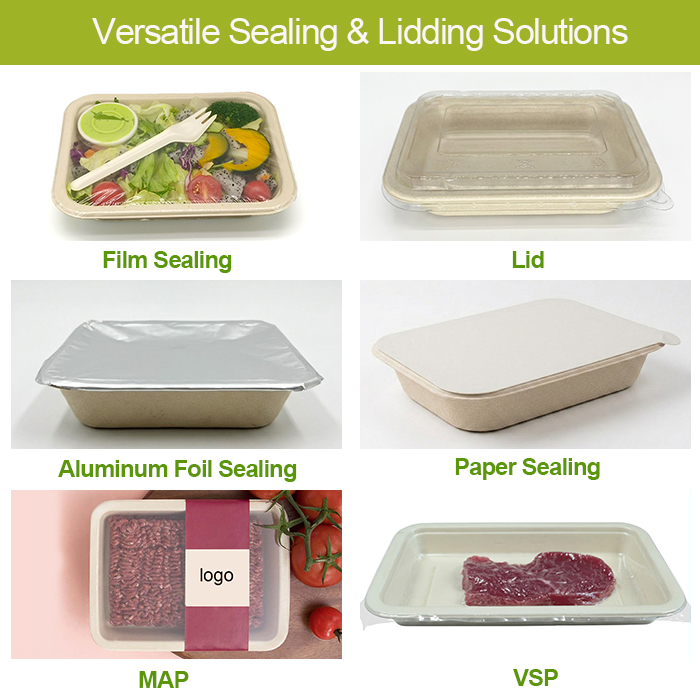
But there is a widening gap between the word "compostable" on a package and the physical reality of composting infrastructure. That gap is where buyer mistakes happen, and increasingly where regulators intervene. This guide explains the distinction between industrial and residential composting routes, how certification works, where fiber trays with lamination film sit in industrial composting systems, and how to source compostable ready meal containers without falling into greenwashing traps. For the complete system view—including EVOH barrier layers, MAP and VSP sealing—start from our ready meal packaging buyer's guide.
② Technical Parameters: What Defines an Industrially Compostable Fiber Tray
Compostability is an engineering property of the whole package, not a label. It depends on material composition, coating or film weight, thickness distribution, and the time–temperature profile of the receiving facility. For molded fiber ready meal containers, the parameters that matter are:
| Parameter | Specification | Notes |
|---|---|---|
| Base material | 100% virgin sugarcane bagasse (molded pulp) | Renewable agricultural by-product; chlorine-free physical pulping |
| Lamination (compostable system) | PLA film or paper-based lidding; no conventional plastic film | Enables whole-package industrial composting of the sealed format |
| Lamination (low-plastic system) | PP / PET / CPET / EVOH functional lamination film | Film is ≤ 5% of total product weight (functional lamination film) |
| Unlaminated series | No film; 100% plastic-free | For cold-chain and non-sealed applications |
| Industrial compostability certification | OK Compost Industrial (TÜV AUSTRIA); AS 4736 industrial composting — ABAP Certificate No. 10587 (ABA) | Verify scope of certificate with the holder before claiming |
| Food contact | FDA; LFGB; REACH compliance; SGS reports covering the laminated tray series | Entry documentation for EU/US/AU markets |
| PFAS | PFAS-FREE, <10 ppm (ND) | Fluorine-free chemistry throughout |
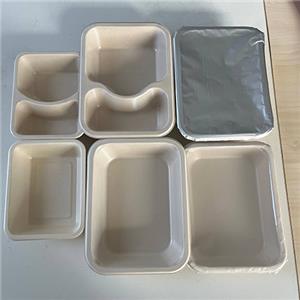
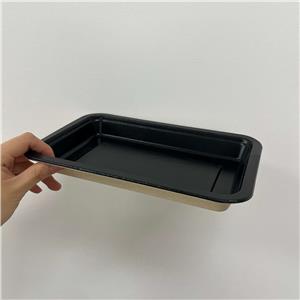
Two composition families deserve separate mental models. A bagasse tray laminated with PP, PET, CPET, or EVOH film is a low-plastic fiber package (≤ 5% plastic): it delivers sealing and barrier performance but should not be presented as a fully compostable package unless the specific certification covers it. When reheating behavior drives the format decision, the microwave and oven-safe bagasse meal trays guide maps each film class to its rated heating range. A bagasse tray paired with PLA film or paper lidding is engineered as a whole-package industrial-compostable system, and it is this family that carries the OK Compost Industrial and AS 4736 industrial claims for sealed ready meal containers.
③ Integrated Solutions: Making the Sealed Package Match the Composting Claim
The hardest part of compostable ready meal containers is not the tray—it is the seal. A ready meal tray that is heat-sealed with a conventional plastic lidding film stops being compostable the moment the lid is applied, regardless of the fiber base. That is why material selection must be treated as a system decision across tray, lidding film, and sealing process:
Paper-based heat-sealable lidding: natural pulp surface with a heat-sealable PLA coating; no conventional plastic film layer; matches the fiber tray's industrial-compostable profile.
PLA lidding film: supports whole-system industrial compostability when paired with PLA-lined bagasse trays.
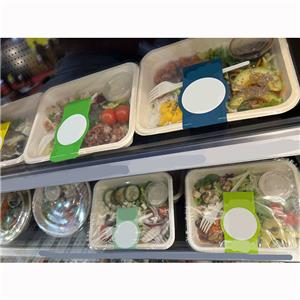
Barrier lidding for chilled lines: where MAP or VSP shelf life is the priority and a compostable claim is secondary, EVOH barrier lidding on a low-plastic fiber tray is the honest configuration—documented as ≤ 5% plastic rather than as compostable.
Sealing equipment completes the chain. Hebei Mountain supplies matched manual, semi-automatic, and fully automatic tray sealers with calibrated temperature, pressure, and dwell-time parameters, so the sealed pack behaves identically to a plastic-tray pack on the line. For the engineering details of MAP/VSP-ready fiber trays, see our bagasse VSP & MAP solutions guide.
④ Customization: 1:1 Mold Replication Without Re-engineering Your Line
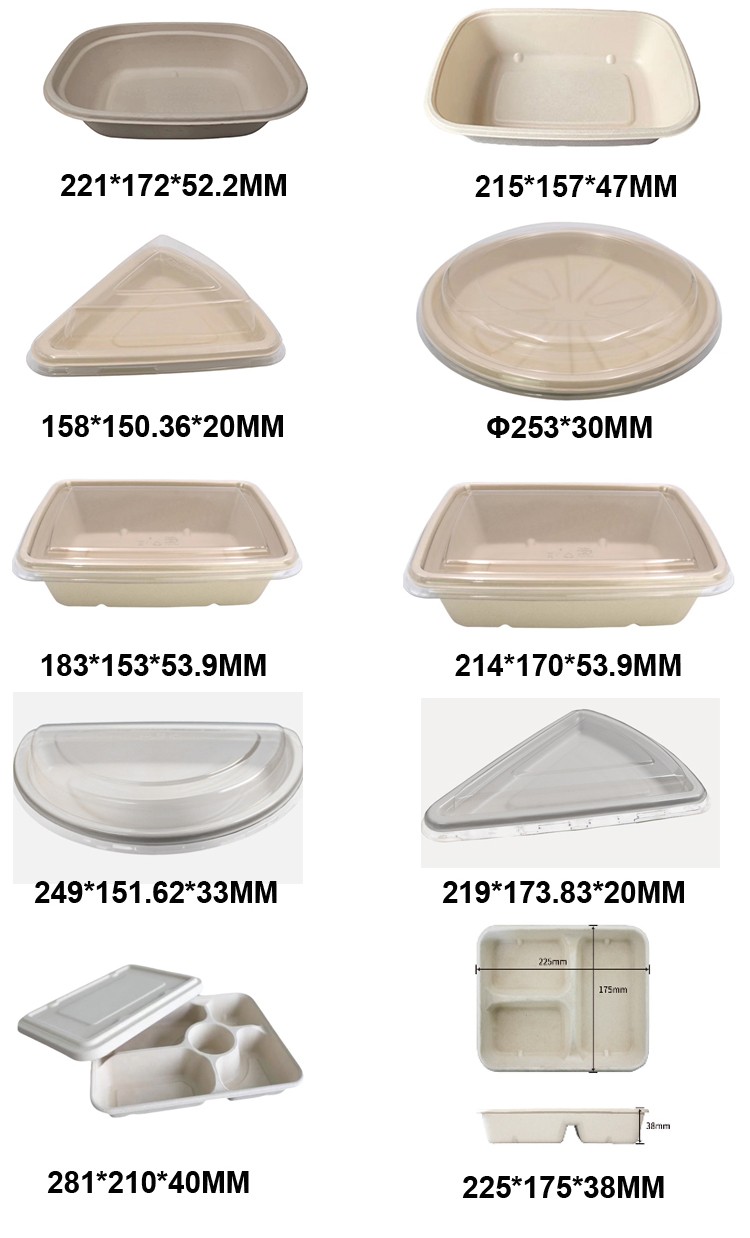
Compostable ready meal containers do not require a packaging-line overhaul. Hebei Mountain develops molds that replicate existing plastic tray geometry at 1:1 scale—outer dimensions, nesting, corner radii, flange widths—so denesters, filling lines, and sealing molds stay unchanged.
Customization scope: compartment layouts from 1 to 5+; embossed or debossed logos formed in the pulp; film choice (unlaminated, PP/PET/CPET/EVOH low-plastic, or PLA for compostable systems); custom-printed lidding film and branded outer cartons; rapid tooling with 3,000+ existing molds and 200+ new molds developed annually, with mold-fee rebate programs at agreed volumes. Explore the full bagasse food packaging range for format options.
⑤ Compliance: Certification, Labeling, and the Greenwashing Risk
Certifications held by Hebei Mountain (documents available on request):
OK Compost Industrial (TÜV AUSTRIA)
AS 4736 industrial composting — ABAP Certificate No. 10587 (ABA)
FDA food-contact compliance
LFGB (German Food and Feed Code) compliance
REACH compliance
SGS reports covering the laminated tray series (PPWR Total Fluorine, PFAS (ND), BPA (ND), and related food-contact parameters)
Labeling discipline matters as much as certification. Fiber packaging is certified for industrial composting (AS 4736 / OK Compost Industrial); commercial composting acceptance varies by municipality, so end-of-life claims should always be verified against the local facility. European and U.S. regulators are simultaneously tightening packaging-waste rules and policing environmental claims, which makes unverifiable "biodegradable" language on packaging a supply-chain risk rather than a marketing perk. A defensible claim names the standard, the certificate, and the product scope it covers—nothing more. For the 2026 regulatory evidence behind fluorine-free fiber trays, see our PFAS-free food packaging trays compliance guide.
For U.S. importers planning duty calculations, molded pulp tableware (HTS 4823.70) from Hebei Mountain's Cambodia facility currently carries a 10% U.S. import duty with 0% antidumping duty; confirm the applicable rate with your customs broker at the time of shipment.
⑥ Expert FAQ
Q1: Are your compostable ready meal containers certified for industrial or residential composting?
Industrial composting. The fiber formats carry OK Compost Industrial and AS 4736 industrial composting certification (ABAP Certificate No. 10587, ABA). They are not marketed for residential composting; verify acceptance at the receiving commercial facility.
Q2: If the tray is heat-sealed with film, is the whole pack still industrially compostable?
Only when the film is part of the compostable system—PLA film or paper-based lidding with a heat-sealable PLA coating. PP/PET/CPET/EVOH-laminated trays are documented as low-plastic fiber packaging (≤ 5% plastic) and should not be presented as fully compostable.
Q3: What documentation do you provide for compostability claims?
Certificates for OK Compost Industrial and AS 4736 (ABAP No. 10587), FDA and LFGB compliance documentation, REACH statements, and SGS reports covering the laminated tray series for PPWR Total Fluorine, PFAS (ND), and BPA (ND).
Q4: Does the fiber tray affect the taste or safety of the meal?
No. The base is 100% virgin sugarcane bagasse with chlorine-free physical pulping; food-contact surfaces meet FDA and LFGB compliance. There is no recycled-waste-paper input and no fluorine-based additive.
Q5: How do I avoid greenwashing in my own packaging claims?
Name the standard (AS 4736 industrial or OK Compost Industrial), the certificate scope, and the exact product family it covers; never extend a fiber-base certificate to film systems it does not cover; and verify municipal commercial-composting acceptance before printing end-of-life claims.
Q6: Can these containers run on my existing sealing line?
Yes. 1:1 mold replication keeps denesters, filling lines, and sealing molds unchanged, and matched sealing parameters are provided for every tray–film combination. Contact us with a sample or 3D file for a compatibility assessment.
About Hebei Mountain Environmental Protection Technology: manufacturer of laminated sugarcane bagasse tableware and total thermoseal packaging solutions—trays, lidding films, and sealing machines—for ready meal, fresh food, and foodservice brands. Industrially compostable systems (AS 4736 / OK Compost Industrial) and low-plastic fiber packaging (≤ 5% plastic), PFAS-FREE (ND).