Microwave & Oven-Safe Bagasse Meal Trays: The 2026 Temperature Guide for Ready Meal Brands
① Why Heating Performance Decides the Ready Meal Tray
A ready meal package is judged twice: once in the retail chill cabinet, and once inside the consumer's microwave or oven. The second test is the one that drives repeat purchases—and it is entirely determined by the packaging. A microwaveable meal tray must survive reheating without warping, leaking, or releasing impurities; an ovenable ready meal tray must hold up to convection-oven heat for a full bake cycle. Get the tray wrong and a premium meal arrives deformed, soggy, or with a melted lid.
This is why material science, not branding, is the real battleground in ready meal packaging. The ready-to-eat food packaging market was valued at USD 452.0 billion in 2026 and is projected to reach USD 647.4 billion by 2033 (Grand View Research, retrieved 2026-09-07), and within that volume, fiber formats are growing fastest because they can now match plastic heating behavior—provided the right film is specified. Traditional unlaminated paper and pulp trays cannot be sealed and cannot take heat; laminated sugarcane bagasse trays can do both.
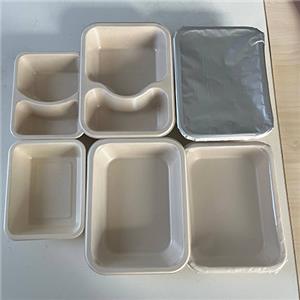
The governing rule is simple: in laminated bagasse trays, the film is the performance layer. The molded fiber base delivers rigidity, insulation, and a natural appearance; the functional lamination film delivers sealing, barrier, and heating range. That is why the complete ready meal packaging decision always starts with the film matrix, not the tray shape.
② Technical Parameters: The Temperature Selection Matrix
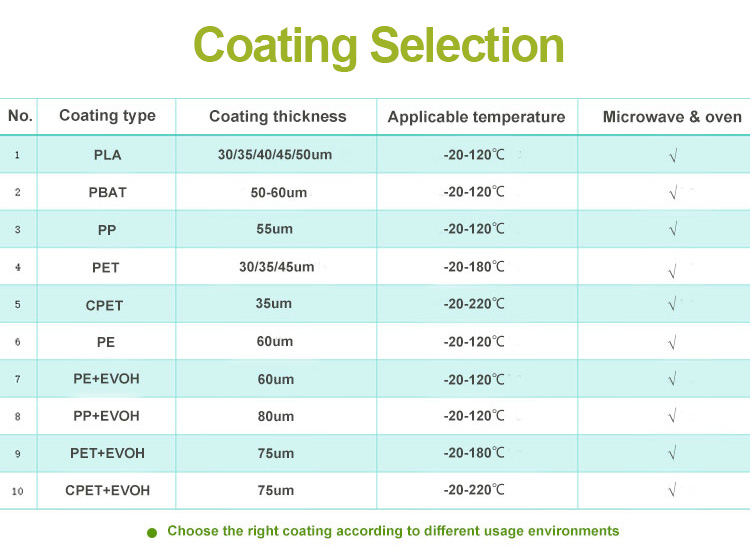
All temperature performance below applies to the laminated series only. Unlaminated bagasse products are 100% plastic-free but are not engineered for hot-food sealing or high-heat reheating; specify the film that matches your consumer's reheating behavior:
| Film layer | Temperature range | Best fit |
|---|---|---|
| PP lamination | -20°C to 120°C | Microwave reheating for daily meals, takeaway, and delivery formats |
| PET lamination | -20°C to 180°C | Microwave plus moderate conventional-oven warming; stronger heat tolerance |
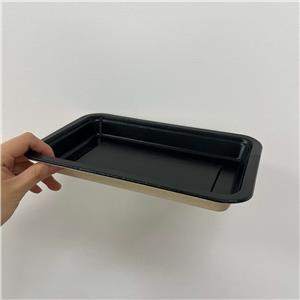
| CPET lamination | -40°C to 220°C | Dual-ovenable bake-ready meals: conventional oven 30–40 minutes, airline catering, frozen-to-oven formats |
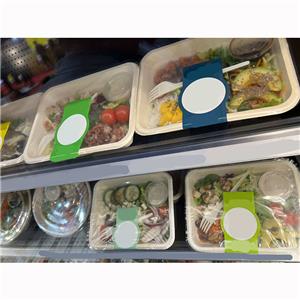
| PLA lamination | Cold-chain formats | Fresh salads, chilled meals, and fruit lines where low-temperature performance and industrial compostability matter (no oven use) |
| EVOH lamination | Chilled high-barrier formats | MAP and VSP meat, seafood, and premium ready meals where oxygen barrier drives shelf life |
The tray itself contributes two properties that plastic cannot easily match. First, the fiber base acts as natural insulation: meals stay hotter on the outside surface of the tray, which stays comfortable to touch during microwave reheating. Second, the structural density of the molded fiber holds dimensional stability—flange flatness and compartment geometry remain true through freezer storage, reheating, and transport, keeping automated lines and sealing molds consistent.
Specifying checklist for brands: confirm the consumer heating instruction (microwave only, oven bake, or dual-ovenable), the expected reheating time and temperature, freezer-to-heat workflow, and whether the format needs a sealed lid. Only then select among PP, PET, and CPET laminated trays for the heat-sealable tray range.
③ Integrated Solutions: Sealing, Films, and Equipment That Match the Heat Claim
A heating claim is only as strong as the whole sealed system. Hebei Mountain supplies matched components so the "microwave in 3 minutes" instruction on your pack is true from the first unit to the millionth:
Tray sealing machines: manual to fully automatic, with calibrated temperature, pressure, and dwell-time parameters per tray–film combination.
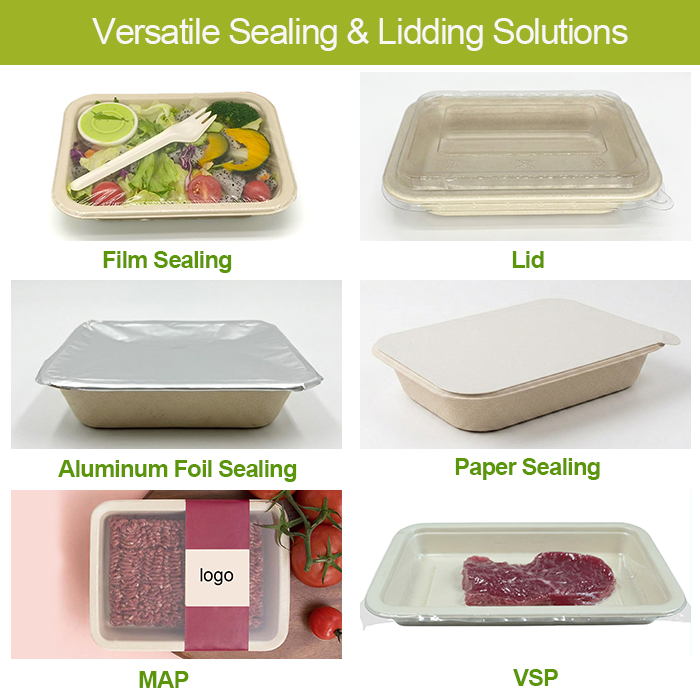
Lidding films: high-clarity anti-fog CPET/PET/PP films that stay transparent under hot food and refrigerated display; aluminum foil lids for shelf-stable and long-bake formats; paper-based and PLA lidding for compostable cold-chain systems.
Barrier engineering: EVOH multi-layer lamination for MAP and VSP chilled formats, where oxygen transmission rate—not heat—is the shelf-life driver. See our EVOH-laminated VSP tray comparison for side-by-side material data.
Line validation: sealing parameters are documented per tray, so food manufacturers can lock the process without trial-and-error.
The same logic applies when balancing compliance, performance, and cost across a full SKU portfolio; our 2026 heat-sealing packaging guide walks through the trade-offs.
④ Customization: Switching from CPET/PP Plastic Trays Without Changing the Line
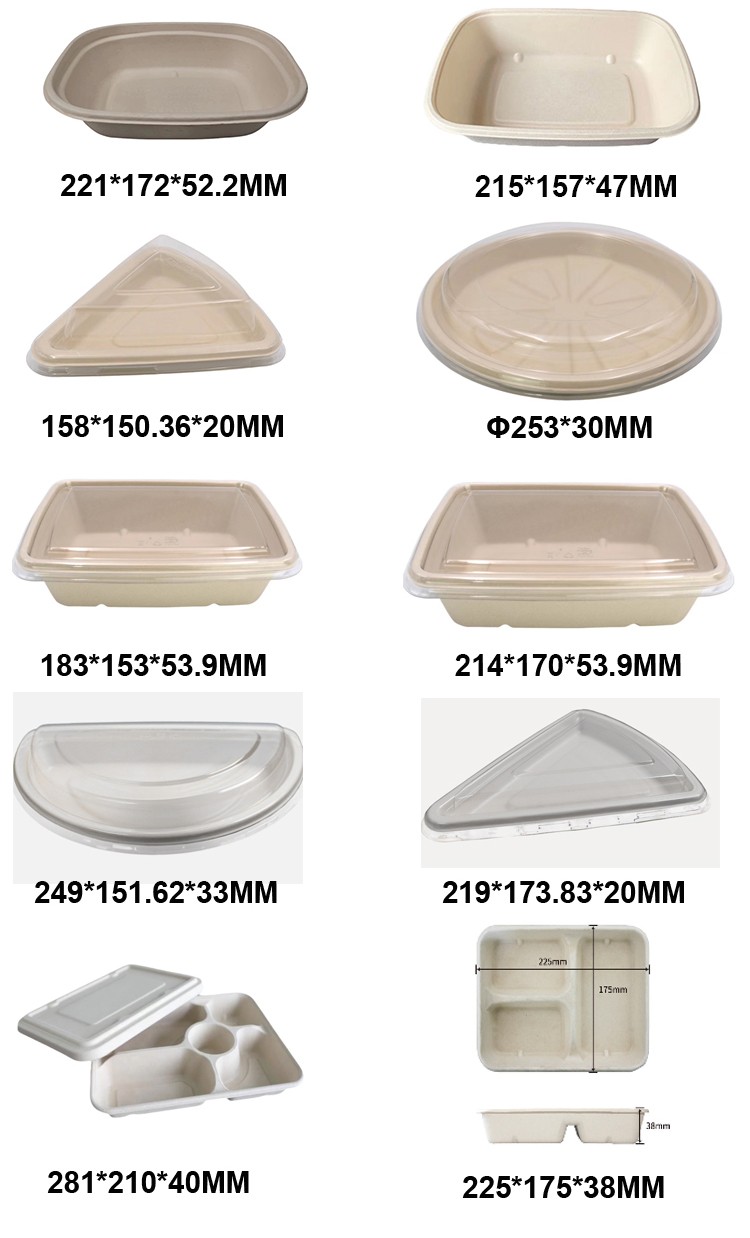
Most food manufacturers switching to fiber do not want to touch their packaging line. Hebei Mountain develops 1:1 mold replicas of existing plastic trays—outer dimensions, nesting, corner radii, flange widths—so existing denesters, filling lines, and sealing molds run unchanged. The plastic tray in the supermarket becomes a fiber tray with identical geometry and a film chosen to match the old tray's heating class:
PP-tray replacement → PP-laminated bagasse (microwave up to 120°C)
PET/CPET-tray replacement → PET or CPET-laminated bagasse (oven-capable, CPET to 220°C for 30–40 minutes)
Fresh meat MAP/VSP formats → EVOH-laminated bagasse with matched barrier lidding
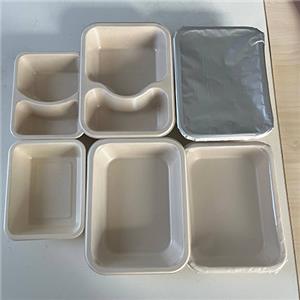
Customization covers compartment counts from 1 to 5+, embossed or debossed logos, film and lid branding, and custom outer cartons; 3,000+ existing molds and 200+ new molds per year keep tooling lead times short. The sealed meal tray with lamination film page shows the production format in detail.
⑤ Compliance: Certifications Behind the Heating Claim
A temperature claim is a legal claim, and it must be backed by tested, documented material systems. Certifications held by Hebei Mountain include OK Compost Industrial (TÜV AUSTRIA); AS 4736 industrial composting — ABAP Certificate No. 10587 (ABA); FDA food-contact compliance; LFGB compliance; REACH compliance; and SGS reports covering the laminated tray series (PPWR Total Fluorine, PFAS (ND), BPA (ND), and related food-contact parameters). Heating safety data—no deformation, no impurity release across the film's rated range—is part of the food-contact documentation supplied with each order. For the EU and U.S. evidence requirements behind these reports, see our PFAS-free food packaging trays compliance guide.
Two clarifications buyers frequently need: (1) temperature performance applies to the laminated series with the film specified for that range; unlaminated fiber is not rated for high-heat reheating. (2) Plastic content of the laminated series is ≤ 5% (functional lamination film), which keeps the format classified as low-plastic fiber packaging under EU definitions while enabling plastic-grade heating behavior. For sealed formats that must be industrially compostable as a whole pack, our compostable ready meal containers guide covers PLA-based systems and certification scope.
For U.S. import duty planning: molded pulp tableware (HTS 4823.70) from our Cambodia facility currently carries a 10% U.S. import duty with 0% antidumping duty; confirm the applicable rate with your customs broker at shipment time.
⑥ Expert FAQ
Q1: Can a bagasse tray really go in the microwave?
Yes—the laminated series with PP film is microwave-safe up to 120°C for routine reheating. The fiber base stays cool to the touch on the outside while food heats, and the flange holds its shape.
Q2: What is the maximum oven temperature for fiber trays?
For the CPET-laminated series, up to 220°C in a conventional oven for 30–40 minutes, which covers bake-ready frozen meals and airline catering. PET lamination extends oven capability to 180°C; PP lamination is for microwave use.
Q3: Do I need a different tray for frozen-to-oven meals?
Yes. If your format goes from freezer directly into a conventional oven, specify the CPET-laminated series, rated from -40°C to 220°C. PP or PET films have different rated ranges.
Q4: Can PLA-laminated trays be heated?
PLA-laminated fiber formats are engineered for cold-chain use—fresh salads, chilled meals—where industrial compostability of the sealed pack matters; they are not specified for hot oven or microwave reheating.
Q5: Will the tray leak or warp during reheating?
No, when the film is matched to the heating instruction. Lamination is applied as a continuous physical film (not a coating), giving a 100% leak-proof, seepage-free barrier; flange flatness and film adhesion are production-controlled.
Q6: Does the film make the tray "plastic"?
The functional lamination film is ≤ 5% of total product weight, keeping the laminated series classified as low-plastic fiber packaging. Unlaminated bagasse products are 100% plastic-free.
Q7: How do we switch from our current CPET tray?
Send a sample or 3D file. Hebei Mountain replicates the geometry 1:1 so denesters, filling lines, and sealing molds remain unchanged, with a film class selected to preserve your existing reheating instructions.
About Hebei Mountain Environmental Protection Technology: manufacturer of laminated sugarcane bagasse tableware and total thermoseal packaging solutions—trays, lidding films, and sealing machines—serving ready meal, fresh food, and foodservice brands. Laminated series ≤ 5% plastic with PP/PET/CPET/EVOH options; PFAS-FREE (ND); industrial-compostable systems (AS 4736 / OK Compost Industrial).