How Does Packaging Impact the Convenience of a Food Product?
Introduction
How does packaging impact the convenience of a food product? More than many businesses realize.
A food product may taste excellent, meet quality standards, and offer good value, but inconvenient packaging can make it harder to store, carry, open, serve, or dispose of. For consumers, these small frustrations can affect the overall eating experience. For food producers, retailers, and packaging distributors, they can influence product selection, customer satisfaction, and repeat purchases.
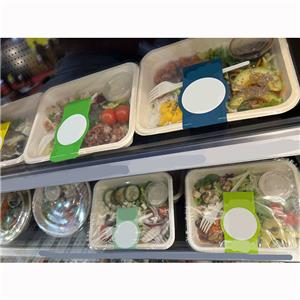
Convenience also means different things in different markets. A takeaway customer may want a container that is easy to carry without leaking. A supermarket shopper may prefer a ready meal that is simple to store and clearly labeled. A catering business may prioritize stackable containers that save space and make serving more efficient.
For these reasons, food packaging should do more than contain a product. It should fit the way the food is prepared, distributed, stored, and consumed.
In this article, we explore the main ways packaging affects food product convenience and explain how molded bagasse tableware and coated bagasse trays can support selected foodservice and prepared-food applications. Two companion guides cover adjacent decisions: how product packaging influences food choices and how to package my food product.
1. Packaging Makes Food Easier to Handle and Carry
One of the most obvious ways packaging affects convenience is through handling.
Food may need to move from a production line to a warehouse, from a restaurant to a delivery driver, or from a supermarket to a customer's home. Packaging that is easy to grip, stable, and appropriately sized makes these steps more manageable.
For takeaway and delivery businesses, useful packaging features may include:
- A container that holds its shape during normal handling.
- A secure, compatible lid or closure.
- Suitable resistance to oil and moisture.
- A design that helps prevent food from shifting during transport.
- A size that is practical for carrying and storage.
The best design depends on the food. A container for dry snacks does not need the same features as one holding a hot meal with sauce.
For distributors and wholesalers, this creates an opportunity to supply packaging designed for specific customer groups instead of relying on one universal container.
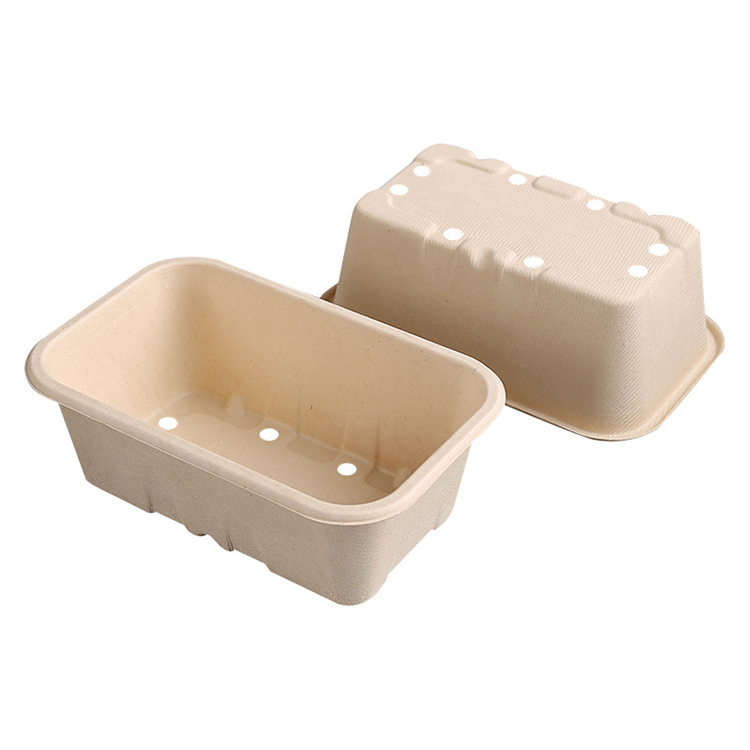
Molded bagasse plates, bowls, and takeaway containers can be useful for selected foodservice applications. Their shape, depth, and structure can be chosen according to the intended meal and serving requirements.
However, buyers should evaluate the actual product's rigidity, closure compatibility, and resistance to food moisture rather than assuming every molded fiber container offers the same performance.
2. Packaging Can Make Food Storage More Convenient
Convenient packaging should fit the way people store food at home, in commercial kitchens, or in food production facilities.
A package that stacks neatly can save shelf and storage space. Containers with consistent dimensions can also make inventory management easier for restaurants, caterers, and wholesalers.
For ready meals and prepared foods, storage requirements are particularly important. A package may need to remain stable in a refrigerator, fit within a standard carton, or protect the food during distribution.
When selecting food packaging, consider:
Stackability: Can filled containers be stacked without excessive deformation or instability?
Size and shape: Does the package use available storage space efficiently?
Closure: Does the lid or seal suit the intended storage and transport conditions?
Temperature requirements: Is the complete package suitable for the specified chilled or frozen storage conditions?
Coated bagasse trays may be suitable for selected ready-meal applications where a molded fiber base and a functional inner film are required. The film and tray structure must be chosen for the food and intended storage conditions.
For wholesale buyers, packaging that performs consistently in storage can help customers organize operations and reduce avoidable handling problems.
3. Easy Opening and Closing Improves the User Experience
A package may protect food effectively but still be inconvenient if it is difficult to open or close.
Consumers often prefer packaging that can be opened without excessive force, allows food to be accessed easily, and minimizes spills. For products intended to be stored after opening, resealability may also matter.
For foodservice and ready-meal packaging, the closure design should balance convenience with the level of protection required.
Examples include:
- Lids that fit securely onto compatible containers.
- Heat-sealed films that can be removed in a controlled way.
- Openings that provide easy access to the food.
- Containers that remain stable while the user eats.
- Packaging that helps keep separate food components organized.
Not every package needs a resealable closure. A single-serving takeaway container, for example, may prioritize secure transport and easy access, while a multi-serving product may benefit from a closure designed for repeated use.
For manufacturers and distributors, the important question is how the package will be used in practice. Request samples and evaluate opening, closing, and handling with the actual product before confirming a large order.
4. Packaging Can Make Serving and Eating Easier
Food packaging can influence the entire eating experience, especially when customers consume food directly from the container.
This is common with takeaway meals, catering, workplace lunches, prepared meals, and food served at events.
A suitable container can reduce the need for extra plates or serving dishes. Compartments can help keep different foods separate, while an appropriate depth and shape can make meals easier to serve.
For example, a divided tray may be useful for a meal containing rice, vegetables, and a main dish. A bowl may be more practical for noodles, salads, or foods that need deeper sides.
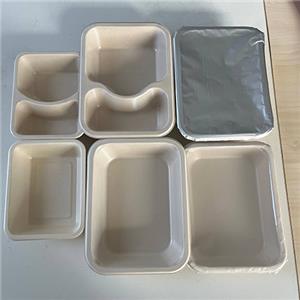
Molded bagasse tableware offers a range of potential formats, including plates, bowls, and compartment containers. These products may be suitable for selected takeaway, catering, and foodservice uses, depending on their design and performance. The available formats are set out on our molded bagasse tray range page.
For food packaging distributors, offering different formats helps meet the needs of customers serving different menus and portion sizes.
The aim is to match the container to the food rather than expecting customers to adapt to an unsuitable package.
5. Leak Resistance Can Make Food Delivery More Reliable
Leakage is one of the most frustrating problems in takeaway and prepared-food packaging.
Sauces, dressings, oils, and liquids can escape if the container, closure, or sealing system is unsuitable. Leaks may damage other items in a delivery bag, create extra cleaning work, and reduce customer confidence.
Packaging convenience therefore depends on more than the container's appearance. It also depends on how the package performs with the actual food.
When choosing packaging for moist or oily meals, consider:
- Whether the container material is suitable for the food.
- Whether the inner surface provides the required oil and moisture resistance.
- Whether the lid or sealing film is compatible with the tray.
- Whether the package has been evaluated under realistic handling conditions.
Where Coated Bagasse Trays May Help
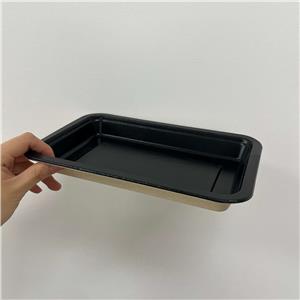
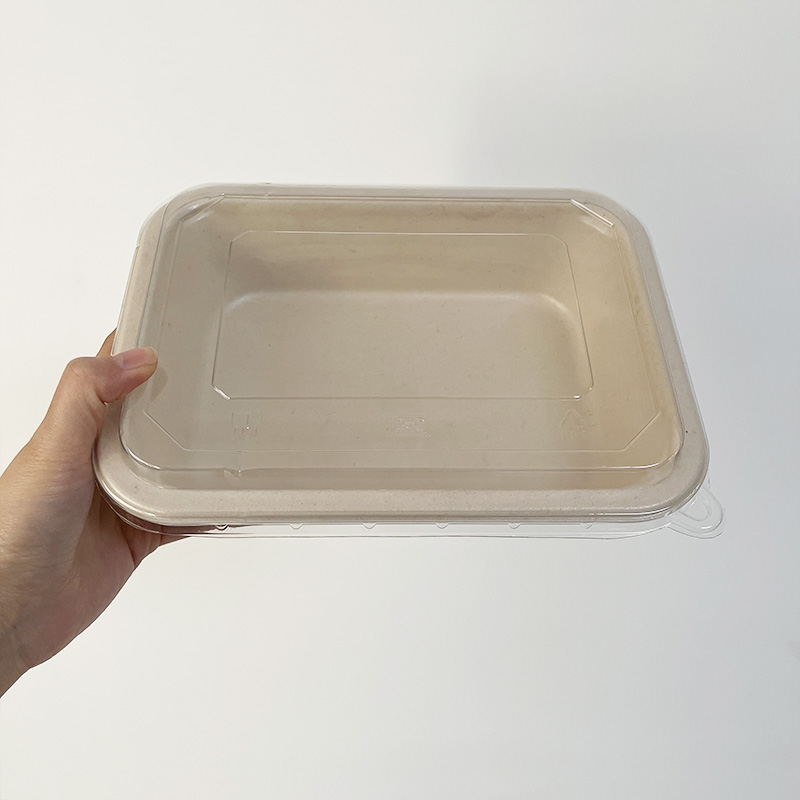
Coated bagasse trays combine a molded sugarcane fiber base with an inner film. Depending on the material and construction, the film can improve resistance to oil and moisture.
These trays may be suitable for selected prepared meals and foodservice applications where an uncoated molded fiber container does not provide the required barrier performance.
Film options for coated tray projects may include PP, PET, CPET, PLA, EVOH-based structures, or PBAT-based options. Each has different characteristics, so the choice must reflect the food, storage temperature, sealing requirements, and intended use.
A coated tray is not automatically leakproof under every condition. Performance depends on the complete package, including the tray design, film, closure or seal, and handling environment.
For distributors and wholesalers, supplying the right tray-and-closure combination can help customers improve package reliability and reduce avoidable problems. Compatible tray and lidding-film combinations are developed as a pair, as shown in our sealable bagasse tray range.
6. Packaging Can Simplify Reheating and Food Preparation
For some food products, convenience includes being able to heat or prepare food with minimal extra handling.
Ready meals are a good example. Customers may prefer a package that can be taken from storage to the next preparation step without transferring the food into another container.
However, this benefit depends on the package being specifically designed and validated for the intended use.
Before purchasing packaging for reheatable meals, check:
- Whether the container is approved or specified for the intended heating method.
- The permitted temperature range and heating conditions.
- Whether the lid or lidding film must be removed before heating.
- Whether the package is compatible with the food and any heating instructions.
- Whether the complete package has been tested under the intended conditions.
Some coated bagasse tray designs may be suitable for particular microwave or other heating applications, while others may not be. A tray's suitability depends on its base material, inner film, construction, and the manufacturer's specified conditions.
Do not assume that a container suitable for hot food is automatically suitable for a microwave or conventional oven.
For food manufacturers and wholesalers, clear instructions and accurate product specifications help ensure that packaging convenience does not come at the expense of safety or performance. How a seal is qualified on the finished pack is described in our article on whether bagasse trays can be heat sealed.
7. Packaging Helps Keep Different Food Components Organized
A package can make meals more convenient by keeping different ingredients in the right place.
Compartment trays are commonly used for prepared meals, catering, and portion-controlled food service. They can separate a main dish from side dishes, help maintain presentation, and make portioning more consistent.
The number and size of compartments should reflect the food rather than simply the appearance of the container.
For example:
- A single-compartment tray may suit a pasta dish or rice meal.
- A two-compartment tray may separate a main dish and a side.
- A three-compartment tray may suit meals with several components.
- A deeper tray may be more suitable for certain foods with sauces.
For distributors, having multiple configurations can help serve different meal brands and foodservice operators.
Custom molded bagasse trays may also be developed when standard formats do not meet the customer's portion size or layout requirements. Before investing in a custom mold, buyers should confirm expected order volume, tooling costs, sample approval, and production lead times.
8. Convenient Packaging Can Improve Supply-Chain Efficiency
Food packaging convenience is not limited to the end consumer. It also matters to the businesses that produce, store, transport, and sell food.
A package that is easy to handle and compatible with production equipment can reduce unnecessary manual work. Consistent dimensions can simplify packing and stacking. Suitable sealing systems can support repeatable production processes.
For wholesalers and distributors, practical packaging design can also affect shipping costs, storage requirements, and inventory planning.
When evaluating a packaging product, consider the entire supply chain:
At the factory: Can the package be filled, closed, and labeled efficiently?
During storage: Can products be stacked and stored safely?
In transport: Can the packaging withstand normal distribution and handling conditions?
At the point of sale: Does it present the food clearly and fit the retailer's requirements?
For the consumer: Is it easy to carry, open, serve, and dispose of according to local facilities and instructions?
A package that works well across these stages can offer greater business value than one designed around a single feature.
9. How Sustainable Packaging Choices Affect Convenience
Many food businesses are exploring plant-based or fiber-based packaging as part of their material-selection strategy. However, changing materials should not create new problems for customers or the supply chain.
A suitable alternative must still perform the required functions.
Bagasse is the fibrous residue left after sugarcane juice is extracted. It can be processed into molded fiber products such as plates, bowls, takeaway containers, and trays.
For selected foodservice applications, bagasse packaging offers a plant-based alternative to conventional plastic containers.
When evaluating bagasse packaging, consider:
- Whether the product has sufficient strength for the intended food.
- Whether oil and moisture resistance meet the application requirements.
- Whether the container shape supports convenient serving and handling.
- Whether the package fits your customers' storage and distribution systems.
- Whether environmental claims are supported by the complete product's specifications and certifications.
What About Coated Bagasse Packaging?
Coated bagasse trays add an inner film to a molded fiber base. This can provide functional benefits, such as improved oil and moisture resistance, and may support heat sealing when the tray and lidding film are compatible.
However, the inner film also affects the complete package's material composition and end-of-life characteristics.
A coated bagasse tray should not automatically be described as fully compostable or plastic-free. Buyers should check the complete construction and any relevant certification before making environmental claims. The documents we make available on request are listed in our certification and test report section.
For international distributors and wholesalers, this is especially important because packaging regulations, labeling rules, and waste-management infrastructure vary between markets.
The best packaging decision balances practical convenience, verified performance, commercial cost, and accurate environmental information.
10. How to Choose Convenient Food Packaging for Your Business
If you are a food packaging importer, wholesaler, or distributor, use the following checklist when evaluating products for your customers.
Identify the Application
Determine whether the packaging is intended for takeaway meals, ready meals, catering, retail food, or another use.
Understand the Food Requirements
Consider the food's moisture and oil content, temperature conditions, portion size, and expected storage period.
Check Ease of Use
Evaluate how the package opens, closes, stacks, carries, and serves the food.
Confirm Performance
Ask for specifications and test results relevant to structural strength, leak resistance, sealing, and temperature limitations.
Compare Total Cost
Include unit price, shipping, storage, tooling, equipment compatibility, and potential product loss.
Evaluate Customization
Decide whether standard containers are sufficient or whether a custom shape, size, or compartment layout would provide meaningful value.
Choose a Reliable Manufacturer
Look for consistent specifications, appropriate documentation, sample support, clear communication, and supply arrangements suited to your business.
11. Bagasse Food Packaging Solutions for Distributors and Wholesalers
If you supply food packaging to restaurants, food manufacturers, catering businesses, supermarkets, or ready-meal brands, offering practical packaging options can help you meet different customer requirements.
Hebei Mountain Environmental Protection Technology Co., Ltd. manufactures bagasse food packaging, including molded fiber tableware and coated trays for selected food packaging applications.
Our OEM/ODM and custom product development capabilities support projects involving different sizes, shapes, compartment layouts, and functional requirements.
For coated bagasse trays, the inner film should be selected according to the intended food, required oil and moisture resistance, sealing process, and temperature conditions. The complete package should be evaluated before it is used in production.
We work with business buyers to discuss standard products and customized packaging projects. For distributors and wholesalers, this provides an opportunity to develop a product range that serves specific customer needs rather than relying on a single container format.
Whether you are sourcing bagasse plates and bowls for foodservice or coated trays for selected prepared-food applications, the starting point is the same: define how the packaging will be used, confirm the product specifications, and evaluate samples before placing a bulk order.
Conclusion: Convenient Packaging Creates Value for Both Businesses and Consumers
How does packaging impact the convenience of a food product? It influences how easily food can be handled, stored, carried, opened, served, reheated, and distributed.
The most convenient package is not necessarily the most complicated one. It is the package that meets the product's needs while making each step simpler for the people who handle it.
For food producers, suitable packaging can support more efficient operations and a better customer experience. For distributors and wholesalers, a well-chosen product range can help meet customer requirements and build long-term business relationships.
Molded bagasse tableware and coated bagasse trays can be useful options for selected foodservice and prepared-food applications. Their suitability depends on the design, material structure, and intended conditions of use.
Frequently Asked Questions
1. How does packaging affect food product convenience?
Packaging affects how easily food can be carried, stored, opened, served, reheated, and transported. Convenient packaging should match the food, the distribution method, and the customer's intended use.
2. What features make food packaging convenient?
Useful features may include suitable size and shape, easy opening, secure closures, stackability, compartment layouts, appropriate leak resistance, and compatibility with required storage or heating conditions.
3. Why is convenient packaging important for food delivery?
Convenient delivery packaging helps food remain organized during transport and makes it easier for customers to carry and access their meals. The container and closure must be suitable for the food and expected handling conditions.
4. Can bagasse packaging improve foodservice convenience?
Bagasse plates, bowls, and containers can provide practical molded fiber formats for selected foodservice and takeaway uses. Buyers should confirm that the specific product meets their strength, oil resistance, moisture resistance, and handling requirements.
5. What are coated bagasse trays used for?
Coated bagasse trays combine a molded sugarcane fiber base with an inner film. Depending on the design, they may offer improved oil and moisture resistance and may be compatible with heat-sealing systems.
6. Can coated bagasse trays be used in microwaves?
Some designs may be suitable for specified microwave applications, but not all coated trays are. Buyers should follow the manufacturer's documented temperature limits and heating instructions for the complete package.
7. Are coated bagasse trays compostable?
Not automatically. Compostability depends on the complete package, including the inner film, and on relevant certifications and disposal conditions. Verify the finished product before making compostability claims.
8. What should wholesalers consider when sourcing convenient food packaging?
Wholesalers should evaluate product performance, ease of handling, material specifications, food-contact documentation, price, shipping efficiency, customization, minimum order quantities, and the supplier's ability to support repeat orders.
Looking for a bagasse food packaging manufacturer?
Hebei Mountain Environmental Protection Technology Co., Ltd. supplies molded bagasse food packaging and coated tray solutions for business customers.
Contact our team to discuss your packaging requirements, explore standard and customized products, and request samples for evaluation.
We welcome inquiries from importers, distributors, wholesalers, supermarket suppliers, and food brands looking for a manufacturing partner.