How Does Product Packaging Influence Food Choices? A Guide for Food Brands and Packaging Buyers
Introduction: Packaging Does More Than Protect Food
Why do shoppers pick one ready meal over another when both products offer similar ingredients and prices? Sometimes, the answer has less to do with the food itself and more to do with how it is presented.
Food packaging is often the first thing a customer notices on a supermarket shelf, in a takeaway display, or when a meal arrives at their door. Its color, shape, material, convenience, and overall appearance can influence how consumers perceive a product before they even taste it.
So, how does product packaging influence food choices?
It affects first impressions, communicates product quality, builds brand trust, and helps consumers decide whether a product meets their needs. Packaging can also influence purchasing decisions through its environmental claims, ease of use, and ability to keep food fresh and protected.
For food brands, retailers, and food packaging distributors, understanding these factors is essential. The right packaging does not simply contain a meal. It can help a product stand out, strengthen brand identity, and create a better customer experience.
In this guide, we explore the main ways packaging influences food choices and explain why bagasse food packaging and coated bagasse trays are worth considering for today's food market.
1. First Impressions Can Influence Purchasing Decisions
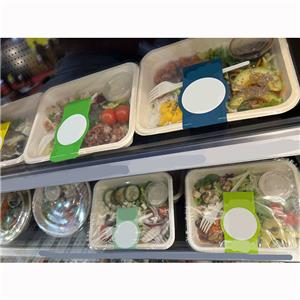
Consumers often make quick judgments when choosing food. On a crowded supermarket shelf, packaging helps a product attract attention before a shopper has time to compare every detail.
A well-designed package can make food look more appealing, organized, and suitable for its intended use.
For example:
- A clear, well-organized tray can help shoppers understand the meal's portion and compartment layout.
- A sturdy container can give the impression that the product is carefully prepared and handled.
- A clean, consistent design can make a food brand look more professional.
- A distinctive package shape can help a product stand out among similar options.
Packaging cannot guarantee a purchase, of course. Price, taste, ingredients, and personal preferences still matter. However, a package that communicates the product's value clearly can make the buying decision easier.
What this means for packaging buyers: When sourcing food containers, look beyond unit price. Consider how the packaging will look on a shelf, in a delivery bag, and in the customer's hands.
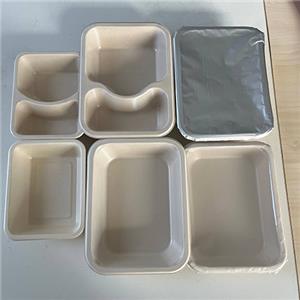
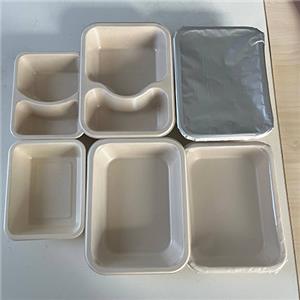
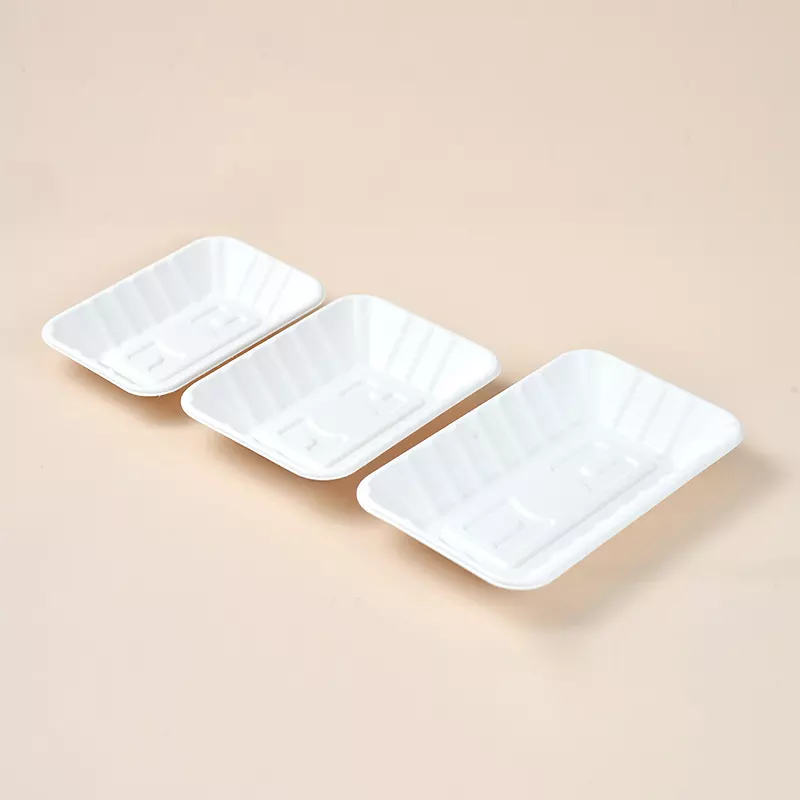
For ready meals, molded bagasse trays offer a natural fiber appearance that can help brands develop a distinctive packaging style. Different shapes, sizes, and compartment layouts can also support different meal formats.
2. Packaging Influences How Consumers Perceive Food Quality
Packaging affects more than appearance. It can also shape consumers' expectations about the quality of the food inside.
Imagine two chilled ready meals. One comes in a container that looks flimsy or poorly sealed. The other is presented in a well-formed tray with a secure seal and a neat label. Even before opening either package, a shopper may feel more confident about the second product.
Several packaging features can contribute to this perception:
Structural strength: A tray that holds its shape during storage, transport, and handling helps present the food professionally.
Food protection: Appropriate packaging helps protect food from contamination and unwanted exposure during distribution and storage.
Leak resistance: Packaging designed for the food's moisture and oil content can reduce messy leaks and improve handling.
Reliable sealing: For suitable ready-meal applications, a properly designed heat-sealed package can help protect the product and maintain package integrity.
These details are particularly important for supermarkets, meal-preparation companies, food manufacturers, and delivery businesses.
For packaging distributors, offering containers designed for specific food applications can be more valuable than selling a one-size-fits-all product.
3. Convenience Can Make a Product More Attractive
Consumers do not choose food based on appearance alone. They also consider how easy it is to store, carry, open, serve, and reheat.
Convenient packaging can make a meal more suitable for busy lifestyles, especially for office lunches, takeaway orders, chilled ready meals, and frozen food products.
Useful features may include:
- Compartments that keep different foods separate.
- Stackable designs that make storage and transportation easier.
- Secure closures that help prevent spills.
- Heat-sealable structures for compatible packaging lines.
- Microwave-compatible materials for reheating, when the complete package is specifically designed and tested for that use.
For example, a ready meal containing rice, vegetables, and a main dish may benefit from a divided tray. A single-compartment tray may be more appropriate for pasta, lasagna, or a prepared meat dish.
This is where customized bagasse food packaging can offer practical value. Manufacturers can develop different shapes, sizes, and compartment configurations to suit specific products and customer requirements.
For wholesalers and distributors, this creates opportunities to serve multiple food categories rather than relying on a single standard container.
4. Sustainable Packaging Can Influence Food Choices
Environmental concerns have become an important consideration for many consumers and food businesses. As a result, packaging materials can influence how shoppers perceive a product and its brand.
However, consumers do not all make purchasing decisions in the same way. Some prioritize sustainability, while others focus more on price, convenience, food quality, or brand familiarity.
For businesses targeting environmentally conscious markets, packaging made from renewable materials can help communicate a sustainability commitment.
What Is Bagasse Food Packaging?
Bagasse is the fibrous residue left after juice is extracted from sugarcane. This material can be processed into molded fiber products such as disposable plates, bowls, takeaway containers, and food trays.
Compared with conventional packaging made entirely from fossil-based plastic, bagasse packaging uses a renewable plant-based raw material.
Potential advantages include:
- Making productive use of a sugarcane processing byproduct.
- Providing a molded fiber alternative to conventional plastic food containers.
- Offering a natural appearance for foodservice and retail packaging.
- Providing options for compostable food packaging when the finished product meets the relevant requirements.
It is important to distinguish between the base material and the finished package. Uncoated bagasse products and coated bagasse products may have different end-of-life characteristics. Compostability depends on the complete product, including any coatings, liners, adhesives, and other components, as well as the applicable certification and composting conditions.
For food brands and distributors, clear and verifiable environmental claims are essential to maintaining customer trust.
5. Why Coated Bagasse Trays Matter for Ready Meals
Traditional molded bagasse trays can work well for many foodservice applications. However, ready meals often require additional performance features, especially when the food contains sauces, oils, or moisture and needs to be sealed for storage and distribution.
This is where coated bagasse food trays become relevant.
At Hebei Mountain Environmental Protection Technology Co., Ltd., we focus on bagasse food packaging, including coated bagasse trays designed for specific food packaging requirements.
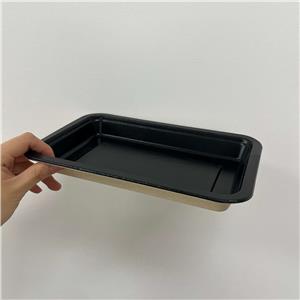
These products combine a molded sugarcane fiber base with a functional film layer. Depending on the intended application, available film materials may include PP, PET, CPET, PLA, EVOH-based structures, and PBAT-based options.
Each material has different properties, so the right choice depends on the food, sealing process, storage temperature, reheating requirements, barrier performance, and end-of-life objectives.
How Coated Bagasse Packaging Can Improve the Customer Experience
Better resistance to moisture and oil
A suitable inner film can improve resistance to water, grease, and food liquids. This is useful for meals containing sauces, oils, or moist ingredients.
Heat-sealing capability
Compatible trays and lidding films can be designed for heat sealing, helping food manufacturers create neat, secure packages for retail and distribution.
Support for ready-meal packaging
With the appropriate tray structure, lidding film, and packaging process, coated bagasse trays can be developed for selected chilled or frozen ready-meal applications.
Compatibility with different food packaging systems
Depending on the tray and film specifications, solutions can be developed for conventional heat sealing or suitable modified atmosphere packaging (MAP) applications. Actual gas-barrier performance must be verified for the complete packaging structure.
Flexible product design
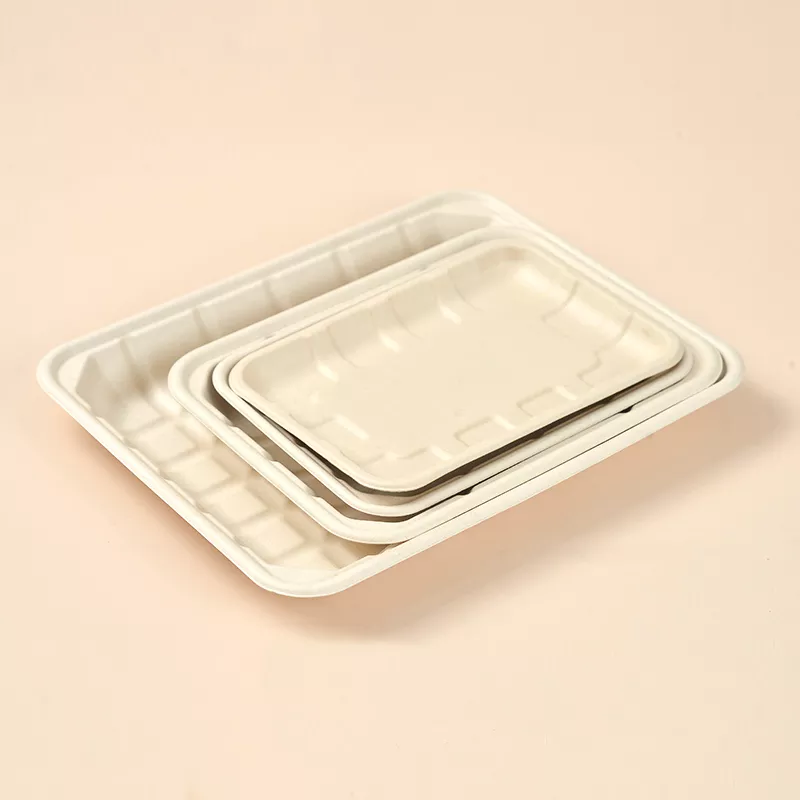
Different tray sizes, depths, and compartment layouts can be developed to match meal portions, retail presentation, and production requirements.
One important point for buyers: a bagasse tray with a plastic inner liner should not automatically be marketed as fully compostable. The finished structure must be assessed against the relevant compostability requirements. Likewise, microwave, freezer, and oven suitability must be confirmed for the specific tray-and-film combination rather than assumed from the bagasse base alone.
For distributors, understanding these distinctions helps prevent misleading product claims and makes it easier to recommend the right packaging for each customer.
6. Packaging Design Helps Build Brand Recognition
Packaging is also a practical branding tool. A consistent visual style across containers, sleeves, labels, and outer cartons can help consumers recognize a brand and remember the product.
For food manufacturers and private-label businesses, useful customization options may include:
- Custom tray shapes and dimensions.
- Single-, double-, or multiple-compartment designs.
- Printed paper sleeves or labels.
- Custom product presentation and packaging configurations.
- Packaging formats developed for particular retail or foodservice channels.
For example, a premium prepared-meal brand may prefer a shallow tray with clean lines and a well-fitted lid. A meal-prep business may need divided containers for portion control. A supermarket supplier may prioritize trays that fit existing filling, sealing, labeling, and transport equipment.
The best design is not necessarily the most complicated. It is the one that suits the product, supports the brand, and works reliably throughout the supply chain.
7. Food Packaging Must Balance Cost and Performance
For distributors and wholesalers, consumer appeal is only part of the equation. Packaging must also make commercial sense.
A container that looks attractive but causes leakage, sealing problems, or high transport costs can create more problems than it solves.
Before selecting a packaging supplier, buyers should evaluate several factors:
| Purchasing factor | What to check |
|---|---|
| Unit price | Compare prices at the intended order volume. |
| Product quality | Check dimensions, strength, consistency, and finish. |
| Food protection | Match moisture, oil, and barrier performance to the food. |
| Sealing compatibility | Test the tray, lidding film, and sealing equipment together. |
| Temperature suitability | Confirm the intended storage and reheating conditions. |
| Customization | Ask about available molds, tooling costs, and sample development. |
| Compliance | Request applicable food-contact and environmental documentation. |
| Supply capacity | Evaluate production capacity, lead times, and export experience. |
The lowest quoted price does not always represent the lowest overall cost. A more suitable tray may help reduce product damage, packaging waste, production interruptions, and customer complaints.
For long-term distribution partnerships, consistent quality and dependable supply are often just as important as the initial price.
8. How to Choose the Right Bagasse Packaging Manufacturer
For international importers, wholesalers, and food packaging distributors, selecting a manufacturer is an important part of product development.
A capable supplier should understand both the packaging material and the practical demands of the food application.
When comparing bagasse packaging manufacturers, consider the following questions:
- Does the factory produce the product types and sizes your customers need?
- Can it supply both standard molded fiber products and coated bagasse trays?
- Can it recommend suitable film materials for different temperature and sealing requirements?
- Does it offer OEM/ODM services and custom mold development?
- Can it provide samples for product, sealing, and temperature testing?
- Can it supply relevant food-contact documentation and substantiated environmental claims?
- Does it have the production capacity and export experience to support repeat wholesale orders?
Work with a Manufacturer That Understands Your Application
Hebei Mountain Environmental Protection Technology Co., Ltd. supplies bagasse food packaging solutions for business customers, with a focus on molded fiber products and coated trays.
Our manufacturing capabilities include an in-house mold library, customized product development, and OEM/ODM support. For buyers developing new packaging, the process can begin with a drawing or product specification, followed by sample development and application testing.
We also have manufacturing operations in China and Cambodia, providing additional options for buyers evaluating production location and supply-chain arrangements.
Rather than selecting a product based on material claims alone, we encourage buyers to define the food application first. Tray dimensions, film selection, sealing conditions, storage temperature, and required certifications should all be considered before confirming a specification.
This approach helps distributors build a more reliable product range and gives their customers packaging that fits real operating requirements.
9. The Future of Food Packaging: Functionality Meets Sustainability
Food packaging is evolving as brands respond to changing consumer expectations, new retail formats, and growing interest in material sustainability.
Several priorities are becoming increasingly important:
- Practical performance: Packaging must protect food and work throughout storage, transport, and use.
- Convenience: Easy handling, portion separation, and suitable reheating options can improve the customer experience.
- Material transparency: Buyers need accurate information about material composition, recycling, and compostability.
- Customization: Packaging needs to fit specific foods, brands, and production lines.
- Responsible sourcing: Businesses increasingly assess supplier quality, documentation, and long-term supply reliability.
Bagasse packaging can play a role in this transition, particularly when molded fiber design is combined with the functional properties required for the intended food application.
For distributors and wholesalers, the opportunity lies in offering more than a basic container. It is about providing customers with packaging solutions that balance presentation, protection, usability, and credible sustainability claims.
Conclusion
So, how does product packaging influence food choices?
It shapes first impressions, affects perceived quality, supports convenience, communicates brand values, and can influence whether consumers feel confident buying a product.
For food brands, packaging is part of the overall product experience. For distributors and wholesalers, it is also an opportunity to differentiate their product range and meet the changing needs of food businesses.
Bagasse food packaging offers a renewable-material option for many foodservice applications, while coated bagasse trays can provide additional moisture resistance and sealing functionality for suitable ready-meal applications.
The key is choosing the right structure for the food rather than assuming that one packaging material fits every use.
Frequently Asked Questions
1. How does product packaging influence food choices?
Product packaging influences food choices through appearance, perceived quality, convenience, food protection, brand recognition, and sustainability messaging. Packaging that communicates a product's benefits clearly can help consumers make purchasing decisions.
2. Why is food packaging important for consumer behavior?
Food packaging helps consumers identify products, understand how they should be stored or used, and judge whether the product suits their needs. Its appearance and functionality can also affect confidence in the brand.
3. Does sustainable food packaging influence purchasing decisions?
It can. Some consumers prefer packaging made from renewable or recycled materials, particularly when environmental claims are clear and credible. However, price, food quality, convenience, and personal preferences also influence purchasing decisions.
4. What is bagasse food packaging?
Bagasse food packaging is made from molded sugarcane fiber left over after juice extraction. It is used for products such as plates, bowls, takeaway containers, and food trays. The environmental characteristics of the finished product depend on its full material composition and applicable disposal conditions.
5. What are coated bagasse trays used for?
Coated bagasse trays are used in suitable food packaging applications that require improved moisture or oil resistance. Depending on the tray and film structure, they can also be designed for heat sealing and selected ready-meal packaging systems.
6. Can coated bagasse trays be used for microwave meals?
Some coated bagasse trays are suitable for microwave reheating, but suitability depends on the exact tray, film, and temperature conditions. Buyers should obtain the manufacturer's specifications and test the complete package before commercial use.
7. How can distributors choose a reliable bagasse packaging manufacturer?
Distributors should compare product quality, manufacturing capacity, customization options, lead times, food-contact documentation, and the manufacturer's ability to support application testing. For coated products, film compatibility and sealing performance are particularly important.
8. Can bagasse packaging be customized for wholesale orders?
Yes. Depending on the manufacturer's capabilities, bagasse packaging can be customized by size, shape, compartment layout, and other design features. OEM/ODM services can help distributors and brands develop products for their own markets.
Looking for a bagasse packaging manufacturer for your wholesale or private-label business?
Hebei Mountain Environmental Protection Technology Co., Ltd. can help you explore standard bagasse food containers, customized molded fiber products, and coated bagasse trays for ready meals.
Contact our team to discuss your target application, request product samples, and evaluate a packaging specification that fits your market.
Whether you are expanding an existing packaging range or developing a new product, we welcome inquiries from importers, distributors, wholesalers, and food brands.