Bagasse Bowls and Trays for Salads and Cold Bowls: Preventing Sogginess in Chilled Delivery
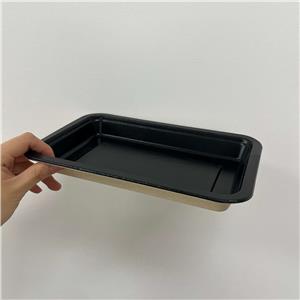
A chilled salad goes soggy because moisture and dressing reach the fiber base, so the fix is a laminated base plus a way of keeping the dressing away from the leaves until the customer opens the pack. The bowl or tray shape matters far less than the coating and the separation.
Cold bowls are the opposite case from a hot meal: nothing needs to stay warm, but everything needs to stay crisp and nothing may leak. This guide explains what actually controls sogginess, how the formats differ, and what to send a manufacturer when you request samples. The same tray engineering used for 1:1 plastic tray replacement applies to bowls, so an existing format can be converted without redesigning the pack.
Why salad packs go soggy, and what controls it
Sogginess has two causes and they are addressed separately: dressing reaching the leaves, and moisture leaving the leaves into the pack. The first is a layout problem and the second is a barrier problem, which is why a salad pack is designed around separation rather than around a single material choice.
An unlaminated fiber base is not suited to a dressed product, because moisture moves into the uncoated fiber. Our laminated trays and bowls are ≤ 5% plastic, and our film-free range is 100% plastic-free and intended for cold, non-sealed applications where no liquid barrier is required.
Separating wet and dry components in one pack
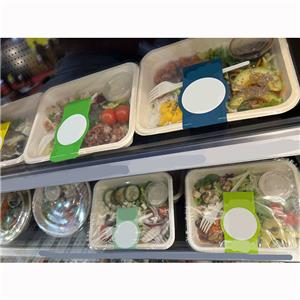
A separate compartment or a small pot for the dressing is the single most effective measure, because it keeps the liquid out of the leaves until the pack is opened. A raised base that keeps the salad off the floor of the pack achieves a similar effect for a product that releases its own moisture.
Separation is a tooling decision rather than a packing-line decision, so it is settled when the layout is drawn. Our mold library holds more than 3,000 in-house molds, and we develop 200+ new molds each year for layouts of this kind. The behaviour of a loaded fiber base is examined in our analysis of fiber strength under load.
Choosing between a bowl, a tray and a compartment pack
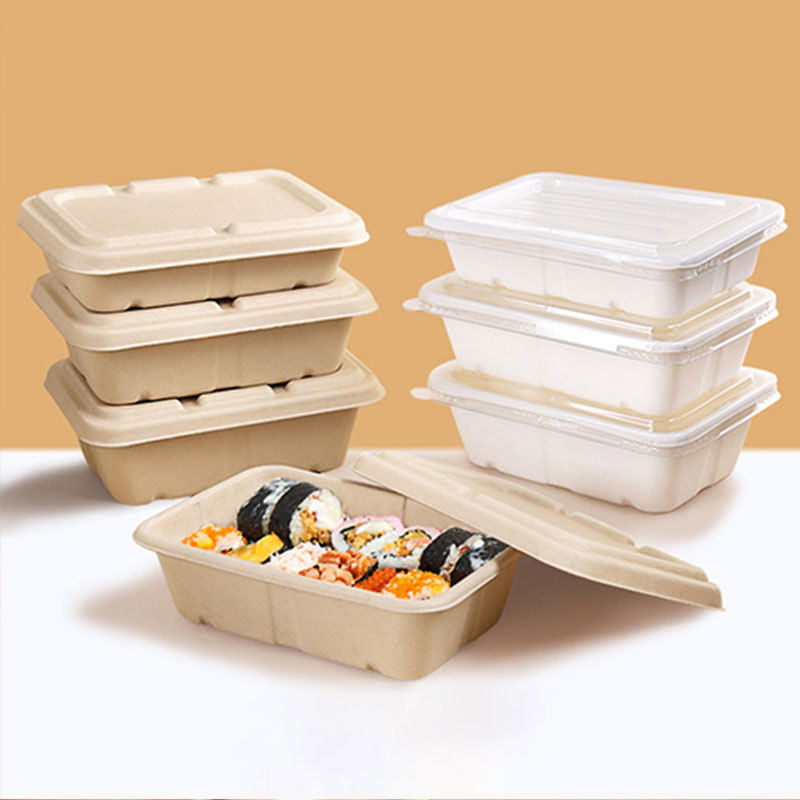
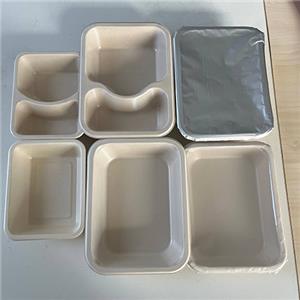
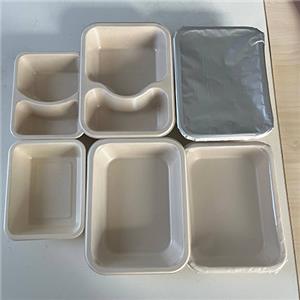
A bowl suits a loose leaf or grain salad, a tray suits a flat arrangement, and a compartment pack suits a bowl with toppings or sides. The format follows how the salad is built and how it is carried, not how it looks on the pass.
Where the bowl is also used for a warm product elsewhere on the menu, the two uses are specified separately, because a bowl that is safe for one service is not automatically suited to the other. Our article on compostable bowls and microwave use covers that boundary, and the wider format range is described in our guide to compostable trays for prepared meals.
Dressing on the side: closures that hold it
A dressing pot needs a closure that holds under a tilted bag, and the main pack needs one that does not press the leaves. That usually means a film seal or a lid on the main pack, and a separate lidded pot rather than a well in the base.
Where a film is used, the film and the rim have to be matched, because seal behaviour is a property of the pair. Our bagasse heat seal food trays are supplied as a tray and film system for that reason, and the film selection criteria are set out in our guide on how to choose the right film.
Matching the pack to the salad type
| Salad type | What the pack has to do | What to specify |
|---|---|---|
| Leafy salads with dressing on the side | Keep leaves dry until the dressing is added | A separate compartment or pot for the dressing, and a laminated base |
| Grain and pasta salads | Hold a moist, heavy mix without leaking | A laminated base, rigidity for the stack, and a closure that holds when tilted |
| Protein-topped bowls | Keep a wet or warm topping away from the leaves | Compartment layout and a separate closure for each side |
| Chopped and pre-dressed salads | Carry a dressed product from the moment it is packed | A coating suited to an acidic dressing, and a closure that contains it |
| Fruit and dessert bowls | Stop juice from reaching the fiber base | A laminated base and a lid or film that seals against the rim |
The table is a starting point, because the layout that works is the one drawn around your own salad build.
What to specify before you order
A useful enquiry describes the salad rather than the material. Send the ingredients and the dressing, whether the dressing is mixed or packed separately, the chilled storage period you need to cover, the delivery window, and how the packs are stacked in the bag or crate.
Compliance documentation belongs in the same request. Our laminated range is PFAS-FREE (ND, < 10 ppm) and ≤ 5% plastic, the certification set is FDA, LFGB, OK Compost Industrial and ABAP, and the supporting test reports cover REACH, POPs, PFAS, PPWR total fluorine and BPA, all listed in our certification and test report section. The base options for this kind of pack are compared in our guide to coated and uncoated bagasse tableware.
Frequently asked questions
Why does a fiber bowl go soft under a dressed salad?
Because moisture from the dressing reaches the uncoated fiber and the base loses rigidity. A laminated base removes that path, which is why a dressed product should not be packed in a film-free format.
Should the dressing be packed separately or mixed in?
Separately, wherever the product allows it, because the dressing is the main source of moisture and separating it delays the moment the leaves start to soften. A pre-dressed salad is a different design problem and is specified as such.
Is a bowl or a tray better for a cold salad?
A bowl is better for a loose mix and a tray is better for a flat arrangement, and the choice depends on how the salad is built rather than on the material. Both formats are made from the same laminated base, so the difference is shape and handling.
Can a salad pack be film sealed for delivery?
Yes, and sealing is often the safest option where the pack is tilted or stacked. Seal behaviour is established on the actual tray and film combination, which is why the pair is specified together.
Does an acidic dressing change the coating choice?
It can, because the film structure is what sits between the dressing and the fiber rather than the fiber itself. The dressings and their acidity belong in the enquiry alongside the food, so the film can be matched to them.
Need samples for a salad or cold bowl format?
Hebei Mountain Environmental Protection Technology Co., Ltd. manufactures laminated bagasse trays and bowls and supplies film structures in PP, PET, CPET, PLA, EVOH-enhanced and PBAT-based options, with 30+ production lines for volume supply. Bowls, trays and compartment packs can all be developed from an existing plastic format or from a new drawing.
Send us the salad build, the dressing and the delivery window, and we will confirm which base and film suit the pack and which samples to run. Please contact our team to start the request.