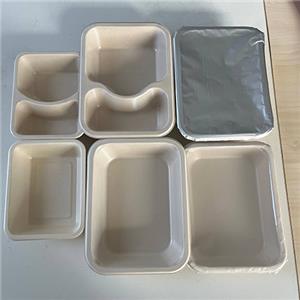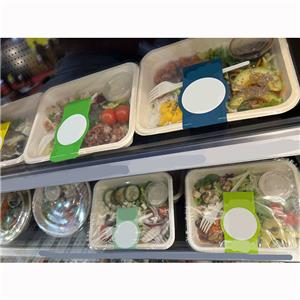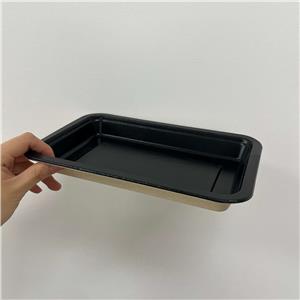
How to Replace CPET Food Trays With Heat-Sealable Bagasse Trays
A CPET food tray and a heat-sealable bagasse tray are sealed in fundamentally different ways, so the sealing step decides whether the replacement works - not the tray material alone. A CPET tray is a single plastic body that already carries its own sealing surface. A molded fiber tray does not, so the sealing surface has to be created by a functional film, and the tray, the film, the lidding film and the machine settings then have to be approved together.
This guide sets out the six steps we use to move a CPET ready meal tray to a heat-sealable laminated bagasse tray, the points where conversions most often stall, and what to send to a manufacturer to start. For the material comparison itself, see our guide to bagasse tray vs CPET tray.
Why a CPET replacement is a sealing project
The tray is only one part of the package, and it is rarely the part that fails first. A CPET tray brings its own sealing layer to the machine. A bagasse tray brings molded fiber, and the fiber alone cannot be heat sealed to a lidding film. The functional film laminated onto the tray provides that sealing surface, which means the film is the part of the package that has to match the lidding film and the sealer.
That is why a CPET replacement should be planned as a full packaging project: the tray geometry, the sealing surface, the film structure, the lidding film, the sealing settings and the food all have to be approved as one system.
What changes when the tray is no longer plastic
- The sealing surface - a CPET tray seals against its own rim; a bagasse tray seals against the functional film laminated onto the rim.
- The rim geometry - the rim has to be designed to give the film a flat, consistent sealing area.
- Stacking and denesting - molded fiber trays are stacked differently from plastic trays.
- Moisture and oil management - ready meals with sauce, oil or high moisture content put the functional film under load during storage and heating.
- Temperature capability - it depends on the film structure selected, not on the word "bagasse".
Film structures used for CPET-equivalent trays
Across our laminated tray range, film structures cover -20°C to 220°C depending on the film selected. The limit that matters for a CPET replacement is the capability of the chosen film structure, not the range as a whole. Our laminated trays are ≤ 5% plastic, and our film-free range is 100% plastic-free.
| Film structure | Typical CPET-replacement application | What to verify before approving |
|---|---|---|
| PP | Chilled and microwave ready meals | Seal window on your own sealer, plus microwave performance with the actual food |
| PET | General prepared and frozen foods | Low-temperature performance across the cold chain and seal integrity |
| CPET-based film | Ovenable ready meals needing higher-temperature performance | Oven time, food weight and rim geometry |
| PLA | Compostable-oriented applications | Industrial composting documentation and seal strength |
| EVOH-enhanced | MAP and VSP formats needing higher oxygen barrier | Barrier requirement and shelf-life testing of the complete package |
| PBAT-based | Selected compostable-oriented formats | Compatibility with the lidding film and the sealing settings |
The full selection logic behind these structures is covered in our guide to choosing the right film structure for a bagasse food tray.
Step 1: Build the data package from the existing CPET tray
A replacement project moves fastest when the existing tray is the reference. Send:
- A physical CPET tray sample and any available technical drawing
- Overall length, width, height, tray depth, rim width, corner radius and compartment layout
- The food, filling weight and whether the meal contains sauce or oil
- Storage conditions (chilled, frozen, or both) and heating conditions (microwave, oven)
- The sealing machine and its current sealing temperature, pressure and dwell time
- The current lidding film specification and the packing format (standard seal, MAP or VSP)
- Expected monthly or annual volume
Step 2: Develop the mold from the existing tray
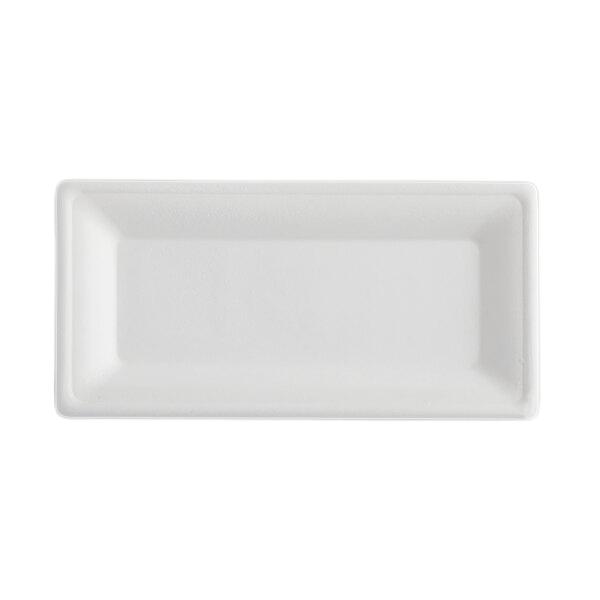
Molded fiber has different material characteristics from CPET, so the tooling is developed around the required dimensions rather than copied from the plastic tool. We support 1:1 plastic tray replacement by building the new mold from the dimensions of your existing tray, so the tray footprint, depth and compartment layout stay as close to the original as the material allows. Our mold library holds more than 3,000 in-house molds, and we develop 200+ new molds each year.
Step 3: Select the film structure
The film structure follows the most demanding condition in the product journey, usually temperature first and barrier second. A chilled meal, a frozen meal and an ovenable meal should not be given the same structure by default. For higher-temperature formats a CPET-based functional layer can be evaluated; where higher oxygen barrier is needed for MAP, an EVOH-enhanced structure can be evaluated; for compostable-oriented projects, PLA or PBAT-based options can be evaluated.
Step 4: Run the seal-window trial on your own sealing machine
The seal window can only be confirmed on the machine that will run the job. A tray that seals well in a laboratory test can behave differently at production speed. The trial normally covers sealing temperature, sealing pressure, dwell time, seal strength and a leak check, and it should use your lidding film. Our guide to seal strength and leak testing sets out the test sequence we use.
Step 5: Test the application, not only the tray
The application tests are the ones that decide whether the replacement is commercially usable: microwave heating with the actual meal, oven heating where applicable, frozen storage if the meal moves through a cold chain, and MAP or VSP checks if the format uses a modified atmosphere or vacuum skin. Food-contact and migration documentation should be collected for the exact finished structure - our certification documents section lists the reports we can provide, including REACH, POPs, PFAS, PPWR total fluorine and BPA test reports. Our laminated trays are PFAS-FREE (ND, < 10 ppm).
Step 6: Approve the specification, then scale
Once the seal window and the application tests pass, the tray dimensions, film structure and sealing parameters become the approved specification, and the first production order is run against that specification. Production volume, packaging and delivery arrangements are then planned for the packaging and delivery arrangements of the finished trays.
The five points where CPET conversions most often stall
- The film is chosen before the temperature profile of the meal is defined.
- The seal window is tested in a laboratory instead of on the production sealer.
- The rim is designed without giving the film a consistent sealing area.
- Barrier performance is assumed from the material name instead of being measured on the finished package.
- The food is changed after approval, without repeating the application tests.
What to send us to start a CPET replacement project
If you already use CPET trays for ready meals, frozen food or prepared foods, send your existing tray or technical drawing together with the food, storage and heating conditions, your sealing machine details and your lidding film specification. We will evaluate the dimensions, the temperature requirement and the sealing process, then recommend a suitable tray and film structure.
Our product range includes heat-sealable bagasse tray formats and bagasse heat seal food trays for ready meal, frozen and prepared food applications.
Frequently asked questions
Can a heat-sealable bagasse tray match the oven performance of a CPET tray?
It can be possible for ovenable formats when a suitable film structure is selected, because our laminated range covers up to 220°C depending on the film. The final answer always comes from an oven test with the actual meal, tray geometry and food weight.
Do we need to replace our sealing machine?
In many projects the existing sealer can be used, provided its tooling can reach the sealing temperature, pressure and dwell time the new film needs. This is why the seal window is confirmed on your own machine before the project moves to production.
Can the new tray keep the same footprint as our CPET tray?
Yes, that is the purpose of 1:1 plastic tray replacement development. Overall length, width, depth, rim width, corner radius and compartment layout are taken from your existing tray, and the tooling is developed around those dimensions.
Is a laminated bagasse tray still counted as fiber-based packaging?
The base of the tray is molded sugarcane fiber and the functional film is a thin layer on top. Our laminated trays are ≤ 5% plastic, and our film-free range is 100% plastic-free. Documentation for the exact finished structure is available on request.
Which certifications can be provided for a ready meal tray?
Our certifications include FDA, LFGB, OK Compost Industrial and ABAP, supported by test reports for REACH, POPs, PFAS, PPWR total fluorine and BPA. The certification documents page lists the reports we can share with your compliance team.
Looking to replace your CPET food tray?
Hebei Mountain Environmental Protection Technology Co., Ltd. manufactures molded bagasse food packaging and laminated food trays for ready meal, frozen and prepared food applications. Send us your existing CPET tray, drawing or packaging specification and we will evaluate the tray dimensions, the film structure, the sealing method and the temperature conditions for your application.
Please contact our team to discuss your CPET-to-bagasse replacement project, our 30+ production lines and our custom mold development capability, and to request samples for your packaging line.