How to Choose a Bagasse Food Packaging Manufacturer in China
If you are sourcing bagasse food packaging from China, the supplier you choose can affect much more than the purchase price.
For standard plates or bowls, finding a supplier may be relatively simple.
For heat-sealable bagasse trays, ready meal packaging, laminated molded fiber products, MAP trays, VSP trays, and customized food packaging, the selection process is more complicated.
The manufacturer needs to understand not only bagasse fiber production, but also mold development, film selection, sealing performance, food applications, and your existing packaging equipment.
For importers, distributors, wholesalers, food manufacturers, and brands, this guide explains what to check before choosing a bagasse food packaging manufacturer in China.
Why Manufacturer Selection Matters
Two suppliers may both sell a product called a “bagasse food tray,” but their capabilities can be very different.
One company may mainly produce standard molded fiber tableware.
Another may have experience with:
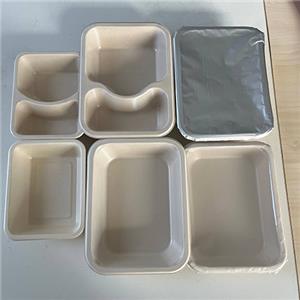
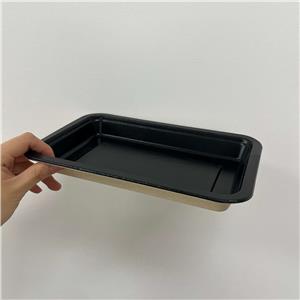
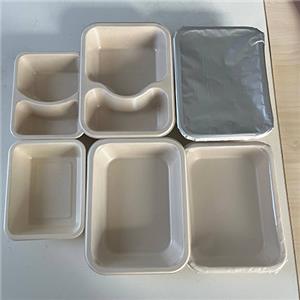
- Laminated bagasse trays
- Heat-sealable food trays
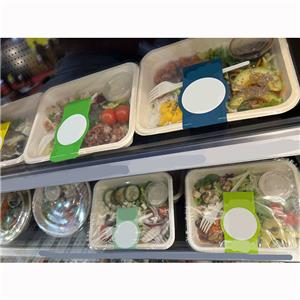
- Ready meal packaging
- MAP packaging
- VSP packaging
- Custom molds
- Lidding films
- Packaging machines
- OEM and ODM projects
If your project involves replacing an existing plastic tray, developing a new food package, or integrating the tray into an automated production line, these differences become important.
The right supplier should be able to understand your complete packaging requirement, not just quote a tray price.
1. Check Whether the Company Is a Real Manufacturer
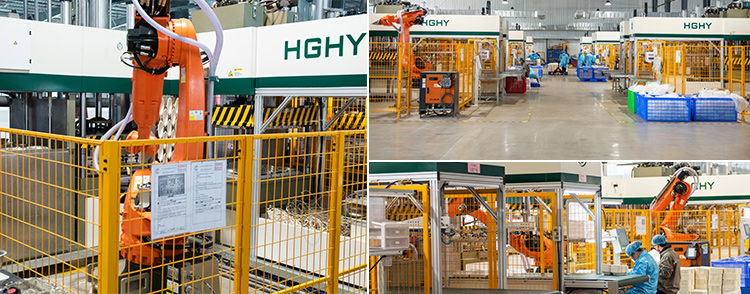
The first question is simple:
Are you buying directly from the manufacturer?
This matters because customized food packaging usually involves multiple technical steps.
Ask the supplier about:
- Factory location
- Production facilities
- Production lines
- Mold department
- Quality control
- R&D team
- Production capacity
- Main product categories
- Export experience
A supplier should be able to clearly explain how your product moves from drawing to mold, sampling, production, inspection, and shipment.
If the company cannot explain its own production process, it may be acting mainly as a trading company.
A trading company is not necessarily unsuitable, but buyers should understand who is actually manufacturing the packaging.
2. Look at the Manufacturer's Main Product Focus
Not every bagasse manufacturer is suitable for every application.
Some factories specialize in:
- Plates
- Bowls
- Clamshell containers
- Cups
- Cutlery
- Basic foodservice packaging
Others focus more on industrial food packaging.
If your project involves ready meals or plastic tray replacement, look for experience with products such as:
- Heat-sealable bagasse trays
- Laminated bagasse trays
- Ready meal trays
- Food processing trays
- MAP trays
- VSP trays
- Frozen food trays
- Fresh food packaging
The closer the supplier's existing experience is to your application, the easier it may be to discuss technical requirements.
3. Ask About Mold Development
Custom food packaging usually starts with the mold.
This is especially important when you want to replace an existing PP, PET, or CPET tray.
Ask whether the manufacturer has:
- In-house mold development
- Mold design capability
- 3D drawing support
- Prototype development
- Custom tray tooling
- Experience converting plastic tray designs into molded fiber
An experienced manufacturer should be able to work from:
- Existing tray samples
- CAD drawings
- Technical drawings
- Dimensions
- Product photographs
- Existing packaging specifications
For some projects, a 1:1 replacement may be possible.
For others, the bagasse tray needs to be redesigned because molded fiber has different structural characteristics from conventional plastic.
4. Check the Manufacturer's Customization Capability
Customization is more than putting a logo on a standard tray.
For B2B food packaging, customization may include:
- Tray dimensions
- Number of compartments
- Tray depth
- Rim structure
- Shape
- Stacking design
- Film structure
- Sealing area
- Printing
- Labels
- Packaging configuration
Ask the manufacturer:
Can you develop a completely new tray based on our product?
This question can quickly show the difference between a standard product supplier and a project-oriented manufacturer.
5. Ask What Film Options Are Available
If you need heat-sealable or laminated bagasse trays, film selection is critical.
Depending on the application, a manufacturer may offer structures using:
- PP
- PET
- CPET
- PLA
- EVOH-enhanced structures
- PBAT-based structures
The correct choice depends on the application.
For example, the project may require:
- Heat sealing
- Oil resistance
- Moisture resistance
- Oxygen barrier
- Freezer performance
- Microwave heating
- Oven heating
- MAP compatibility
- VSP compatibility
Do not simply ask:
“Which film is the best?”
Instead, provide the manufacturer with the actual application.
A technically capable supplier should ask questions about the food, temperature, shelf life, sealing process, and equipment before recommending a film.
6. Check Heat-Sealing Experience
For ready meal and industrial food packaging, heat sealing can be more important than the appearance of the tray.
Ask the supplier whether they have experience with:
- Heat-sealable bagasse trays
- Lidding films
- Sealing temperature optimization
- Sealing pressure
- Dwell time
- Peelable seals
- Leak testing
- Automated sealing equipment
The tray rim is particularly important.
A beautiful tray design is not useful if the lidding film cannot create a consistent seal.
For this reason, the manufacturer should evaluate the tray + film + sealing machine as one system.
7. Ask About MAP and VSP Applications
If your food product uses modified atmosphere packaging or vacuum skin packaging, tell the supplier at the beginning.
MAP projects may require attention to:
- Oxygen barrier
- Water vapor barrier
- Seal integrity
- Tray rim design
- Lidding film
- Gas flushing
- Headspace
- Shelf-life testing
VSP applications may require additional attention to:
- Tray rigidity
- Rim geometry
- Vacuum performance
- Skin film compatibility
- Product presentation
A manufacturer that only produces standard molded fiber tableware may not have the same experience with these applications.
8. Review Factory Production Capacity
Capacity matters when moving from samples to regular orders.
Ask about:
- Number of production lines
- Monthly output
- Current production load
- Lead time
- Peak-season capacity
- Backup production arrangements
- Quality control during high-volume production
However, a large production capacity does not automatically mean the supplier is suitable for your project.
The more important question is whether the factory has sufficient capacity for your specific product and expected order volume.
For example, a supplier may have large capacity for standard plates but limited capacity for customized laminated trays.
9. Check Sample Development Speed
Before placing a large order, you should usually test the product.
Ask the supplier:
- How long does drawing development take?
- How long does mold development take?
- How long does sampling take?
- Can they provide prototype samples?
- Can they modify the mold after testing?
For customized projects, development speed can have a significant impact on the launch schedule.
At Hebei Mountain, our current website information states that drawings can be developed in as little as 1 day, with samples targeted in around 7 days, depending on project complexity.
Actual development time can vary according to tray design, mold complexity, film structure, and sample requirements.
10. Ask About MOQ
MOQ is especially important for distributors and brands launching a new product.
Do not only ask:
“What is your MOQ?”
Also ask:
- Is the MOQ per SKU?
- Is the MOQ different for custom molds?
- Is the MOQ different for different film structures?
- Can multiple SKUs be combined?
- What is the sample MOQ?
- Can the supplier support a trial order?
A supplier with flexible project support can be more useful when you are testing a new product before committing to large-volume production.
11. Understand the Cost Structure
The lowest unit price is not necessarily the lowest total project cost.
For customized bagasse packaging, the total cost may include:
- Product price
- Mold cost
- Film cost
- Printing
- Packaging
- Sample development
- Testing
- Shipping
- Tooling modification
Ask the supplier to explain these costs clearly.
For example, a tray with a lower unit price may require a more expensive mold or additional packaging process.
A slightly higher unit price may sometimes be offset by better production efficiency or simpler logistics.
The important thing is to compare the complete project cost, not only the price per tray.
12. Check Food Contact and Compliance Documentation
For food packaging, documentation is an important part of supplier evaluation.
Depending on the target market and product, buyers may need documentation related to:
- Food-contact compliance
- Material composition
- Migration testing
- PFAS
- Compostability
- Heavy metals
- Chemical restrictions
- Packaging regulations
Do not accept a simple statement such as “FDA approved” without asking for the relevant documentation.
The exact requirements depend on:
- Product type
- Food type
- Country
- Intended use
- Temperature
- Contact conditions
- Applicable regulations
A professional supplier should be able to explain what documents are available for the specific product.
13. Be Careful With “Compostable” Claims
Bagasse is a plant-fiber material, but the complete packaging structure may contain a film layer.
This distinction matters.
A molded bagasse tray without a functional coating is different from a tray laminated with PP, PET, CPET, or another polymer film.
Therefore, buyers should ask:
- What is the film material?
- How much film is used?
- Is the complete product certified?
- Under what composting conditions?
- Is the certification for the tray, coating, or complete package?
- Which market does the certification cover?
Do not evaluate sustainability claims based only on the word “bagasse.”
Evaluate the complete packaging structure.
14. Check Whether the Manufacturer Can Supply a Complete Solution
For many food manufacturers, the tray is only one part of the project.
A complete ready meal packaging system may include:
Tray → Lidding Film → Sealing → MAP/VSP → Labeling → Packing
If your supplier can provide several parts of the system, communication can be simpler.
For example, Hebei Mountain can support projects involving:
- Bagasse food trays
- Laminated trays
- Lidding films
- Heat-sealing solutions
- MAP packaging
- VSP packaging
- Sealing machines
- Custom molds
- OEM/ODM
This type of one-stop approach can be particularly useful for overseas distributors and food manufacturers developing a new packaging project.
15. Ask About Existing Plastic Tray Replacement Projects
If your company currently uses PP, PET, or CPET trays, ask the supplier:
“Have you developed molded fiber replacements for existing plastic trays?”
Then ask for examples of the development process.
A capable supplier should be able to discuss:
- Existing tray dimensions
- Mold conversion
- Film selection
- Sealing requirements
- Equipment compatibility
- Sample testing
- Production trials
This is more useful than simply asking how many years the factory has been operating.
Relevant experience should match your actual project.
16. Check Quality Control During Production
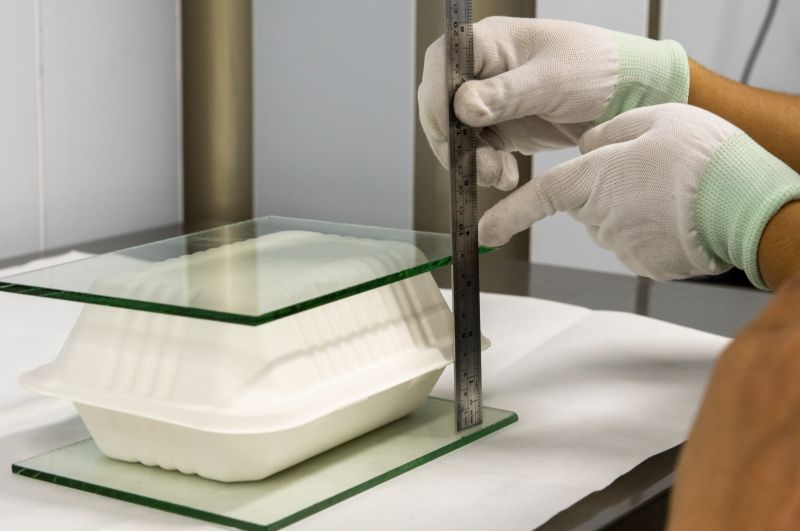
Quality control should not begin when the finished goods are already packed.
For customized bagasse packaging, quality control can include:
Raw Material
Checking bagasse pulp and material consistency.
Molded Tray
Checking:
- Dimensions
- Weight
- Shape
- Wall structure
- Rim
- Surface quality
Laminated Structure
Checking:
- Film coverage
- Film adhesion
- Surface condition
- Sealing area
Finished Product
Checking:
- Sealing performance
- Leakage
- Stacking
- Packaging
- Carton quantity
The exact inspection program should be agreed according to the product requirements.
17. Ask About Export Packaging
Your product may be excellent, but poor export packaging can still create problems.
Ask how the manufacturer handles:
- Carton design
- Pallet loading
- Moisture protection
- Container loading
- Product protection
- Carton labeling
- Shipping marks
For long-distance international transportation, packaging efficiency can have a direct impact on logistics costs.
18. Consider Communication and Technical Support
International packaging projects often require multiple rounds of communication.
You may need to discuss:
- Drawings
- Dimensions
- Samples
- Film specifications
- Sealing parameters
- Testing results
- Mold modifications
- Production schedules
A supplier should be able to communicate technical information clearly in English.
For overseas buyers, this can be just as important as the initial quotation.
19. Visit the Factory or Request Factory Evidence
If possible, a factory visit can help verify production capabilities.
If you cannot visit China in person, consider requesting:
- Factory videos
- Production line videos
- Mold department photos
- Sample room photos
- Product inspection videos
- Production photos
- Factory certifications
- Business registration information
These materials do not replace an independent audit, but they can help you understand the supplier's actual capabilities.
For larger projects, buyers may also arrange third-party factory inspections.
20. Questions to Ask Before Choosing a China Bagasse Manufacturer
Before sending a purchase order, consider asking these questions:
- Are you the actual manufacturer?
- Where is your factory located?
- How many production lines do you operate?
- Do you develop molds in-house?
- Can you make a tray based on our existing PP/PET/CPET tray?
- What film options can you provide?
- Can the tray be heat sealed?
- Can it be used for MAP?
- Can it be developed for VSP?
- Can you provide lidding film?
- Can you support sealing equipment?
- What is the sample lead time?
- What is the mold lead time?
- What is the MOQ?
- What certifications and test reports are available?
- What is the production lead time?
- How do you inspect finished products?
- Can you provide export packaging?
- Can you support OEM/ODM?
- Can you provide a complete packaging solution?
The answers to these questions can help you understand whether the supplier is suitable for a simple standard order or a more complex packaging development project.
Why Hebei Mountain Works With B2B Packaging Projects
Hebei Mountain focuses on bagasse food packaging and customized molded fiber solutions for international B2B customers.
Our current manufacturing capabilities include:
- 30+ production lines
- 3,000+ in-house molds
- 200+ new molds per year
- Custom mold development
- OEM and ODM
- Laminated bagasse food trays
- Heat-sealable trays
- Ready meal packaging
- MAP and VSP packaging solutions
- Lidding films
- Sealing machines
For customers replacing conventional plastic trays, we can start from an existing PP, PET, or CPET tray and evaluate a suitable molded bagasse structure.
We can also coordinate the tray, film, mold, and sealing process as one project.
What Should You Send Us for a Quotation?
If you are looking for a bagasse food packaging manufacturer in China, you do not need to prepare a complicated technical document before contacting us.
You can start with:
- Existing tray sample or drawing
- Tray dimensions
- Food type
- Food weight
- Storage temperature
- Heating requirements
- Lidding film
- Sealing machine information
- MAP/VSP requirements
- Estimated monthly or annual quantity
- Target market
From this information, the packaging structure and development requirements can be evaluated.
For a customized project, you can also send photos of your current packaging if a physical sample is not available.
Choosing a China Bagasse Manufacturer: A Practical Checklist
Before making a final supplier decision, check these areas:
| Supplier Factor | What to Check |
|---|---|
| Factory | Actual production facility |
| Product Focus | Bagasse food packaging experience |
| Mold | In-house custom mold capability |
| Film | PP, PET, CPET, PLA, EVOH, PBAT-based options |
| Sealing | Heat-sealing experience |
| MAP/VSP | Relevant application experience |
| Customization | New shapes and 1:1 replacements |
| Samples | Development and testing support |
| MOQ | Suitable for your business volume |
| Quality | Inspection process |
| Compliance | Relevant test reports and documentation |
| Equipment | Sealing/MAP/VSP support |
| Export | International shipping experience |
| Communication | Technical English support |
| Service | OEM/ODM and project support |
The goal is not simply to find a factory with the lowest quotation.
The goal is to find a supplier whose manufacturing capabilities, technical support, documentation, production capacity, and communication process match your project requirements.
Final Thoughts
Choosing a bagasse food packaging manufacturer in China requires more than comparing product prices.
For standard products, price and delivery may be the main considerations.
For customized food packaging, you also need to evaluate:
- Mold development
- Film selection
- Heat sealing
- Food compatibility
- MAP/VSP requirements
- Production equipment
- Quality control
- Certifications
- MOQ
- Lead time
- Export capability
- Technical support
This becomes especially important when you are trying to replace an existing PP, PET, or CPET tray.
A manufacturer that can work from your existing tray, develop a customized molded fiber structure, select the appropriate film, and test the complete packaging system can make the transition more structured.
If you are sourcing bagasse food packaging from China for your food business, distributor network, or ready meal project, send your current tray drawing or sample together with your application requirements.
Hebei Mountain can evaluate your project and provide a customized bagasse food packaging solution, from mold development and laminated trays to lidding film and sealing equipment.