How to Replace PP Food Trays With Laminated Bagasse Trays
For food manufacturers looking to reduce conventional plastic packaging, replacing a PP food tray with a laminated bagasse tray can be a practical way to move toward fiber-based packaging without completely redesigning the product.
However, switching from PP to bagasse is not simply a matter of changing the material.
The new tray still needs to work with the food product, lidding film, heat-sealing machine, storage conditions, transportation, and production process.
This guide explains how food manufacturers, ready meal companies, food packaging distributors, and brands can evaluate a PP food tray replacement with a laminated bagasse tray.
Why Replace PP Food Trays?
PP, or polypropylene, is widely used for food trays because it offers good toughness, chemical resistance, heat resistance, and compatibility with many sealing systems.
It is commonly used for:
- Ready meals
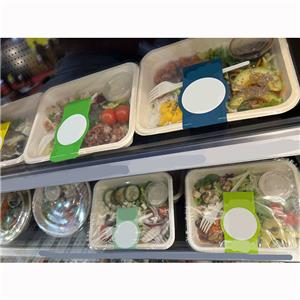
- Fresh food
- Prepared meals
- Meat and seafood
- Chilled food
- Frozen food
- Meal delivery
- Foodservice packaging
But many food brands and distributors are now looking for packaging solutions with a higher fiber content or reduced dependence on conventional plastic.
This is where laminated bagasse trays can be considered.
A molded bagasse tray provides the structural body, while a functional film layer can be added to provide properties needed for sealing, moisture resistance, oil resistance, barrier performance, or specific temperature applications.
Instead of replacing the entire packaging system, manufacturers can evaluate whether a laminated bagasse tray can perform the required functions of the existing PP tray.
What Is a Laminated Bagasse Tray?
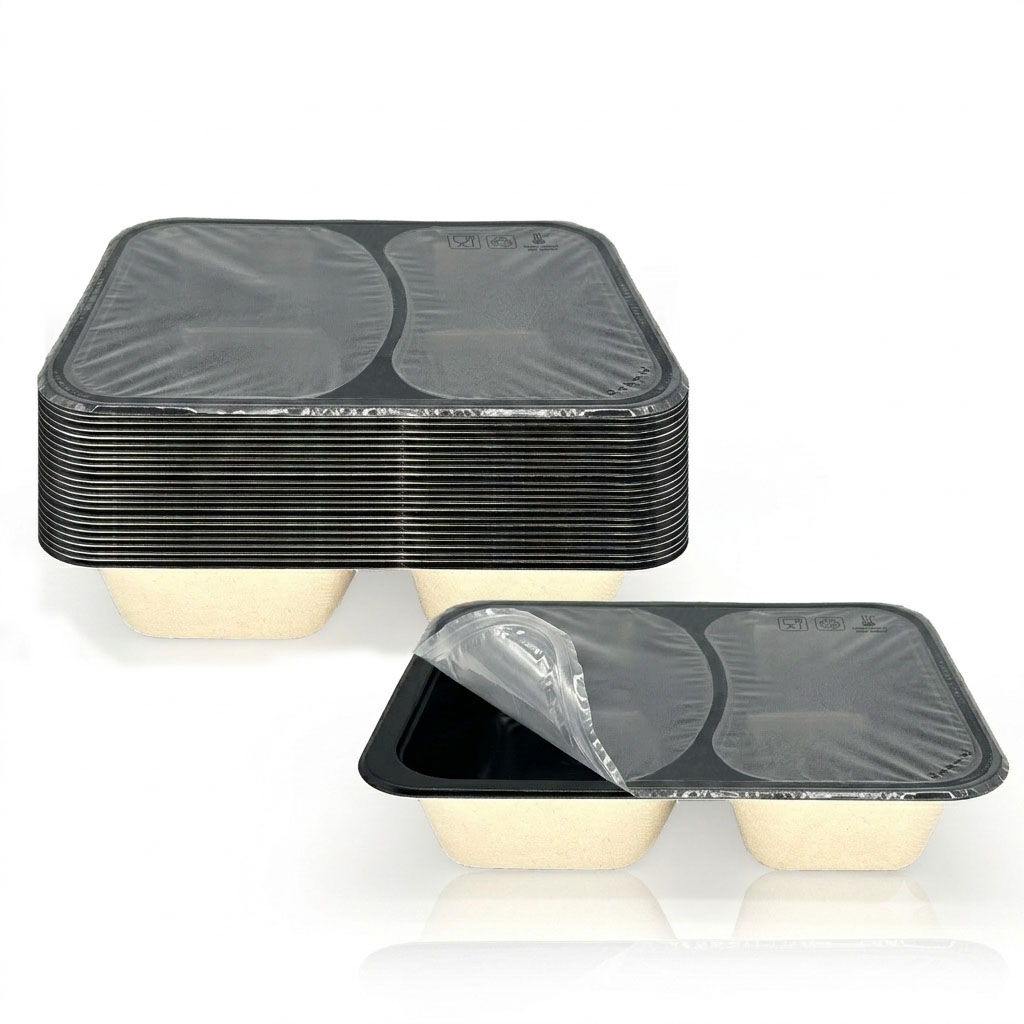
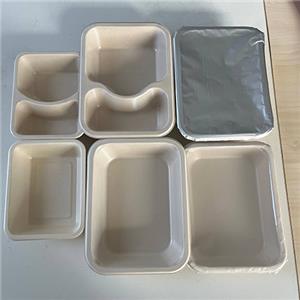
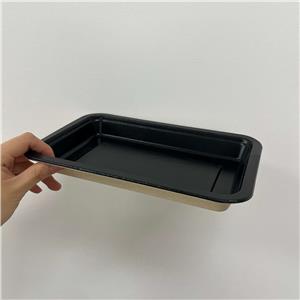
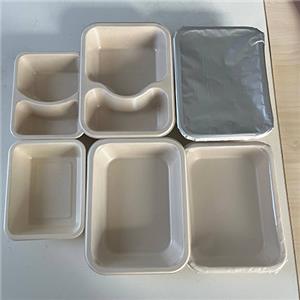
A laminated bagasse tray is made from molded sugarcane bagasse fiber with a functional film layer applied to the tray surface.
The bagasse provides the molded structure.
The film layer can be selected according to the application.
Depending on the project, available film structures may include:
- PP
- PET
- CPET
- PLA
- EVOH-enhanced structures
- PBAT-based structures
The correct structure depends on factors such as:
- Food type
- Storage temperature
- Heating temperature
- Freezing conditions
- Required shelf life
- Oxygen barrier requirements
- Moisture barrier requirements
- Heat-sealing requirements
- Existing lidding film
- Packaging equipment
- Sustainability requirements
This means there is no single laminated bagasse structure that is suitable for every PP replacement project.
Start With Your Existing PP Tray
The easiest way to develop a replacement tray is usually to start with the PP tray you are already using.
Instead of designing a completely new package from zero, your packaging supplier can first understand the current tray.
Prepare information such as:
- Tray length and width
- Tray depth
- Tray weight
- Number of compartments
- Rim dimensions
- Corner radius
- Stacking requirements
- Food weight
- Existing lidding film
- Sealing temperature
- Sealing pressure
- Dwell time
- Storage temperature
- Heating requirements
- MAP or vacuum requirements
If possible, sending an actual PP tray sample is even better.
A physical sample allows the manufacturer to study the tray structure and develop a suitable molded fiber replacement.
1. Decide Whether You Need a 1:1 Replacement
There are two common approaches.
Option 1: 1:1 PP Tray Replacement
The new bagasse tray follows the existing PP tray as closely as possible.
The goal is to maintain:
- Similar dimensions
- Similar capacity
- Similar compartment layout
- Similar stacking
- Similar sealing area
- Similar equipment compatibility
This approach is particularly useful for food manufacturers that already have established packaging lines.
It can reduce the amount of change required during the transition.
A 1:1 replacement is also useful when the customer already has a specific tray design approved for a food product.
Option 2: Optimize the Tray for Bagasse
A molded fiber tray does not always need to copy the PP tray exactly.
Bagasse has different structural characteristics from polypropylene.
During development, the tray can therefore be redesigned to improve:
- Fiber distribution
- Wall thickness
- Rim strength
- Corner structure
- Stacking
- Moldability
- Material efficiency
- Sealing performance
For a new food product, optimizing the tray from the beginning may provide more design flexibility.
For an existing production line, however, a 1:1 replacement can often be a useful starting point.
2. Select the Right Film Structure
This is one of the most important steps.
A plain molded bagasse tray and a laminated bagasse tray are not the same packaging solution.
The film layer can influence:
- Heat sealing
- Moisture resistance
- Oil resistance
- Oxygen barrier
- Temperature performance
- Lidding compatibility
- MAP performance
- VSP performance
- Compostability strategy
For example, PP film may be considered when the application requires a familiar heat-sealing structure and good resistance to moisture and oil.
PET can be considered for applications where the required thermal and structural performance is different.
CPET-based structures may be evaluated for higher-temperature food applications.
PLA or PBAT-based structures may be considered when compostable-oriented packaging is part of the project requirements.
EVOH-enhanced structures can be evaluated when higher oxygen barrier performance is required, particularly for certain MAP applications.
The important point is that the film should be selected based on the complete packaging application, not simply the name of the tray material.
3. Check the Existing Lidding Film
Changing the tray does not necessarily mean changing the lid.
If your existing PP tray uses a lidding film, the new laminated bagasse tray should be tested with the intended lidding material.
The supplier should check:
- Film type
- Film thickness
- Sealant layer
- Sealing temperature
- Sealing pressure
- Dwell time
- Seal strength
- Peel behavior
- Tray rim design
A tray may have excellent material properties but still fail if the tray rim and lidding film are not properly matched.
For this reason, tray and lidding film should be evaluated as a complete sealing system.
4. Test Heat-Sealing Performance
Heat sealing is one of the most important considerations when replacing a PP food tray.
The sealing process normally depends on several variables:
Sealing Temperature
The required temperature depends on the film structure and lidding film.
Pressure
The sealing tool needs sufficient pressure to create consistent contact between the tray rim and lidding film.
Dwell Time
The film needs enough time under heat and pressure to form a reliable seal.
Rim Design
The tray rim needs to provide a stable and consistent sealing surface.
A small change in any of these factors can affect the final package.
This is why a laminated bagasse tray should be tested on the customer's actual sealing equipment whenever possible.
5. Check Compatibility With Your Existing Sealing Machine
One of the biggest questions from food manufacturers is:
Can I replace the PP tray without replacing my sealing machine?
In many projects, the answer needs to be determined through testing rather than assumed in advance.
The key factors include:
- Tray dimensions
- Tooling
- Tray height
- Sealing area
- Tray positioning
- Film roll system
- Temperature control
- Pressure
- Dwell time
- Machine format
If the new tray dimensions are close to the existing PP tray, it may be possible to develop tooling around the existing production process.
However, the sealing tool may still need adjustment or replacement.
This is why an experienced tray manufacturer should evaluate the packaging line before finalizing the tray design.
6. Evaluate MAP Packaging Requirements
Many ready meal manufacturers use modified atmosphere packaging to help manage product quality and shelf-life requirements.
If the PP tray is currently used for MAP, the replacement bagasse tray needs to be evaluated as part of the complete MAP package.
Important factors include:
- Tray structure
- Film barrier
- Seal integrity
- Rim design
- Headspace
- Gas flushing process
- Lidding film
- Oxygen transmission
- Water vapor transmission
- Actual food product
- Storage temperature
For products with higher oxygen sensitivity, an EVOH-enhanced structure may be evaluated to provide higher oxygen barrier performance.
However, the final MAP performance should be confirmed through actual packaging and shelf-life testing.
A material name alone cannot guarantee shelf life.
7. Consider VSP Applications
Some PP trays are used with vacuum skin packaging.
In these applications, the tray needs to maintain its shape while the skin film is pulled tightly around the food.
A laminated bagasse tray can be developed for VSP applications when the tray structure, surface, rim, film, and equipment are properly matched.
During testing, manufacturers should evaluate:
- Tray rigidity
- Rim geometry
- Film compatibility
- Vacuum performance
- Seal integrity
- Food contact area
- Product presentation
- Transportation performance
VSP applications should be tested on the actual machine because equipment settings can vary considerably between production lines.
8. Test Frozen, Chilled, and Heated Applications
A PP tray replacement should be tested according to the real temperature range of the food product.
For example, a chilled ready meal may require completely different performance from a frozen meal or an oven-heated product.
Before selecting the film, define the actual application:
Chilled
The tray may need to maintain structural integrity and sealing performance during refrigerated storage.
Frozen
The tray and sealing structure need to withstand low-temperature storage and handling.
Microwave Heating
The complete packaging structure should be evaluated under the intended microwave conditions.
Oven Heating
Higher-temperature applications require particularly careful film and tray selection.
Do not choose the film based only on a general temperature number.
The actual food, heating method, heating time, equipment, and packaging configuration should all be considered.
9. Test the Tray With Real Food
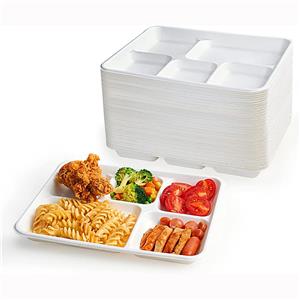
Laboratory testing is useful, but real food testing is essential.
Different foods can create different packaging challenges.
For example:
- Sauces can test leak resistance.
- Oily foods can test oil resistance.
- High-moisture foods can test moisture resistance.
- Meat products can create oxygen-barrier requirements.
- Frozen food can test low-temperature performance.
- Hot meals can test thermal performance.
A good PP replacement project should therefore include the customer's actual product whenever possible.
10. Compare the New Tray With the Existing PP Tray
Before moving to mass production, compare the new tray against the existing PP packaging.
A practical comparison can include:
| Test Item | Existing PP Tray | Laminated Bagasse Tray |
|---|---|---|
| Dimensions | ✓ | ✓ |
| Capacity | ✓ | ✓ |
| Tray weight | ✓ | ✓ |
| Stacking | ✓ | ✓ |
| Heat sealing | ✓ | ✓ |
| Leak resistance | ✓ | ✓ |
| Lidding film compatibility | ✓ | ✓ |
| MAP compatibility | If required | Test required |
| VSP compatibility | If required | Test required |
| Freezer performance | ✓ | Test required |
| Microwave performance | ✓ | Test required |
| Oven performance | ✓ | Test required |
| Transport performance | ✓ | Test required |
The purpose of this comparison is not simply to show that one material is “better.”
The purpose is to confirm whether the new packaging can meet the requirements of the actual food application.
11. Check Packaging Line Performance
A tray can perform well in a laboratory but still create problems during production.
The production trial should therefore check:
- Tray feeding
- Tray positioning
- Sealing
- Film cutting
- MAP gas flushing
- Vacuum
- Product filling
- Stacking
- Labeling
- Carton packing
- Transportation
If the tray is automatically loaded into the machine, dimensions and tolerances become particularly important.
For high-volume food production, stable feeding and consistent sealing can be just as important as the material itself.
12. Evaluate Transportation and Stacking
PP trays are often designed for efficient stacking and transportation.
When moving to molded fiber, manufacturers should also evaluate:
- Empty tray stacking
- Filled tray stacking
- Carton quantity
- Pallet loading
- Compression
- Vibration
- Transportation
- Warehouse storage
A successful PP replacement should work not only during filling and sealing, but also throughout the logistics process.
13. Develop the Mold From the Existing Tray
One advantage of working directly with a manufacturer is the ability to develop a new mold around the customer's existing packaging.
If you already have a PP tray, you can provide:
- Physical sample
- CAD drawing
- Technical drawing
- Product dimensions
- Photos
- Existing mold information
The manufacturer can then evaluate whether the existing geometry can be converted into a molded bagasse structure.
For more complex products, the mold may need to be redesigned rather than copied exactly.
A supplier with in-house mold development can help shorten this development process.
From PP Tray to Bagasse Tray: A Practical Workflow
A typical development process can follow these steps:
Step 1 — Send Your Existing PP Tray
Provide the physical tray, drawing, or detailed dimensions.
Step 2 — Define the Food Application
Tell the manufacturer what food will be packed and how it will be stored, transported, and heated.
Step 3 — Review the Packaging Line
Provide information about your sealing, MAP, VSP, filling, or other packaging equipment.
Step 4 — Select the Film Structure
Choose the appropriate PP, PET, CPET, PLA, EVOH-enhanced, PBAT-based, or other suitable structure according to the application.
Step 5 — Develop the Mold
Create a 1:1 replacement mold or optimize the design for molded bagasse.
Step 6 — Produce Samples
Produce prototype trays for dimensional and packaging tests.
Step 7 — Test Sealing
Run the tray with the intended lidding film and sealing parameters.
Step 8 — Test With Real Food
Evaluate the actual food product under realistic conditions.
Step 9 — Run a Production Trial
Test the tray on the customer's production equipment whenever possible.
Step 10 — Confirm Mass Production
After the packaging system passes the required tests, move to regular production.
This approach is much safer than ordering a large quantity before confirming compatibility.
How Much of the Existing PP Packaging Can Be Reused?
This depends on the packaging system.
Some parts may remain unchanged, while others may require modification.
Potentially Reusable
- Filling equipment
- Food processing equipment
- Sealing machine
- MAP machine
- VSP machine
- Conveyor system
- Labeling equipment
May Require Adjustment
- Sealing tooling
- Tray feeding tooling
- Machine settings
- Film parameters
- Tray positioning
- Packaging line speed
May Need to Change
- Tray mold
- Lidding film
- Specialized sealing components
The objective should be to minimize unnecessary equipment changes while ensuring that the new tray works reliably.
What Information Should You Send to a Bagasse Tray Manufacturer?
If you want to replace an existing PP food tray, sending complete information at the beginning can significantly improve the development process.
A supplier will usually need:
- Existing PP tray sample or drawing
- Tray dimensions
- Food type
- Food weight
- Number of compartments
- Storage temperature
- Heating requirements
- Shelf-life target
- Existing lidding film
- Sealing machine model
- MAP or VSP requirements
- Desired annual or monthly quantity
- Target market
- Required certifications or compliance documentation
The more complete the information, the easier it is to select the right packaging structure.
Why Work With a Manufacturer Instead of Only a Tray Trader?
For a simple standard tray, buying from a distributor may be sufficient.
For a PP replacement project, however, the packaging often needs customization.
The supplier may need to coordinate:
- Mold development
- Bagasse tray production
- Film selection
- Lidding film
- Heat sealing
- MAP
- VSP
- Sample testing
- Machine compatibility
- Custom printing
- Packaging optimization
Working with a manufacturer that can support several of these stages can simplify communication.
For distributors and wholesalers, this can also make it easier to develop customized products for their own customers.
A One-Stop Approach to PP Tray Replacement
At Hebei Mountain, we focus on molded bagasse food packaging for applications where conventional plastic trays are currently being used.
Our service can cover:
- Laminated bagasse food trays
- Ready meal trays
- Custom molded fiber trays
- Heat-sealable trays
- Lidding films
- MAP packaging solutions
- VSP packaging solutions
- Sealing machines
- Custom molds
- OEM and ODM projects
For customers replacing an existing PP tray, we can start from the current tray design and evaluate the required structure instead of asking the customer to redesign the entire packaging system.
The goal is simple:
Develop a bagasse tray that fits the food, sealing process, equipment, and commercial requirements of the existing packaging project.
Is PP Replacement Suitable for Every Food Product?
No.
A laminated bagasse tray should be evaluated according to the actual application.
A project may face limitations related to:
- Very high temperatures
- Extremely long shelf life
- High oxygen sensitivity
- Unusual food chemistry
- High mechanical loads
- Specialized automated equipment
- Specific recycling requirements
- Local packaging regulations
This is why material selection and application testing are important before mass production.
The right question is not:
“Can bagasse replace PP?”
A more useful question is:
“Can a suitable laminated bagasse structure meet the technical requirements of this specific PP tray application?”
That is the question that should guide the development process.
Frequently Asked Questions
Can laminated bagasse trays replace PP food trays?
They can be evaluated for many food packaging applications, including ready meals, fresh food, chilled food, frozen food, MAP, and VSP. The actual suitability depends on the tray structure, film, food product, temperature, sealing system, and packaging equipment.
Can a laminated bagasse tray use the same lidding film as a PP tray?
Possibly, but it should be tested. The tray rim, sealing layer, film, temperature, pressure, and dwell time all affect seal performance.
Can I use my existing sealing machine?
In many projects, the existing machine can be evaluated for use with the new tray. Tooling and machine parameters may need adjustment.
Can an existing PP tray be reproduced in bagasse?
Yes, a manufacturer can evaluate the existing tray and develop a custom molded bagasse tray. A 1:1 replacement is possible for some designs, while others may require structural modifications.
Can bagasse trays be used for MAP?
Heat-sealable laminated bagasse trays can be developed for MAP applications. Barrier performance, seal integrity, tray design, lidding film, and actual shelf-life testing all need to be considered.
Can bagasse trays be used for frozen food?
Some laminated bagasse structures can be developed for frozen applications. The actual tray and film structure should be tested at the required storage temperature.
Do I need a new mold?
Usually, a new molded-fiber mold is required for a custom tray. The existing PP tray can be used as the design reference.
How do I start a PP tray replacement project?
Send your existing PP tray or drawing, food information, storage and heating requirements, lidding film details, and sealing machine information. The manufacturer can then evaluate the appropriate bagasse structure and sample development plan.
Replace Your PP Food Tray With a Customized Bagasse Solution
Replacing PP packaging does not have to mean rebuilding your entire packaging process.
By starting with your existing tray, understanding the food application, selecting the right film, and testing the complete sealing system, a laminated bagasse tray can be developed around your real production requirements.
If you are a food manufacturer, ready meal producer, packaging distributor, wholesaler, or food brand looking for a PP tray replacement, send us your existing tray or technical drawing.
Include your:
- Tray dimensions
- Food type
- Food weight
- Storage temperature
- Heating requirements
- Lidding film
- Sealing machine
- MAP/VSP requirements
- Expected quantity
Our team can evaluate the tray structure, film option, mold design, and packaging process and develop samples for testing.
Looking to replace a PP food tray with a laminated bagasse tray? Contact Hebei Mountain to discuss your project and request a customized sample.