Bagasse Tray vs PP Tray: Can Laminated Bagasse Replace PP Food Trays?
Polypropylene (PP) trays are widely used in food packaging because they are lightweight, durable, heat-sealable, and suitable for many chilled, frozen, and ready meal applications.
But as food brands, manufacturers, and distributors look for alternatives to conventional plastic packaging, molded bagasse fiber has become an increasingly interesting option.
This leads to an important question:
Can a laminated bagasse tray replace a PP food tray?
In many applications, it can.
However, replacing a PP tray is not simply a matter of changing the material. The new packaging needs to meet the requirements of the food product, sealing process, storage temperature, transportation, and packaging equipment.
This guide compares bagasse trays vs PP trays and explains what food manufacturers should consider before making the switch.
What Is a PP Food Tray?
PP stands for polypropylene, a thermoplastic polymer commonly used in food packaging.
PP food trays are used for applications such as:
- Ready meals
- Takeaway food
- Fresh food
- Prepared foods
- Chilled meals
- Frozen food
- Meat products
- Foodservice packaging
PP trays are popular because they can provide a combination of stiffness, moisture resistance, heat resistance, and heat-sealing performance.
They can also be manufactured in many shapes and sizes, making them suitable for automated filling and sealing lines.
For food manufacturers, PP is therefore not just a material choice. It is often part of an established packaging process.
A successful alternative needs to work within that process.
What Is a Laminated Bagasse Tray?
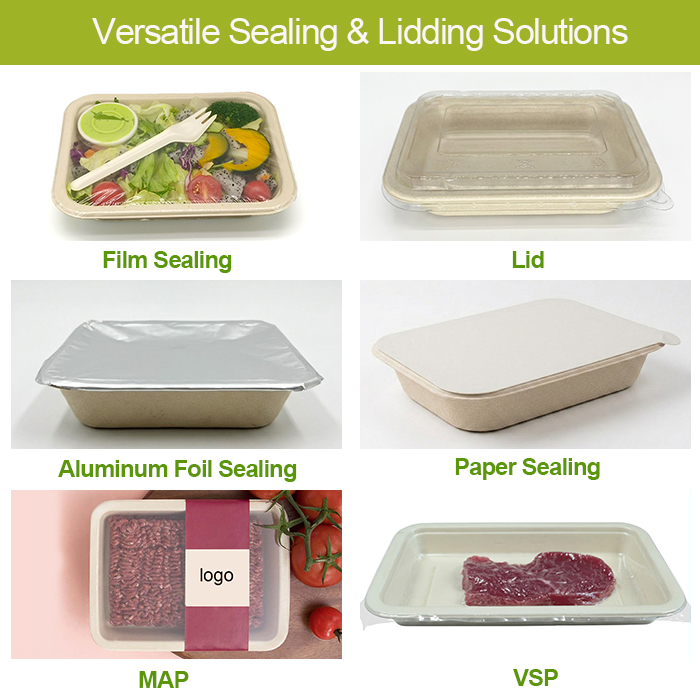
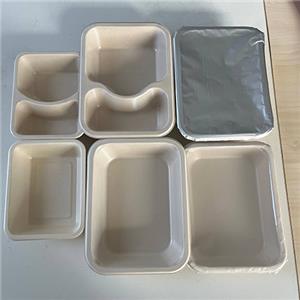
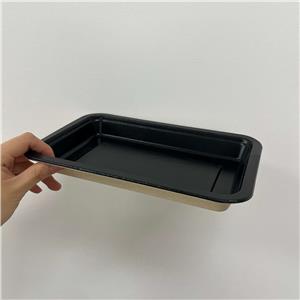
A laminated bagasse tray combines a molded fiber structure made from sugarcane bagasse with a functional film or coating.
The bagasse provides the main structural body.
The film layer can be selected to provide properties such as:
- Heat sealing
- Water resistance
- Oil resistance
- Leak resistance
- Barrier performance
- Temperature resistance
Depending on the application, film options can include:
- PP
- PET
- CPET
- PLA
- EVOH-enhanced structures
- PBAT-based structures
The exact structure should be selected according to the customer's application.
This is an important difference between a standard molded fiber container and a laminated bagasse food tray designed for industrial packaging.
Bagasse Tray vs PP Tray: Key Differences
The two packaging formats can be compared across several important factors.
| Factor | PP Tray | Laminated Bagasse Tray |
|---|---|---|
| Main structure | Polypropylene | Molded bagasse fiber |
| Heat sealing | Common | Available with suitable film |
| Water resistance | Inherent to PP | Provided by suitable film/coating |
| Oil resistance | Generally good | Can be designed for oil resistance |
| Custom shapes | Yes | Yes |
| Ready meals | Widely used | Suitable for selected applications |
| MAP | Common | Possible with suitable structure |
| VSP | Common | Possible with suitable structure |
| Frozen applications | Common | Film and structure must be selected accordingly |
| Microwave use | Depends on PP grade/design | Depends on film and tray structure |
| Oven use | Limited by PP application | Requires suitable high-temperature structure |
| Fiber-based structure | No | Yes |
| Plastic content | Plastic tray | Depends on selected film structure |
| Existing equipment | Established compatibility | Requires compatibility testing |
The important point is that bagasse and PP solve packaging requirements in different ways.
A bagasse tray should therefore be designed around the actual application rather than treated as a simple material substitution.
Can a Bagasse Tray Be Used for the Same Food as a PP Tray?
Potentially, yes.
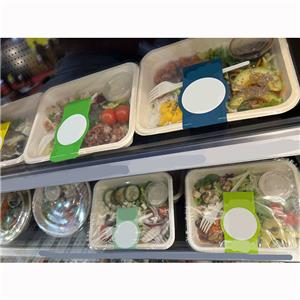
For example, a food manufacturer currently using PP trays for ready meals may evaluate a laminated bagasse tray for:
- Rice meals
- Pasta meals
- Meat meals
- Vegetable meals
- Prepared foods
- Chilled ready meals
- Frozen meals
- Multi-compartment meals
But the packaging requirements need to be checked first.
The important questions include:
What temperature will the tray experience?
Does the food contain oil or sauce?
Does the package need MAP or VSP?
How long does the product need to remain in storage?
Will the package be microwaved or heated in an oven?
What sealing machine is being used?
These questions determine the appropriate tray and film structure.
Heat Sealing: PP Tray vs Bagasse Tray
Heat sealing is one of the most important considerations when replacing PP trays.
PP trays are commonly used with heat-sealable lidding films.
A laminated bagasse tray can also be designed for heat sealing.
The sealing system normally includes:
Bagasse tray + sealing layer + lidding film + sealing equipment
During the sealing process, heat and pressure activate the sealing layers and create a bond between the tray rim and lidding film.
The exact sealing conditions depend on the film, tray design, lidding film, and equipment.
Important parameters can include:
- Sealing temperature
- Sealing pressure
- Dwell time
- Rim width
- Sealing surface
- Film compatibility
The goal is not simply to achieve a seal.
The goal is to achieve a stable and repeatable seal across the production line.
Can Laminated Bagasse Replace PP in MAP Packaging?
For suitable applications, laminated bagasse trays can be developed for MAP packaging.
This is especially relevant for ready meal manufacturers.
A MAP project may require control of:
- Oxygen transmission
- Moisture transmission
- Seal integrity
- Gas retention
- Tray rigidity
- Lidding film compatibility
For applications with higher oxygen-barrier requirements, an EVOH-enhanced film structure may be considered.
However, the correct barrier structure depends on the product and target shelf life.
A food manufacturer should not assume that every bagasse tray has the same MAP performance.
Instead, the complete packaging system should be tested.
What About VSP Packaging?
Vacuum Skin Packaging, or VSP, creates a close-fitting film around the product and tray.
VSP applications can place additional requirements on:
- Tray rigidity
- Tray rim design
- Film compatibility
- Sealing performance
- Product presentation
A suitable laminated bagasse tray can be developed for selected VSP applications.
Again, the important factor is the complete structure.
If you are currently using a PP VSP tray, the existing tray dimensions and packaging process can provide a useful starting point for developing a bagasse replacement.
Temperature Performance: A Major Consideration
One of the biggest mistakes in material comparison is assuming that all bagasse trays or all PP trays have the same temperature performance.
They do not.
The final temperature range depends on:
- Polymer type
- Film structure
- Adhesive or lamination system
- Bagasse fiber structure
- Tray geometry
- Heating method
- Exposure time
- Food application
For this reason, a food manufacturer should define the actual temperature requirement before selecting the film.
For example:
Chilled Food
The priority may be:
- Cold-chain performance
- Moisture resistance
- Seal integrity
- Barrier performance
Frozen Food
The tray may need to withstand:
- Freezer storage
- Low-temperature handling
- Transportation
- Thawing or reheating
Microwave Applications
The complete tray and film structure should be evaluated for the intended microwave conditions.
Oven Applications
A high-temperature structure is required.
Not every laminated bagasse tray is designed for oven use.
This is why temperature requirements should be discussed before mold development and mass production.
Is Bagasse More Sustainable Than PP?
Bagasse and PP have fundamentally different material structures.
PP is a conventional plastic polymer.
Bagasse is a plant-fiber material produced from sugarcane processing residues.
A laminated bagasse tray can therefore provide a fiber-based alternative to a conventional PP tray.
However, the sustainability profile of the finished package depends on the complete structure.
If a plastic film is used, the film contributes to the overall material composition.
For projects with specific compostability or plastic-content requirements, the selected film and certification requirements should be evaluated together.
This is particularly important for distributors selling packaging into markets with specific environmental requirements.
Instead of asking only:
“Is the tray made from bagasse?”
It is better to ask:
“What is the complete packaging structure, and what certifications and test data support the intended claim?”
Can Bagasse Trays Be Made in the Same Shape as PP Trays?
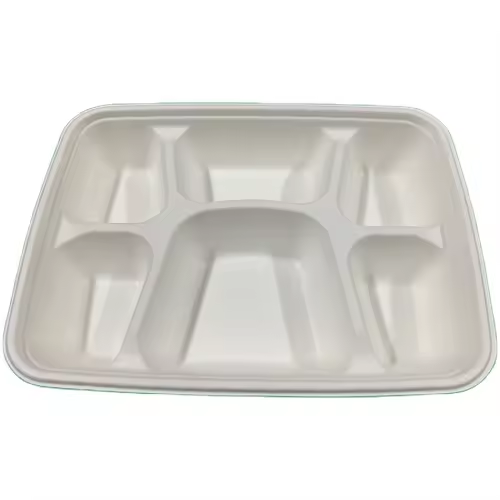
Yes.
Custom molded bagasse trays can be developed in many different shapes.
For food manufacturers replacing an existing PP tray, there are two common approaches.
Option 1: New Design
The manufacturer develops a completely new bagasse tray based on:
- Product size
- Food portion
- Compartment layout
- Shelf presentation
- Sealing requirements
Option 2: 1:1 Replacement
The existing PP tray becomes the reference.
The customer can provide:
- Existing PP tray
- CAD drawing
- Dimensions
- Product information
- Photos
- Packaging line information
The manufacturer can then evaluate the geometry and develop a bagasse mold based on the existing format.
A 1:1 replacement approach can be useful when the customer wants to minimize changes to:
- Filling equipment
- Sealing equipment
- Labels
- Cartons
- Sleeves
- Retail shelf dimensions
The final dimensions still need to be validated through testing.
Will Switching From PP to Bagasse Require New Equipment?
Not necessarily.
This is one of the first questions a food manufacturer should ask.
If the new bagasse tray can be designed to work with the existing packaging system, equipment changes may be reduced.
However, compatibility must be tested.
The manufacturer should evaluate:
- Tray dimensions
- Tray height
- Rim geometry
- Sealing tool
- Film roll
- Sealing temperature
- Pressure
- Dwell time
- MAP gas flushing
- VSP process
A tray that looks similar to the PP tray may still behave differently during automated packaging.
Therefore, machine trials are recommended before mass production.
Bagasse Tray Cost vs PP Tray Cost
Price is another important consideration.
At first glance, PP may appear more economical because it is produced at very large volumes and benefits from established plastic manufacturing processes.
However, the purchase price of the tray is only one part of the total packaging cost.
Food manufacturers should also consider:
- Tooling cost
- Film cost
- Lidding film
- Sealing process
- Packaging speed
- Equipment compatibility
- Transportation
- Storage
- Product protection
- Environmental requirements
- Customer requirements
- Potential packaging redesign
For distributors, the commercial value may also include the ability to offer a differentiated fiber-based packaging solution to customers looking to reduce conventional plastic packaging.
Therefore, a meaningful comparison should consider total packaging cost, not only the unit price of one tray.
What Should You Test Before Replacing a PP Tray?
Before switching an existing PP package to bagasse, we recommend evaluating the actual product and packaging process.
A practical test plan can include:
1. Dimensional Check
Compare the new bagasse tray with the existing PP tray.
2. Filling Test
Fill the tray with the actual food product.
3. Sealing Test
Use the intended lidding film and sealing equipment.
4. Leak Test
Check for leakage after sealing and handling.
5. Temperature Test
Test the package under the actual storage, heating, or freezing conditions.
6. MAP Test
If MAP is required, evaluate gas retention and barrier performance.
7. VSP Test
If VSP is required, run the tray through the intended VSP process.
8. Transportation Test
Evaluate stacking, handling, and transport conditions.
9. Shelf-Life Test
Conduct product-specific shelf-life evaluation using the final packaging structure.
10. Production Trial
Run the new tray on the actual packaging line before committing to large-scale production.
This process helps identify problems before mass production.
Why a One-Stop Supplier Can Make PP Replacement Easier
Replacing a PP tray often involves more than ordering a new container.
The project may require:
Tray + film + lidding film + mold + sealing + packaging equipment
If these components are purchased from different suppliers, technical coordination can become more complicated.
A one-stop supplier can help coordinate the packaging structure around the customer's actual requirements.
For example, a project may start with an existing PP tray.
The supplier can then help develop:
- 1. Bagasse tray geometry
- 2. Functional film structure
- 3. Lidding film
- 4. Custom mold
- 5. Sealing parameters
- 6. MAP or VSP compatibility
- 7. Packaging samples
- 8. Production testing
This approach is particularly useful for food manufacturers and distributors developing a new packaging program.
How Hebei Mountain Supports PP Tray Replacement Projects
Hebei Mountain focuses on coated and laminated bagasse food packaging for commercial food applications.
For customers currently using PP, PET, or CPET trays, we can start from the existing packaging format and evaluate a molded bagasse alternative.
Our customization process can work from:
- Existing tray samples
- Technical drawings
- CAD files
- Product dimensions
- Food application
- Temperature requirements
- Sealing requirements
- Packaging machine information
We support custom molds and can develop tray structures using different film options according to the application.
Our goal is not simply to supply a standard bagasse container.
The goal is to develop a tray that fits the customer's food product, packaging process, and commercial requirements.
PP Tray Replacement: A Practical Checklist
If your company is considering switching from PP to laminated bagasse, start with these questions:
Product
- What food will be packaged?
- Is it chilled, frozen, or ambient?
- Does it contain oil, sauce, or liquid?
Packaging
- Does the package require heat sealing?
- Is MAP or VSP required?
- What lidding film is currently used?
- What barrier performance is required?
Temperature
- What is the lowest storage temperature?
- What is the highest processing temperature?
- Will the package be microwaved?
- Will it be used in an oven?
Equipment
- What sealing machine is being used?
- What are the current sealing parameters?
- Is MAP equipment already installed?
- Is VSP equipment used?
Customization
- Can you provide the existing PP tray?
- Do you have a technical drawing?
- Do you need a 1:1 replacement?
- Are there specific dimensions that cannot change?
The answers provide the information needed to develop the correct bagasse tray structure.
Final Thoughts
Can laminated bagasse replace a PP food tray?
For many food packaging applications, it can be considered as a practical alternative.
But successful replacement depends on much more than changing the tray material.
The new packaging needs to match the food product, temperature conditions, sealing process, lidding film, packaging equipment, barrier requirements, and distribution environment.
For ready meals and other prepared foods, a coated or laminated bagasse tray can combine a molded fiber structure with the functional properties required for industrial food packaging.
If you are currently using PP trays and want to evaluate a bagasse replacement, the most useful starting point is your existing package.
Send us your PP tray sample or drawing, together with your food application, storage temperature, sealing method, and packaging requirements. We can evaluate the structure and develop a customized bagasse tray sample for testing.
Frequently Asked Questions
Can bagasse trays replace PP trays?
Yes, selected PP food tray applications can be evaluated for replacement with laminated bagasse trays. The tray structure, film, sealing process, temperature, and food application need to be tested.
Are bagasse trays heat sealable like PP trays?
A suitable laminated bagasse tray can be designed for heat sealing. The sealing layer and lidding film need to be compatible with the sealing process.
Can bagasse trays be used for ready meals?
Yes. Bagasse trays can be developed for selected chilled and frozen ready meal applications, including one-, two-, and three-compartment formats.
Can bagasse trays be used for MAP?
Yes. A properly designed heat-sealable bagasse tray can be developed for selected MAP applications. Barrier performance and gas retention should be tested with the actual food product and packaging system.
Can a bagasse tray use the same lidding film as a PP tray?
It may be possible, but compatibility must be tested. The tray sealing layer and lidding film need to form a suitable seal.
Can you make a bagasse tray based on our existing PP tray?
Yes. An existing PP tray, drawing, or CAD file can be used as the reference for a custom mold. A 1:1 replacement approach can be considered when the application requires similar dimensions.
Will we need to replace our existing sealing machine?
Not necessarily. The new tray can be evaluated for compatibility with the existing sealing equipment. Machine trials are recommended before mass production.
What information should we provide for a custom PP-to-bagasse project?
Useful information includes the existing tray sample or drawing, food type, tray dimensions, filling weight, storage temperature, heating requirements, sealing method, lidding film, and packaging machine information.