In-Flight Catering Trays: Can Bagasse Replace Aluminum and CPET On Board?
Bagasse trays can replace aluminum and CPET in the chilled and ambient parts of an in-flight meal service, and they can serve the hot parts too where the reheat method is matched to the film structure. The tray material is rarely the limiting factor; the reheat method and the seal are.
Cabin catering puts a pack through chilling, transport, a galley reheat and a final presentation, and each step narrows the field of workable structures. This guide sets out what an in-flight tray has to do, where fiber fits today, and what to confirm before a line is changed. For the format itself, start from our 1:1 plastic tray replacement options.
What in-flight catering packaging has to do
An in-flight tray has to survive a long cold chain, a galley reheat and a service window without leaking, flexing or changing how the food presents. That combination is what makes cabin catering a packaging problem rather than a food problem.
The load is a stack in a trolley rather than a single pack on a shelf, so rigidity and nesting matter more than they do in retail. The weight of the pack is measured against the whole trolley, which is why the fiber base and the closure are specified together.
Where aluminum and CPET are used today
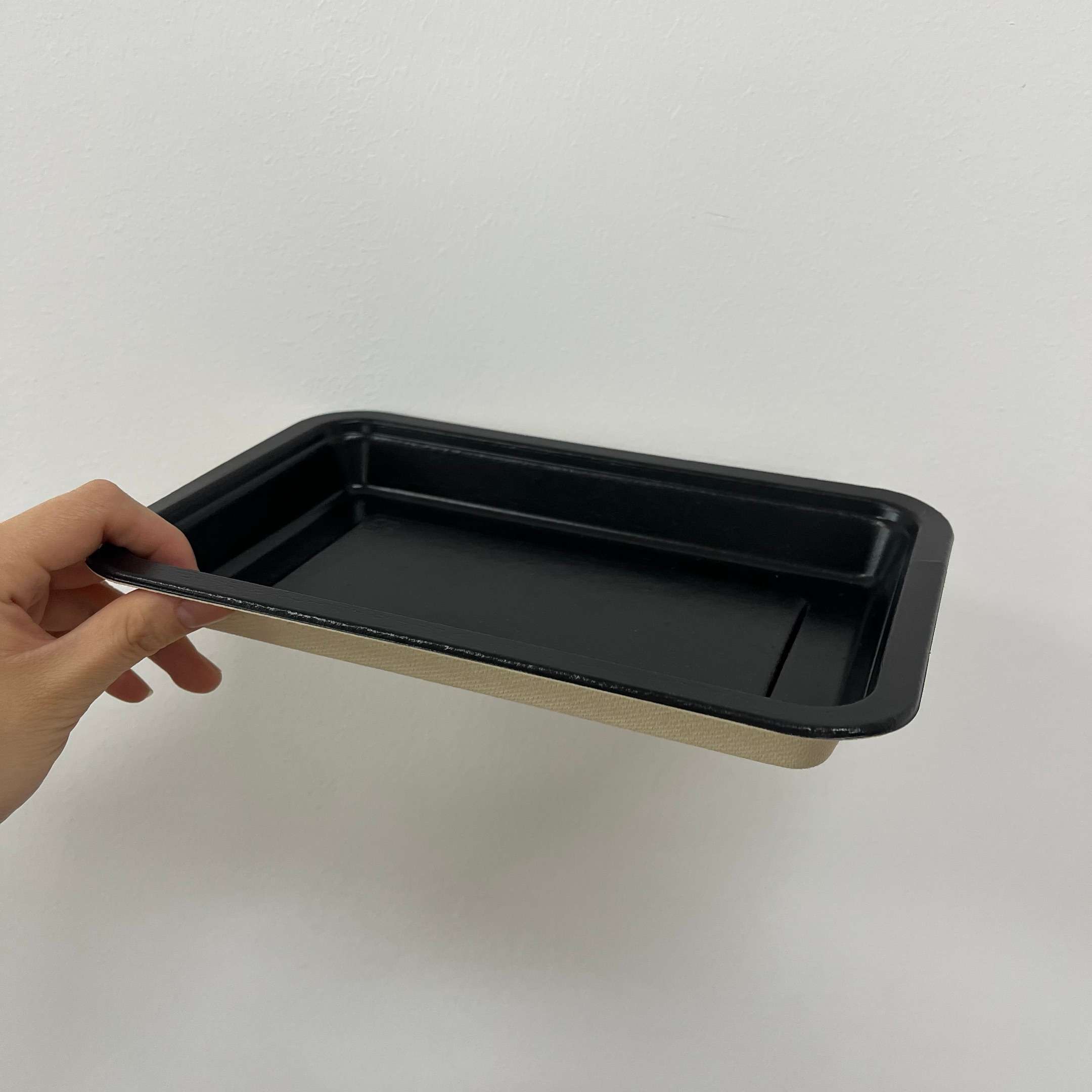
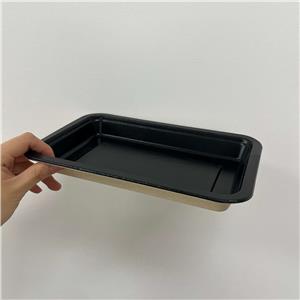
Aluminum carries the ovenable hot entree because it tolerates direct heat, and CPET carries ovenable formats where a rigid, transparent-to-microwave tray is preferred. Both work, and both bring the properties that a replacement has to match.
The trade-offs between the two materials and fiber are set out in our comparison of aluminum and bagasse food trays, and the handling side is covered in our guide on heating food in an aluminum tray. End-of-service handling is a separate question again, covered in our article on whether aluminum food trays are recyclable.
Why a fiber tray fits the chilled and ambient service
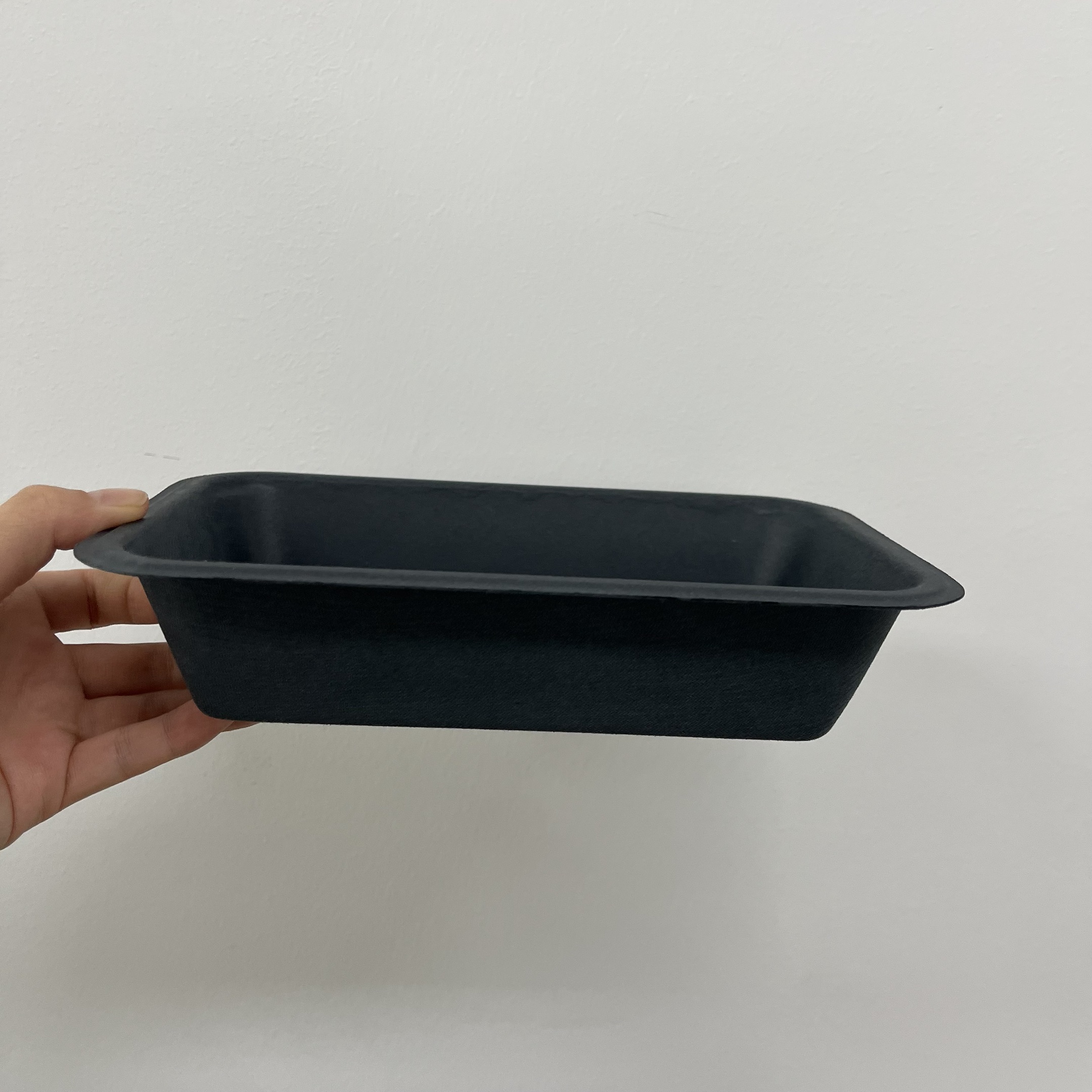
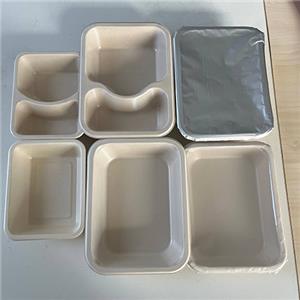
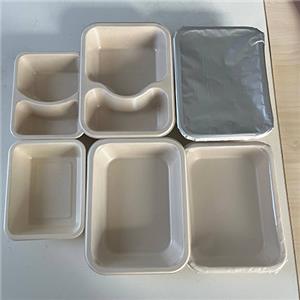
For chilled and ambient service, a laminated fiber tray does what the pack needs without the metal: it holds its shape, it seals against a film, and it presents the meal without a metallic surface. That is the part of the service where a direct substitution is most straightforward.
Our laminated trays are ≤ 5% plastic and our film-free range is 100% plastic-free, and film-free formats suit cold or ambient components that are not sealed. On the compliance side, laminated trays are PFAS-FREE (ND, < 10 ppm), the certification set is FDA, LFGB, OK Compost Industrial and ABAP, and the supporting test reports cover REACH, POPs, PFAS, PPWR total fluorine and BPA, all listed in our certification and test report section.
Thermal performance: what to confirm for reheating
Reheating is the step that decides the film, because the structure has to tolerate the reheat method the galley actually uses. Where the method is a conventional oven, the ovenable structure is the one to specify; where it is a microwave, a different film applies.
Which film suits which reheat method is the subject of our guide to microwave and oven safe bagasse meal trays, and the same logic applies when a CPET format is converted, as described in our article on replacing CPET food trays with bagasse. A tray that is right for a chilled service is not automatically right for an oven reheat.
Matching the tray to the service class
| Service format | What the tray has to do | What to specify |
|---|---|---|
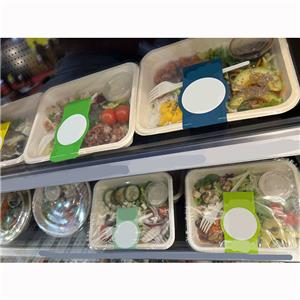
| Chilled meal service | Stay sealed through chilling and the reheat step | A laminated base, the film for the reheat method, and seal behaviour on the actual combination |
| Ambient and dry items | Carry dry components without adding weight | The film-free option where nothing is sealed, and the footprint your trolley accepts |
| Hot entree service | Tolerate the reheat method the galley uses | The film structure and its tolerance for that method, confirmed on a trial run |
| Multi-component meals | Keep a warm item and a chilled item apart in one tray | Compartment layout and the closure used for each side |
| Frozen and long-haul catering | Survive frozen storage and a controlled thaw | Base behaviour at the storage range you use, and the film selected for that range |
The table is a planning aid, because the structure that works is confirmed on the actual meal rather than on the tray alone.
What to specify before you order
A useful enquiry describes the service rather than the material. Send the meal concept, the reheat method used in the galley, the chilled or frozen storage period, the trolley footprint and stacking height, and the closure you intend to run.
Where a format already exists in aluminum or CPET, the outer dimensions can usually be reproduced rather than redesigned. Matching the rim geometry to the sealing equipment is part of the same exercise, and our top sealing solutions cover the tray and film pairing needed for a changeover.
Frequently asked questions
Can a fiber tray replace an aluminum tray directly on board?
For chilled and ambient service, yes, and for hot service it depends on the reheat method rather than on the material. The structure has to be matched to the way the galley heats the meal.
Is a CPET tray required for oven reheating?
No, but the film has to be selected for the oven rather than for a microwave, because the two methods put different demands on the structure. The ovenable option is chosen from the film range for that reason.
Will a laminated tray stay sealed through a chilled flight?
Yes, provided the seal was established on the tray and film combination you actually run. Seal strength is a property of the pair, which is why it is verified on the finished pack rather than on the film alone.
Does a fiber tray add weight to the trolley?
A molded fiber tray is a light rigid base, and the total trolley weight is what matters in practice. It is confirmed on a loaded trial, since nesting depth and stack height affect the outcome as much as the individual tray.
What documentation does a catering buyer normally request?
Food-contact compliance together with the certification and test report set. Our laminated trays are PFAS-FREE (ND, < 10 ppm) with FDA, LFGB, OK Compost Industrial and ABAP certification, backed by REACH, POPs, PFAS, PPWR total fluorine and BPA reports.
Need samples for an in-flight catering format?
Hebei Mountain Environmental Protection Technology Co., Ltd. manufactures laminated bagasse trays and supplies film structures in PP, PET, CPET, PLA, EVOH-enhanced and PBAT-based options, with 30+ production lines for volume supply. Our mold library holds more than 3,000 in-house molds, and we develop 200+ new molds each year.
Send us the meal concept, the reheat method and the trolley footprint, and we will confirm which base and film suit the service and which samples to run. Please contact our team to start the request.