What Certifications Should You Ask for When Buying Bagasse Food Packaging?
When buying bagasse food packaging from China, many importers, distributors, wholesalers, and food manufacturers ask the same question:
“What certifications do I need from the manufacturer?”
The answer depends on the product, target market, food type, temperature, and packaging structure.
A plain molded bagasse plate, a laminated ready meal tray, and a heat-sealable MAP tray may require different documentation.
This is especially important when buying bagasse food trays, ready meal packaging, laminated molded fiber packaging, and custom heat-sealable trays.
A professional supplier should be able to explain which documents apply to the specific product you are buying.
This guide explains the main certifications, test reports, and compliance documents buyers should consider before placing an order.
Why Certifications Matter for Bagasse Food Packaging
Food packaging comes into direct or indirect contact with food.
Therefore, buyers need to know whether the packaging is suitable for its intended application.
Documentation can help verify information about:
- Food-contact safety
- Material composition
- Chemical migration
- PFAS
- Heavy metals
- Compostability
- Temperature use
- Manufacturing standards
- Target-market requirements
However, a certificate should not be treated as a universal approval for every product made by a factory.
The most important question is:
Does the document apply to the exact product, material, film, and intended use that I am buying?
1. Food-Contact Compliance
Food-contact documentation is one of the first areas buyers should ask about.
Depending on the target market, relevant requirements may come from different regulatory systems.
For example, customers selling packaging in the United States may need to consider applicable FDA food-contact requirements.
European customers may need to consider EU food-contact legislation and the requirements applicable to the specific packaging materials.
Other markets may have their own rules.
Therefore, do not simply ask:
“Is this product FDA approved?”
Ask instead:
“What food-contact compliance documents are available for this exact product and material structure?”
This gives you much more useful information.
2. Migration Testing
Migration testing evaluates whether substances from food-contact packaging can migrate into food or food simulants under specified test conditions.
For laminated bagasse trays, the testing may need to consider more than the bagasse fiber itself.
The complete structure may include:
Bagasse Fiber + Film Layer + Adhesive or Processing Components, if applicable
The test conditions should reflect the intended use.
For example:
- Chilled food
- Frozen food
- Hot food
- Microwave heating
- Oven heating
- Fatty food
- Acidic food
The exact test conditions depend on the applicable standard and intended use.
When buying customized packaging, ask the manufacturer whether the available test report matches your final product structure.
3. PFAS Testing
PFAS has become an important topic in food packaging.
Buyers increasingly ask whether molded fiber packaging contains intentionally added PFAS or whether PFAS has been detected during testing.
However, the wording matters.
A supplier should distinguish between statements such as:
- PFAS not intentionally added
- PFAS tested
- Specific PFAS substances not detected
- Compliance with a specific regulatory requirement
These statements are not necessarily interchangeable.
If PFAS is important to your market, ask the manufacturer for the relevant test report or declaration.
For example, ask:
“Can you provide PFAS testing or documentation for the exact tray structure we are purchasing?”
This is more useful than relying only on a general marketing statement.
4. Compostability Certification
Bagasse comes from sugarcane fiber, which makes it a plant-fiber material.
However, buyers should distinguish between the fiber portion and the complete finished packaging.
This is particularly important for laminated bagasse trays.
A tray made from molded bagasse alone is different from a tray laminated with:
- PP
- PET
- CPET
- PLA
- EVOH-based structures
- PBAT-based structures
If compostability is an important requirement, ask:
“Is the complete finished product certified as compostable?”
Not:
“Is bagasse compostable?”
The second question is too general.
5. OK Compost and Other Compostability Standards
Some buyers may request compostability certification such as OK compost.
There can be different certification categories and testing requirements depending on whether a product is intended for industrial composting or other conditions.
Therefore, confirm:
- Certification name
- Certificate number
- Certified product
- Certified material
- Composting conditions
- Certification validity
- Target market
Do not assume that a certificate for one product automatically covers another product with a different coating or film.
For laminated packaging, the complete structure should be checked.
6. Material Composition Documentation
For custom packaging, buyers may also need a material declaration.
This can help clarify:
- Bagasse fiber
- Film type
- Additives
- Coatings
- Adhesives, if applicable
- Printing inks
- Other components
This information can be particularly useful when importing packaging into another country.
For example, if a customer orders a bagasse tray with a PP film layer, the product should not be described simply as “100% bagasse.”
The correct description should reflect the complete packaging structure.
Clear material information helps avoid misunderstandings during purchasing and regulatory review.
7. Heavy Metal Testing
Heavy metal limits can be relevant to certain food-contact and packaging requirements.
Depending on the market and applicable standard, buyers may ask about substances such as:
- Lead
- Cadmium
- Mercury
- Chromium
- Other regulated heavy metals
The exact substances and limits depend on the relevant regulation or testing standard.
If your customer requires heavy metal testing, ask the supplier to provide the applicable test report rather than relying on a general “food safe” statement.
8. FDA-Related Documentation for the U.S. Market
For customers selling food packaging in the United States, FDA requirements may be relevant depending on the material and intended use.
However, buyers should be careful with the phrase:
“FDA certified.”
FDA food-contact compliance is not necessarily the same thing as receiving a single universal FDA certificate for the entire packaging product.
The actual compliance pathway depends on the material, substances, intended use, and applicable FDA requirements.
For a laminated bagasse tray, buyers should ask for documentation relevant to:
- The bagasse material
- The film layer
- Food-contact conditions
- Intended temperature
- Intended food type
If your customer requires specific FDA documentation, provide those requirements to the manufacturer before production.
9. EU Food-Contact Requirements
European buyers should also ask for documentation relevant to the EU market.
The applicable requirements depend on the packaging materials and intended use.
For a laminated bagasse tray, this may involve evaluating both:
Molded Fiber
and
Film / Coating Structure
The buyer should ask the manufacturer which declarations and test reports are available for the complete packaging.
If the packaging will be sold across multiple European markets, the importer should also check country-specific requirements that may apply.
10. Packaging Regulations and Market Requirements
Food packaging compliance is not limited to food-contact safety.
Depending on your market, you may also need to consider requirements related to:
- Packaging waste
- Recyclability
- Compostability
- Plastic content
- Labeling
- Extended producer responsibility
- Chemical restrictions
- Packaging taxes
- Import requirements
For European customers, packaging regulations such as the EU Packaging and Packaging Waste Regulation (PPWR) may be relevant depending on the product and market.
The manufacturer can provide material and product information, but the importer or brand owner should also confirm the legal requirements applicable to the finished package in its destination market.
11. What About Plastic Content?
This question is especially important for laminated bagasse packaging.
A buyer may see:
“Bagasse Food Tray”
but the actual structure could contain a polymer film.
For example:
or
Bagasse + PET Film
or
Bagasse + PLA-Based Film
The plastic content and regulatory treatment can therefore differ between structures.
If your market has restrictions or reporting requirements related to plastic packaging, ask the manufacturer for the actual material composition.
Do not estimate the plastic content from the product name.
12. Heat-Sealing Test Reports
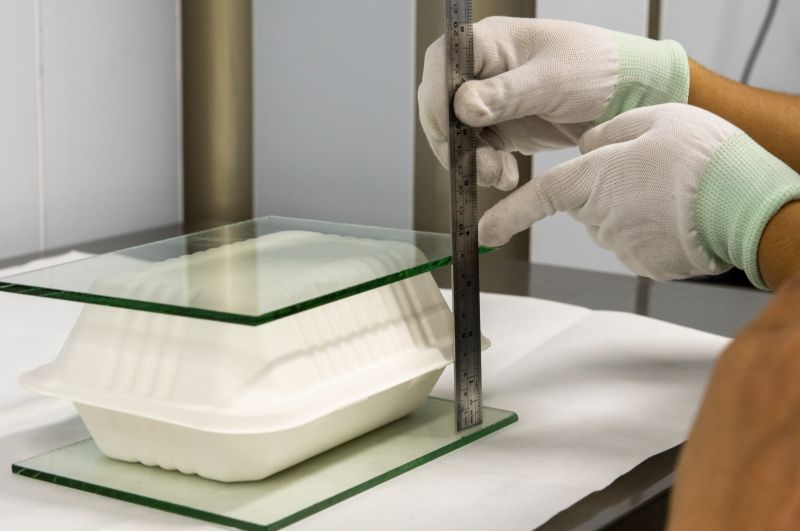
For ready meal trays, food-contact compliance is only part of the evaluation.
You may also need technical testing related to heat sealing.
Ask whether the manufacturer can provide information about:
- Sealing temperature
- Sealing pressure
- Dwell time
- Seal strength
- Leak testing
- Lidding film compatibility
A heat-sealable tray needs to work as part of a sealing system.
The performance of the final package can depend on:
Tray + Film + Lidding Film + Sealing Machine + Settings
Therefore, a general material certificate cannot replace actual sealing tests.
13. MAP Packaging Testing
If you are buying bagasse trays for modified atmosphere packaging, ask about the technical information behind the MAP application.
Relevant factors may include:
- Oxygen barrier
- Water vapor barrier
- Seal integrity
- Tray structure
- Lidding film
- Gas flushing
- Storage temperature
- Shelf-life testing
An EVOH-enhanced structure may be considered for applications requiring higher oxygen barrier performance.
But the final shelf-life result depends on the complete packaging system and the food product.
A material specification alone cannot guarantee a specific shelf life.
14. VSP Packaging Testing
Vacuum skin packaging can also require application-specific testing.
Ask the manufacturer about:
- Tray rigidity
- Rim design
- Film compatibility
- Vacuum performance
- Seal integrity
- Product presentation
The tray should be tested on the actual VSP equipment whenever possible.
This is another example of why certification and performance testing are different things.
A product can meet a material standard but still require process optimization on the customer's machine.
15. Temperature Testing
Temperature is another important part of product documentation.
A tray may be exposed to:
- Frozen storage
- Refrigerated storage
- Room temperature
- Microwave heating
- Oven heating
- Hot filling
Different film structures have different temperature capabilities.
For example, PP, PET, CPET, PLA, EVOH-enhanced, and PBAT-based structures should not be treated as interchangeable.
Ask the manufacturer for the recommended temperature range for the specific tray and film structure.
Also ask whether the stated temperature is based on:
- Material properties
- Internal testing
- Standardized testing
- Customer application testing
This distinction helps you understand how much confidence to place in the number.
16. Factory Quality Management
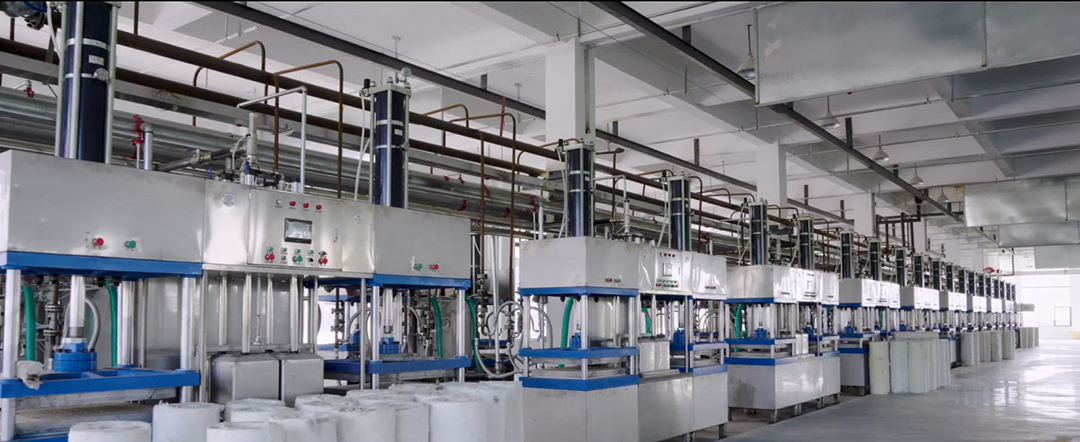
Buyers may also ask whether the factory has a quality management system.
Depending on the supplier, documentation may include certifications or records related to:
- Quality management
- Manufacturing processes
- Product inspection
- Raw material control
- Traceability
A factory certificate does not directly prove that every individual tray will meet your specification.
However, a documented quality system can provide useful information about how production is controlled.
17. What Documents Should You Request?
For a typical customized bagasse food tray project, you may want to request a documentation package.
It could include:
Product Information
- Product specification
- Dimensions
- Weight
- Material structure
- Film type
Food-Contact Documentation
- Food-contact declaration
- Applicable compliance documents
- Migration testing
Chemical Testing
- PFAS testing, if required
- Heavy metal testing
- Other market-specific chemical testing
Sustainability Documentation
- Compostability certification, if applicable
- Material composition
- Fiber content
- Plastic content information
Performance Information
- Heat-sealing data
- Temperature range
- MAP/VSP testing, if applicable
- Leak testing
The exact document list should be based on the product and destination market.
18. Ask for Documents for the Exact Product
This is one of the most important rules when sourcing food packaging.
Suppose a manufacturer sells six types of laminated bagasse trays.
You receive a food-contact report for Product A.
You then purchase Product D with a different film.
You should not automatically assume that the report for Product A covers Product D.
The same applies to:
- Different coatings
- Different films
- Different additives
- Different production structures
- Different intended uses
Always ask:
“Does this document apply to the exact product structure we are purchasing?”
19. Certification vs Testing vs Declaration
These three terms are often mixed together.
They are not necessarily the same.
Certification
A third party or recognized certification organization confirms that a product or process meets specified requirements.
Testing
A laboratory tests a product or material against specified methods and reports the results.
Declaration
A manufacturer formally states that a product or material meets specified requirements based on its compliance assessment.
All three can be useful.
But they answer different questions.
When reviewing supplier documents, check what type of document you are actually receiving.
20. Don't Judge a Supplier by the Number of Certificates
More certificates do not automatically mean a better packaging solution.
What matters is whether the documents are:
- Relevant
- Current
- Authentic
- Applicable
- Traceable to the product
- Suitable for the target market
For example, a certificate for a factory management system does not replace food-contact testing.
A compostability certificate does not replace heat-sealing testing.
A food-contact report does not guarantee MAP shelf life.
Each document answers a different question.
Certification Checklist for Bagasse Food Packaging Buyers
Before placing an order, you can use this checklist:
| Document / Test | Why It Matters | Ask the Supplier |
|---|---|---|
| Food-contact compliance | Food packaging suitability | Is it applicable to this product? |
| Migration testing | Chemical migration | What test conditions were used? |
| PFAS testing | Chemical restriction requirements | Is testing available for the final structure? |
| Heavy metal testing | Chemical compliance | Which substances were tested? |
| Material declaration | Understand complete structure | What materials are included? |
| Compostability certificate | Compostability claims | Does it cover the complete product? |
| Temperature information | Application suitability | What is the tested/recommended range? |
| Heat-sealing test | Packaging line performance | What are the sealing parameters? |
| MAP testing | Barrier/package performance | Has the complete system been tested? |
| VSP testing | Vacuum skin applications | Has it been tested on relevant equipment? |
| Quality certification | Factory management | What system is in place? |
Questions to Send to Your Bagasse Packaging Supplier
You can send the following questions directly to a manufacturer:
- What is the complete material structure of the tray?
- What film or coating is used?
- Can you provide food-contact compliance documents?
- Can you provide migration test reports?
- Do you have PFAS testing or a PFAS declaration?
- Do you have heavy metal testing?
- Is the complete product compostable?
- Which compostability certification applies?
- Can you provide material composition information?
- What temperature range is recommended for this exact structure?
- Can the tray be heat sealed?
- Can you provide sealing test information?
- Can it be used for MAP?
- Can it be developed for VSP?
- Do the documents apply to the exact product we are ordering?
- Can you provide updated documents before mass production?
These questions can save time later in the purchasing process.
What Overseas Distributors Should Ask
For distributors and wholesalers, documentation can be especially important because the packaging may eventually be sold to multiple food manufacturers.
Ask the factory whether documentation can support:
- Customer audits
- Food manufacturer approval
- Retailer requirements
- Import documentation
- Product registration
- Market-specific compliance
If you are distributing the packaging under your own brand, clarify which documents you are allowed to share with your customers.
It is better to establish this before the first large order.
What Food Manufacturers Should Ask
Food manufacturers should focus not only on certification but also on actual packaging performance.
For a ready meal tray, for example, ask for:
- Food-contact documentation
- Migration testing
- Film specification
- Heat-sealing information
- Leak testing
- MAP/VSP information
- Temperature performance
- Actual product testing
If the tray will be used with a specific food product, the final packaging should be evaluated under the actual conditions of use.
What Brands Should Ask
Brands often need to balance technical performance with sustainability claims.
Ask the supplier for:
- Material composition
- Fiber content
- Film content
- PFAS information
- Compostability documentation, if applicable
- Food-contact documentation
- Test reports
- Product specifications
This information can help the brand communicate more accurately with retailers and consumers.
How Hebei Mountain Supports Compliance Documentation
Hebei Mountain supplies molded bagasse food packaging for international B2B customers.
Our products include:
- Bagasse food trays
- Laminated bagasse trays
- Heat-sealable ready meal trays
- Custom molded fiber packaging
- MAP/VSP packaging solutions
- Lidding films
For customized projects, we can discuss the required documentation based on:
- Product structure
- Film type
- Food application
- Temperature
- Target market
- Intended packaging process
Our current product range includes film options such as PP, PET, CPET, PLA, EVOH-enhanced, and PBAT-based structures.
Because the complete packaging structure matters, documentation should be matched to the actual product being ordered.
Before You Place an Order
Do not wait until the goods are already in production to ask about compliance documents.
Ideally, confirm the documentation requirements during the quotation and sample stage.
A practical sequence is:
1. Define the market
Where will the packaging be sold?
2. Define the food
What product will be packed?
3. Define the packaging structure
What tray and film will be used?
4. Define the conditions
Chilled? Frozen? Microwave? Oven? MAP? VSP?
5. Define the documentation
What compliance and test reports are required?
6. Confirm the sample
Test the exact product structure.
7. Confirm the final specification
Make sure the production order matches the tested sample.
This process reduces the risk of discovering documentation problems after production.
Final Thoughts
When buying bagasse food packaging, certifications are important, but they are only one part of supplier evaluation.
A complete assessment should include:
Material + Food Contact + Testing + Performance + Documentation + Application
For laminated bagasse trays, the film layer is particularly important.
A tray made from bagasse with PP film has a different material structure from a tray using PLA or PBAT-based film.
Therefore, always ask for documentation that matches the exact finished product.
If you are buying packaging for a new market, ask the manufacturer about the required documentation before finalizing the material structure.
And if the packaging will be used for ready meals, MAP, VSP, microwave heating, oven heating, or frozen storage, combine certification review with actual application testing.
Need Documentation for a Customized Bagasse Tray?
If you are sourcing bagasse food packaging from China, send us your product requirements before placing an order.
Please provide:
- Tray drawing or sample
- Food type
- Food weight
- Storage temperature
- Heating requirements
- Lidding film
- Sealing method
- MAP/VSP requirements
- Target market
- Required certifications or test reports
Our team can review the packaging structure and help identify the relevant documentation and testing requirements for the project.
Looking for a China bagasse food packaging manufacturer that can support customized trays, film selection, testing, and compliance documentation? Contact Hebei Mountain to discuss your project.